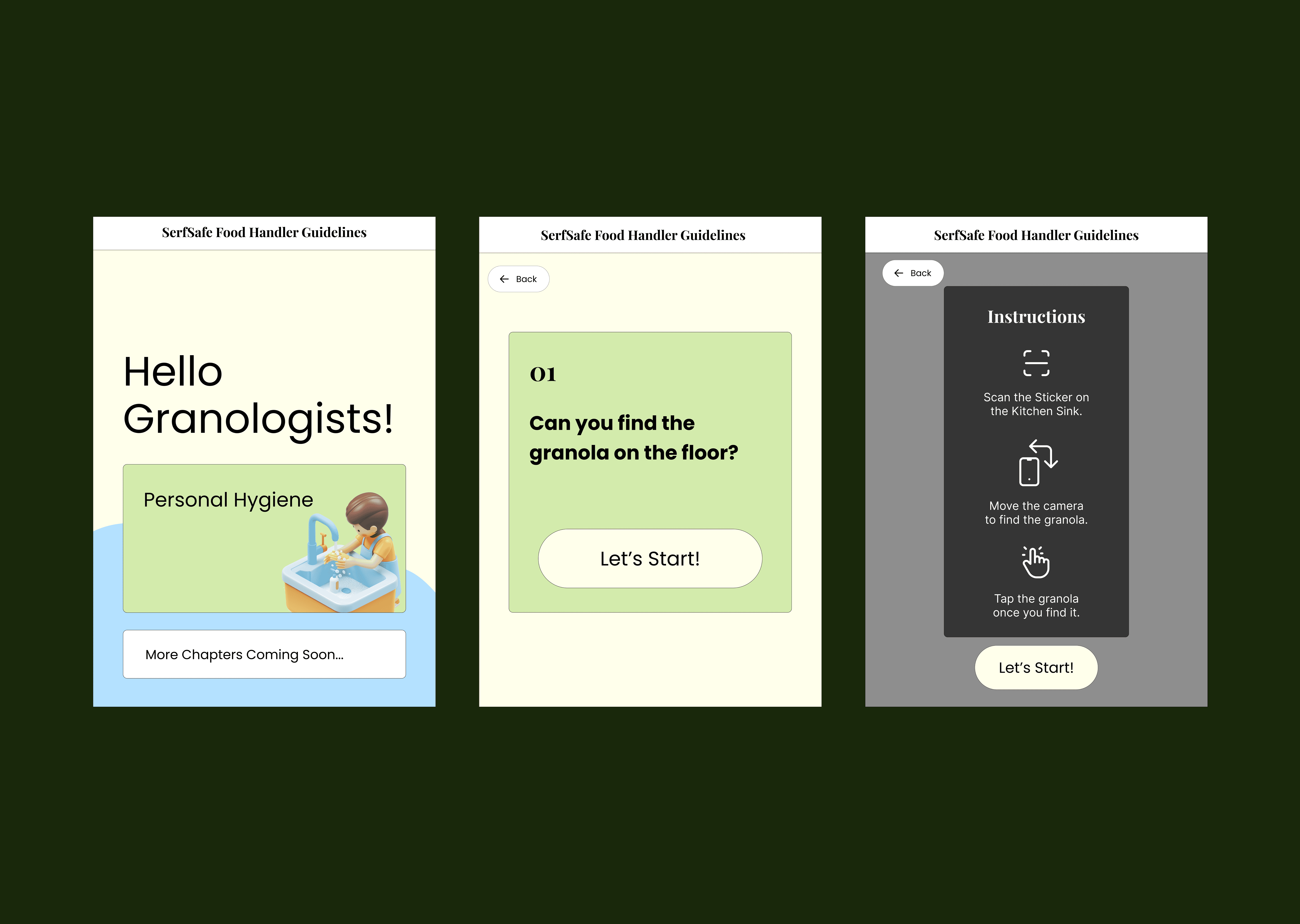
AR learning tool creating accessible, inclusive hygiene training for Luv Michael's neurodivergent employees.
Client: Luv Michael, NYU school project. (Assistive Technology Course)
My Role: UX Designer, AR Developer
Team: 3 UX Designers, 2 AR Developers.
Timeline: Six Weeks & ongoing
Tools: Figma, Snapchat's Lens Studio, Unity
The Problem
Training-to-practice gap persisted: Autistic employees needed better reinforcement for kitchen hygiene.
AR-based learning tool for 10-minute interactive hygiene practice exercises.
Impact
60% engagement increase: Employees actively learned safety practices.
20% reduction in cost and time for safety training reinforcement.
Further usability testing planned to measure information retention.
Action
What led to the solution?
Field research - observing employees in the kitchen
Competitive analysis
Usability testing
UI Kit design
Prototyping
AR Tool - design & development
CONTEXT
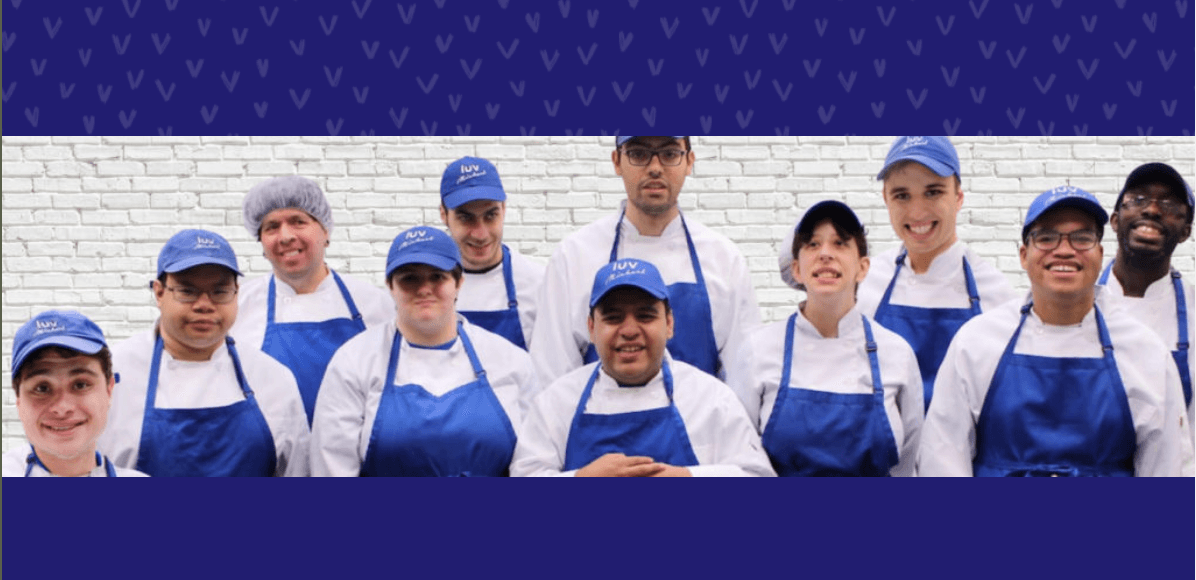
Luv Michael, a granola-making non-profit employing autistic adults, sought a more inclusive learning tool beyond instructor-led lessons and physical games to accommodate diverse abilities.
THE CHALLENGE
RESEARCH
Instructor-led lessons used whiteboard drawings and explanations, reinforced by physical card sorting activities.
Why is the current learning system not effective?

Low information retention.
Group learning was tricky- varied learning abilities.
Employees had difficulty applying lessons in kitchen.
What is the impact?
Cost and time in lesson repetition.
Hygiene in the kitchen is compromised.
Company reputation might be impacted.
What might help?

Quick, simple exercises to reinforce learning.
A degree of personalized learning.
An immersive, practical experience to connect training with real-life tasks.
Reviewed Luv Michael’s ServSafe curriculum to understand what is taught, how it is delivered, and how employees engage with the material.
Reviewed Luv Michael’s ServSafe curriculum to understand the content taught and delivery methods.
Studies on autism and learning show augmented reality is highly effective for autistic individuals.
IDEATION
Explored learning method options with pros and cons detailed below.
The Problem
Why might they work
Gamification - can make it engaging.
User can control the pace for the web game.
Can use audio, visual, and text catering to different learning styles.
Moving and touching physical cards can be an effective learning technique.

Why not
The current material used to teach at Luv Michael is similar to the web game.
Want something that does not require assistance from another person.Can use audio, visual, and text catering to different learning styles.
An Augmented Reality based tool?
USER TESTING WITH AR
My team and I ran fly-on-the-wall observations, noting how employees interacted with their phones while using the AR applications.
7 employees (chosen by Luv Michael)
15 min each
3 applications

Chalk
Chalk was selected to test how employees interacted with:
a free-flowingminimal-constraint
AR experience.
AR Basketball
AR Basketball was selected to observe how employees responded to a simple, structured AR experience.
AR Paddle Ball
AR Paddle Ball was selected to observe how users engaged with a more flexible, less structured experience.
This user testing session helped us understand specific practices that work better than others and that AR was worth exploring.
DESIGN METHOD
Lens Studio was selected for its short learning curve, fitting the 4-week project timeline for AR development.
User Flow
Low-fi wireframes
DESIGN - ITERATION #1
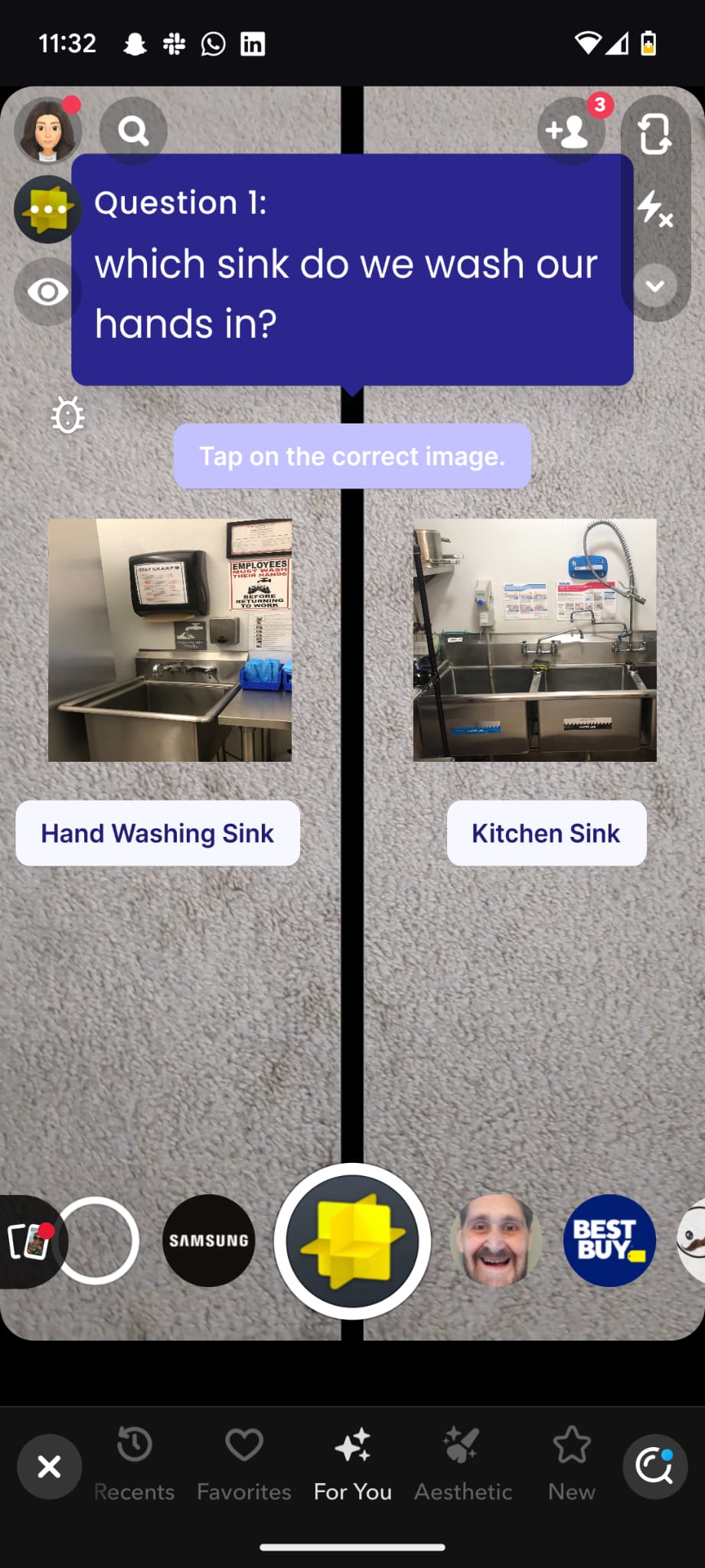
Built initial AR prototype in Snapchat's Lens Studio for usability testing with Luv Michael employees, enabling rapid iteration.
Readable text.
Text accompanied by slow speed audio and visuals. - to cater to different learning needs.
Adhering to WCAG guidelines.
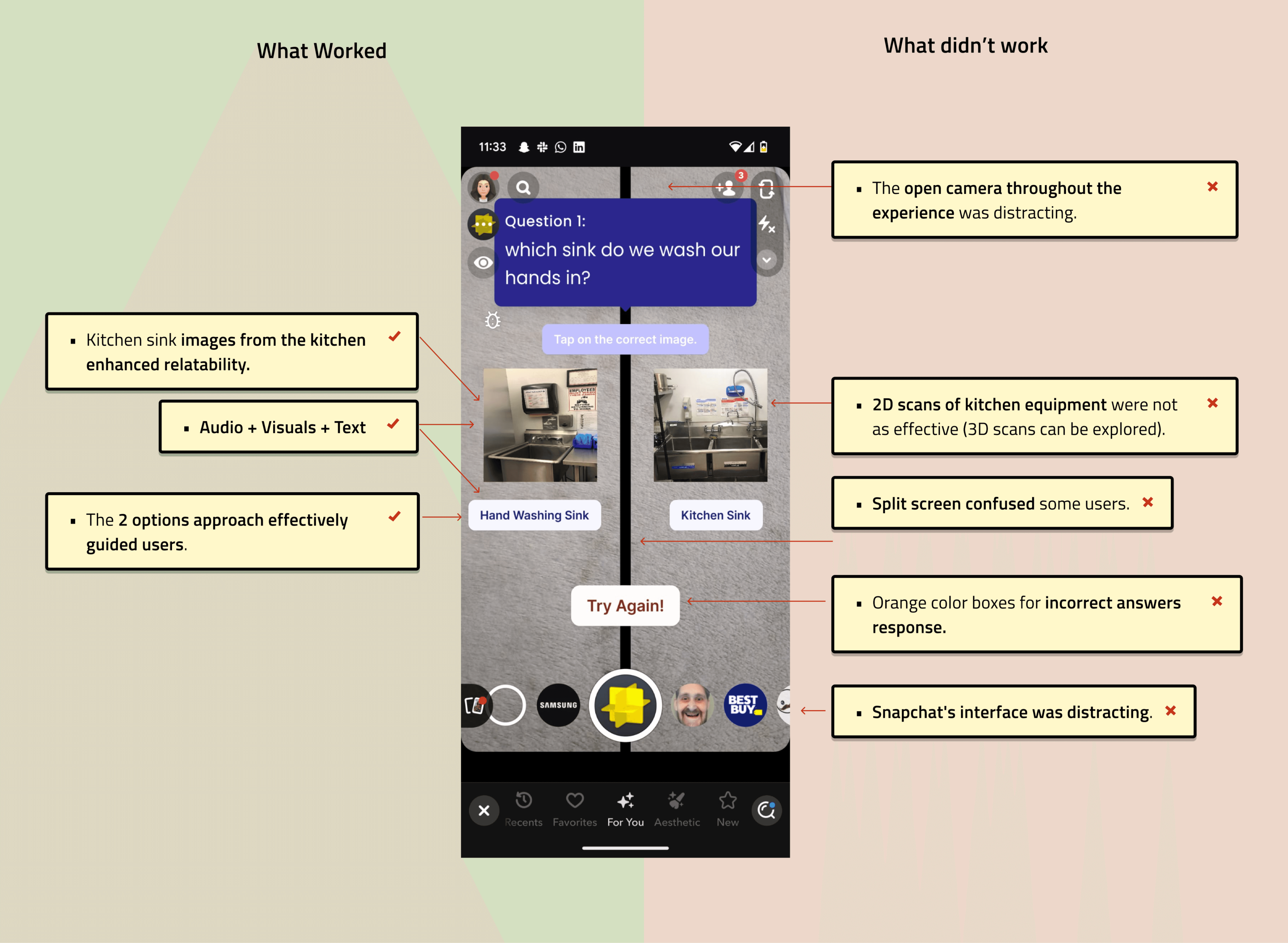
Sample Scenario #1: Which sink do we wash our hands in?
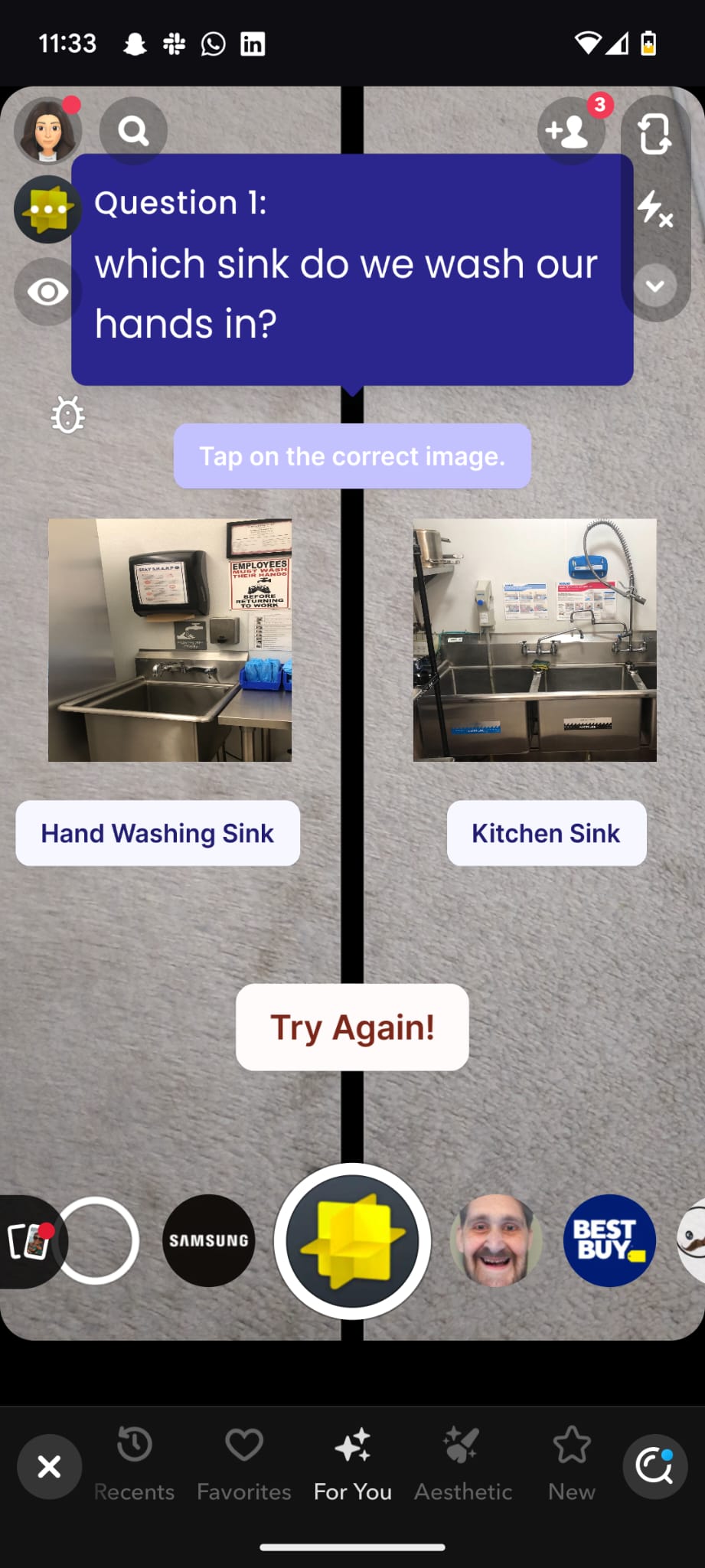
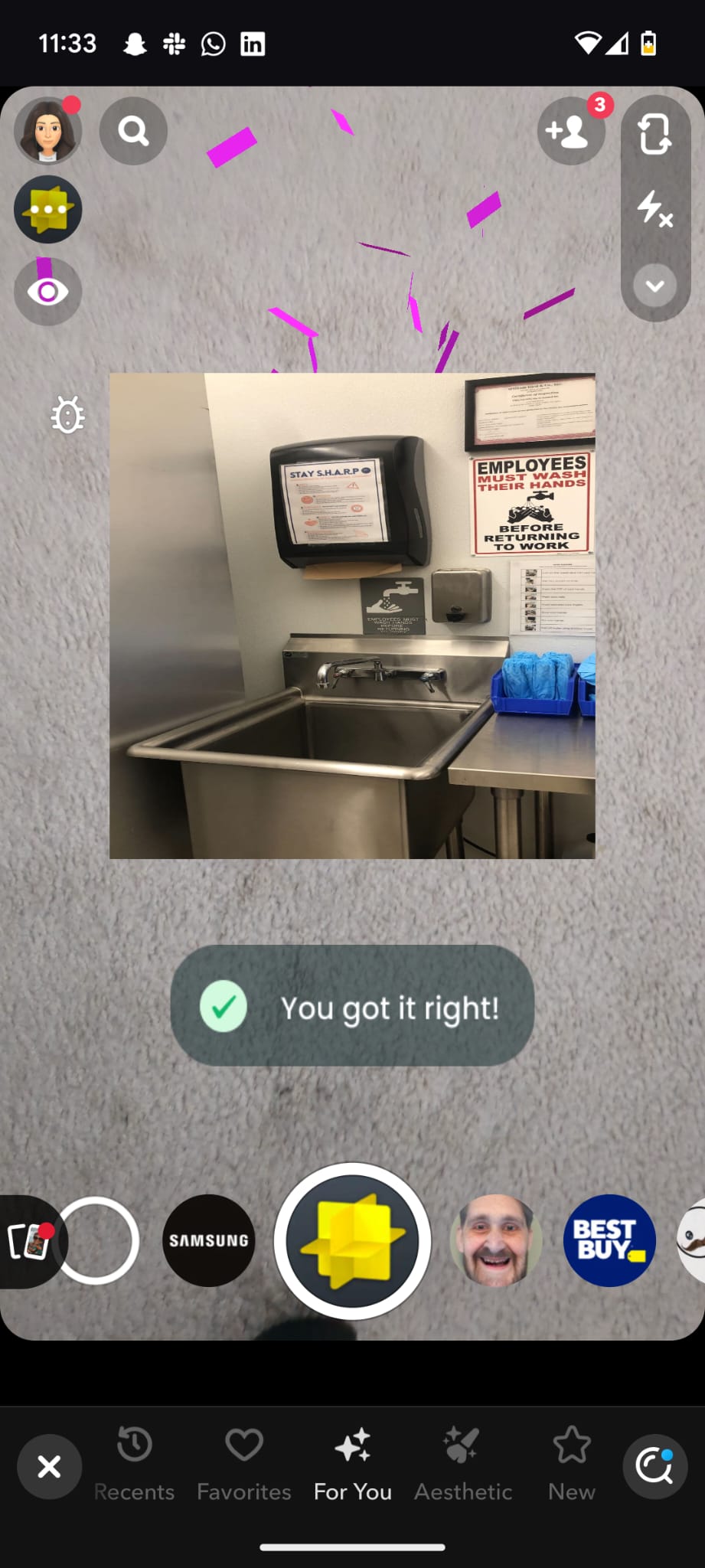
Uh-oh! Looks like there's something on the floor!
After the first scenario, the AR tool prompts users to tilt their phone towards the floor, showing virtual granola on the screen.
Sample Scenario #2: What do we do after picking something off the floor?
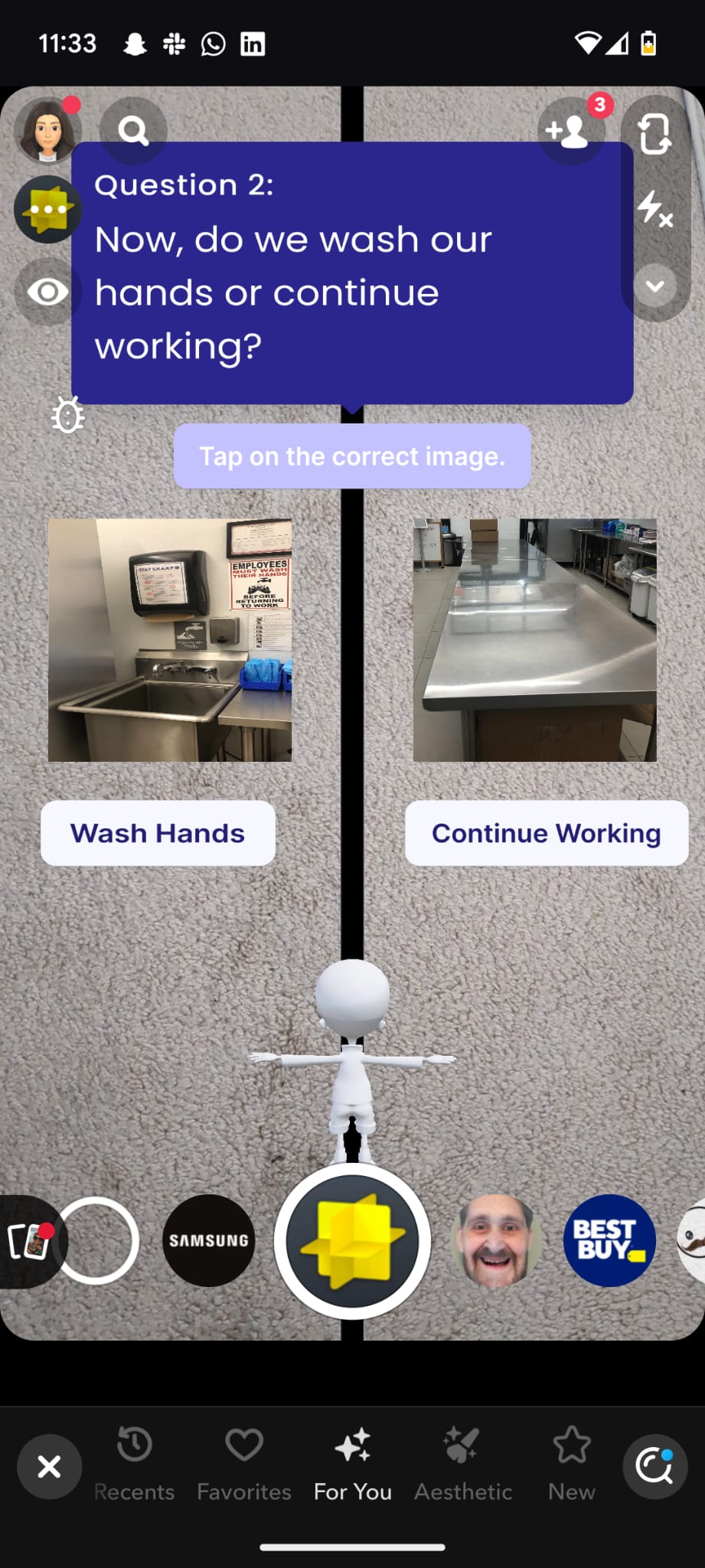
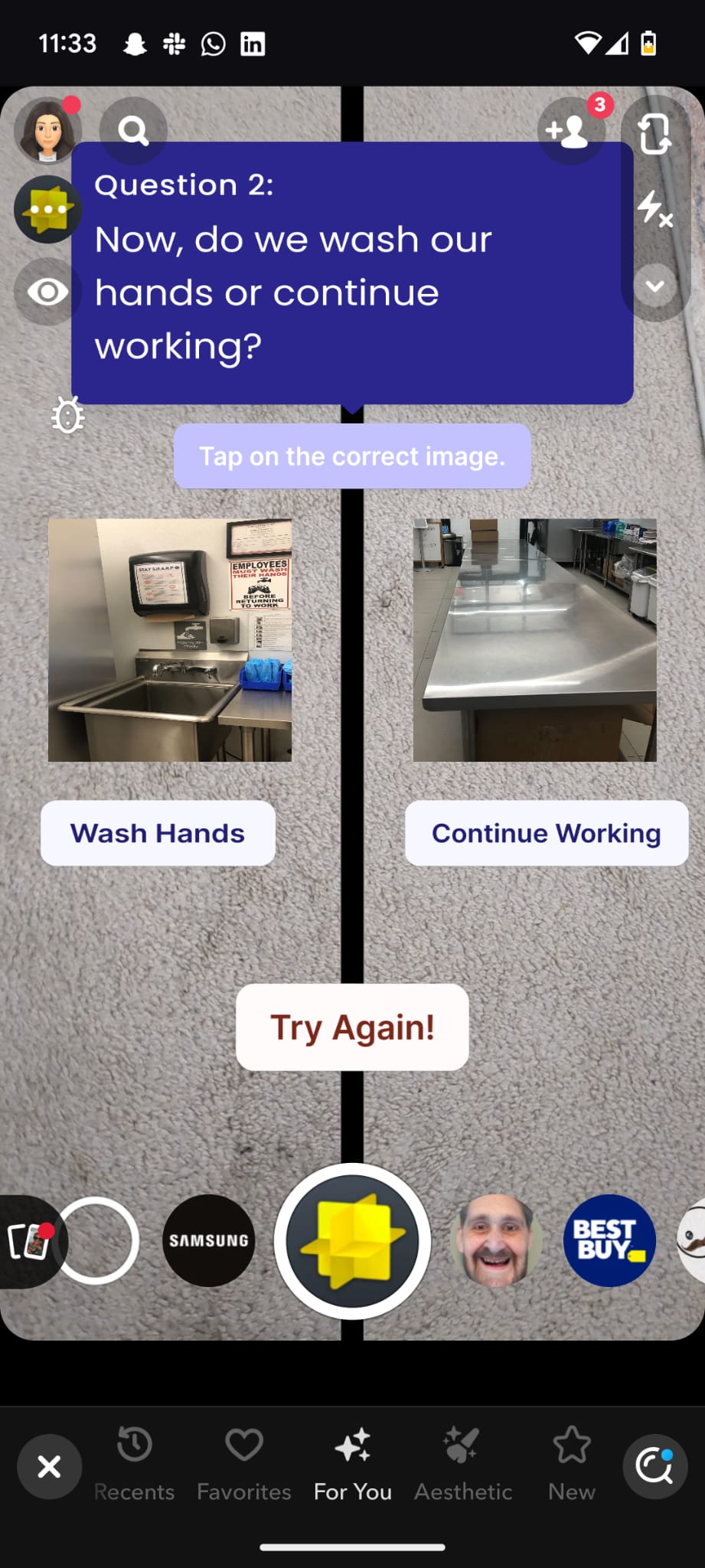
Testing the first prototype with 10 employees revealed key pitfalls to avoid.
DESIGN - ITERATION #2 - PIVOT!
Luv Michael wanted us to continue working on the prototype beyond the initial project timeline and we were thrilled! A lot has changed and now I understood that it was important to pivot.
First Iteration
Snapchat's Lens Studio: Limited scope that doesn't suit new iteration.User can control the pace for the web game.
Camera open throughout: distracting
Split screen approach: Confusing
AR focus throughout: Doesn't help in effective scenario building
Second Iteration
Unity AR: Higher technical feasibility
Camera open only while setting the scenario: clear indication
One screen with 2 options side-by-side: clear and simple decision making
AR Focus only at essential aspects: for effective scenario building with emphasis on understanding the question at hand.
The new requirements demanded new user flows, wireframes, and a complete UI Kit.
Updated user flow diagram reflecting feedback-driven changes and Luv Michael instructor language adjustments.
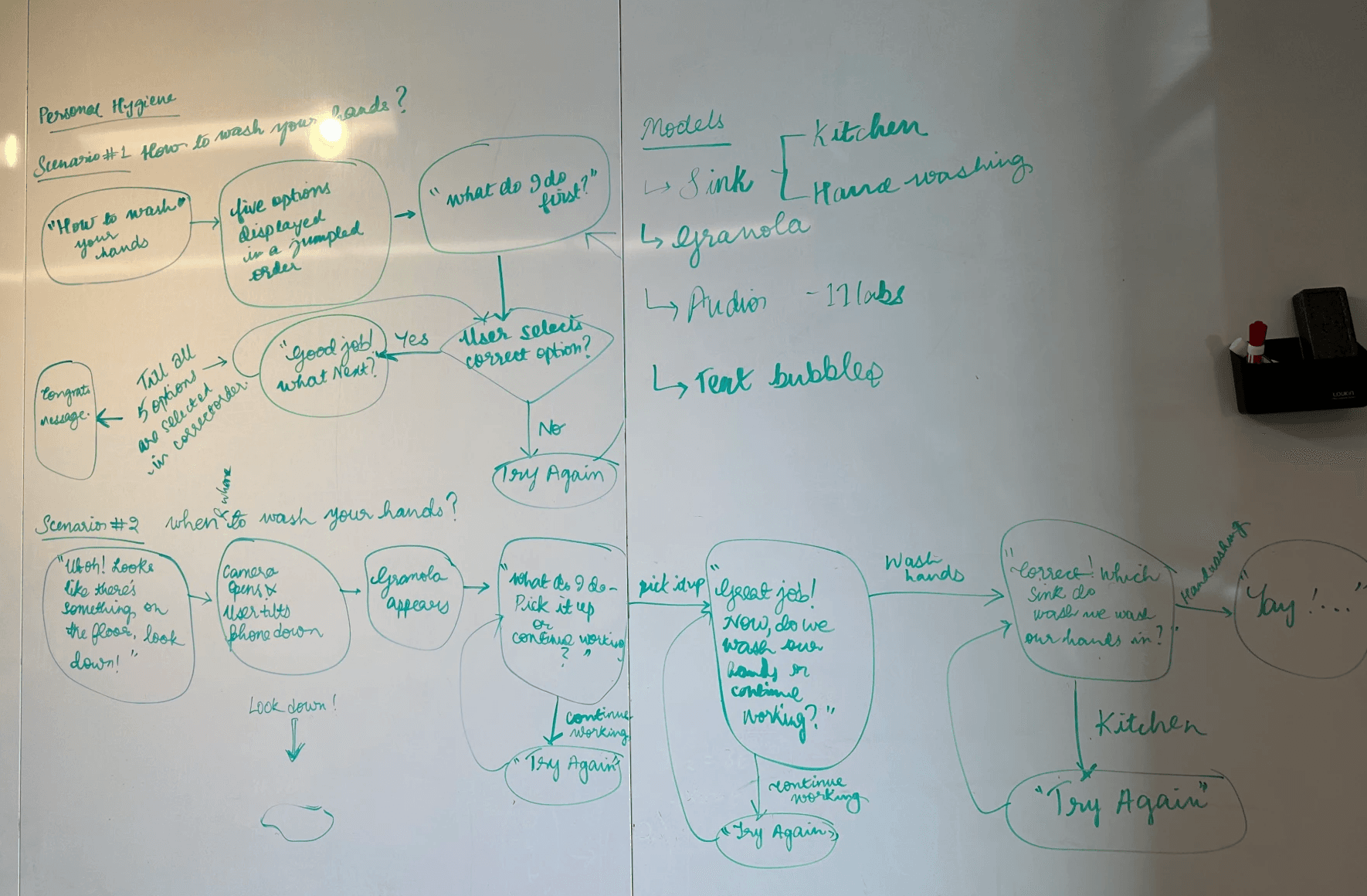
Revised Low-fi Wireframes
Revised UI Kit
FINAL DESIGN
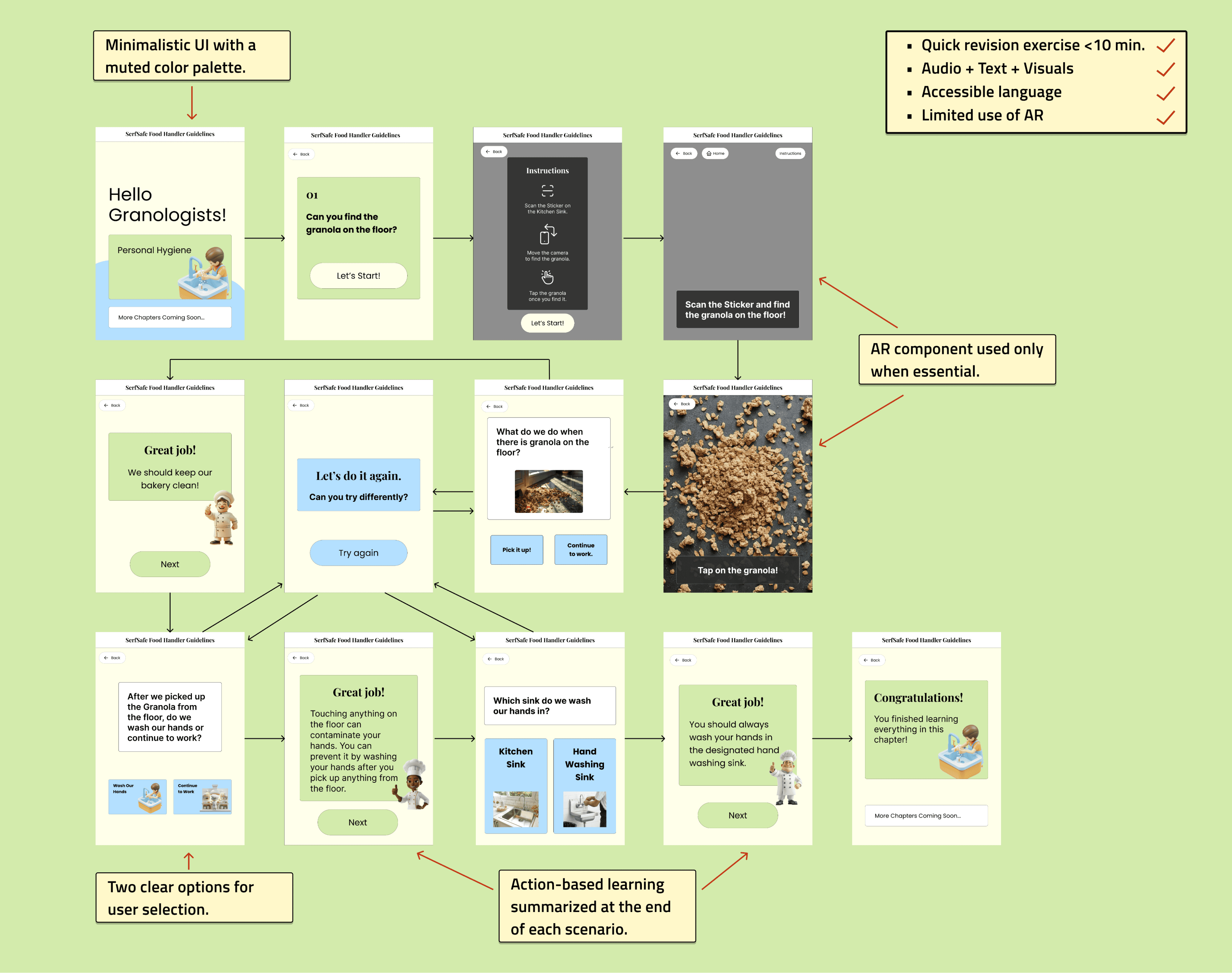
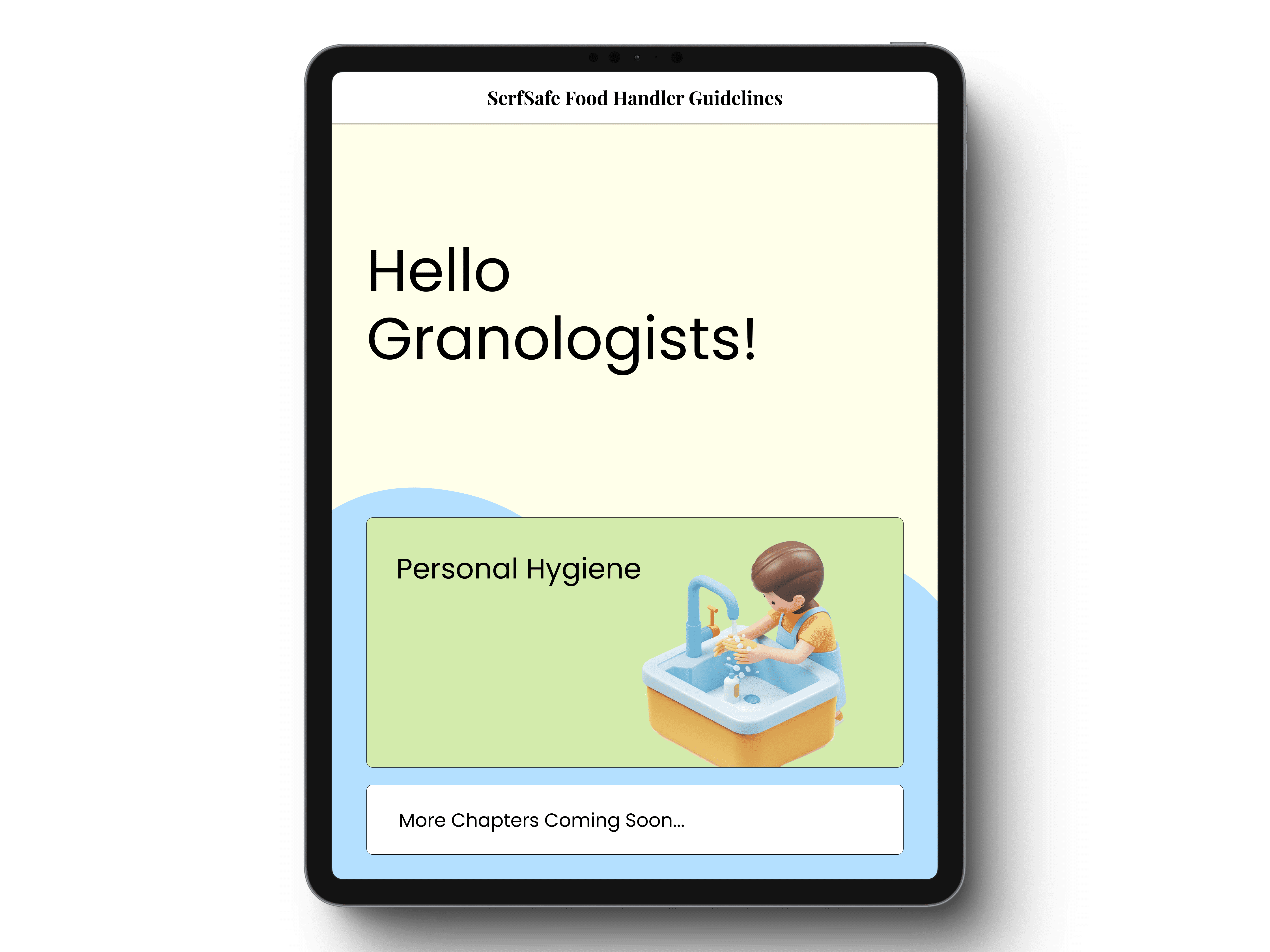
As shown below, decisions like the color palette, minimal AR use, and the two-option approach were all refined based on user testing and insights from earlier iterations.
WORK SHOWCASE
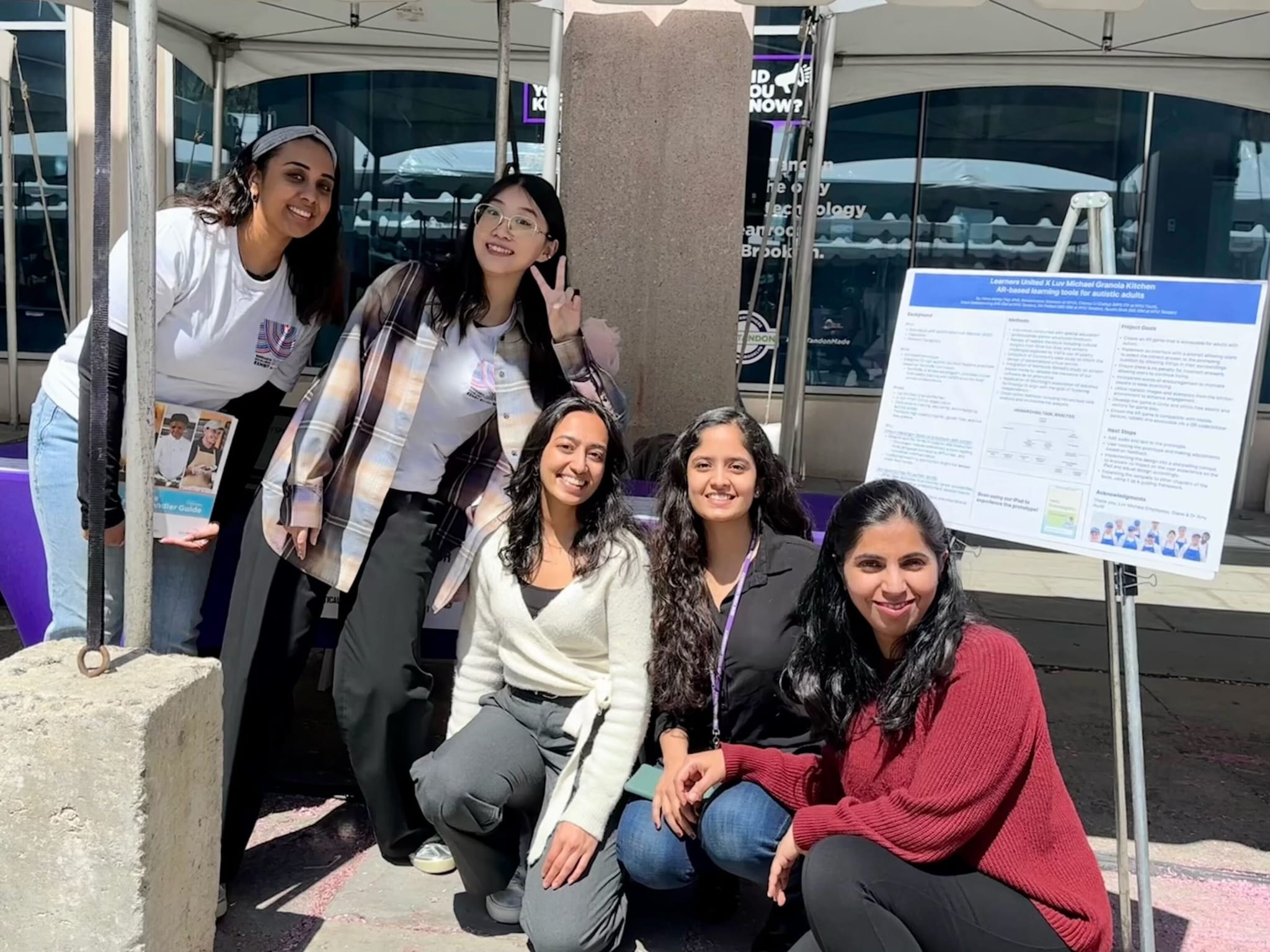
At Tandon's Research Excellence Exhibit, we got a chance to present our research and prototype to numerous attendees and judges. The feedback that the participants gave us based on their use of the prototype and the research was helpful in thinking about future considerations.
Reflections
Working with Luv Michael was rewarding, leading the full end-to-end design and development process.I also learned that aligning all stakeholders early through structured meetings helped streamline decisions and reduce unnecessary back-and-forth.
Collaboration with a neurodiverse audience sharpened my ability to adapt to evolving needs while prioritizing accessibility and inclusivity.
A key takeaway was the importance of being flexible and ready to pivot as conditions change.
Learned that investing time in discovering what not to build is equally valuable.
What would I do differently?
Conduct usability testing with latest prototype on Luv Michael's iPad to identify pain points and effective learning approaches for iterations.
Capture 3D scans of kitchen equipment for app integration, boosting employee relevance.
Expand the app to cover additional chapters of the book for a more comprehensive learning experience.