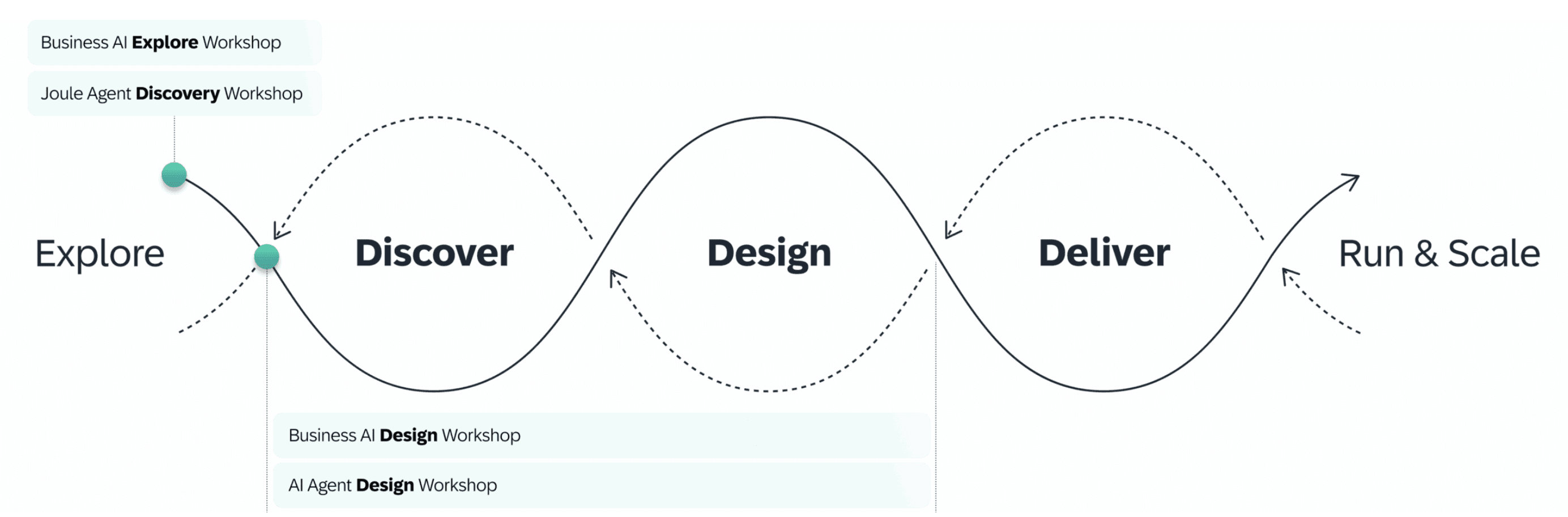
Project Overview
At SAP AppHaus, I facilitated AI-focused design thinking workshops with global enterprise clients using SAP’s AI Innovation Toolkit. These sessions uncovered high-impact AI opportunities, aligned cross-functional teams, and rapidly prototyped early concepts. While client details remain confidential, the workshops followed a structured format with proven methods that drove measurable impact.
My Role: UX Designer
Team: SAP AppHaus Team, Enterprise Client Stakeholders, Business & Technical Experts
Tools: SAP’s AI Innovation Toolkit, Figma, Mural
The Problem
Enterprise clients often know they want to leverage AI, but struggle to:
Identify real, high-value use cases
Balance user needs with feasibility and ROI
Visualize how AI fits into workflows
The solution
Structured design workshops that:
Guided discovery, ideation & prioritization
Turned abstract AI ideas into human-centered workflows
Equipped teams with reusable AI design methods
Impact
15+ actionable AI use cases uncovered
Enabled internal teams to run their own AI workshops
Stronger alignment across design, business, and tech
Action
What led to the solution?
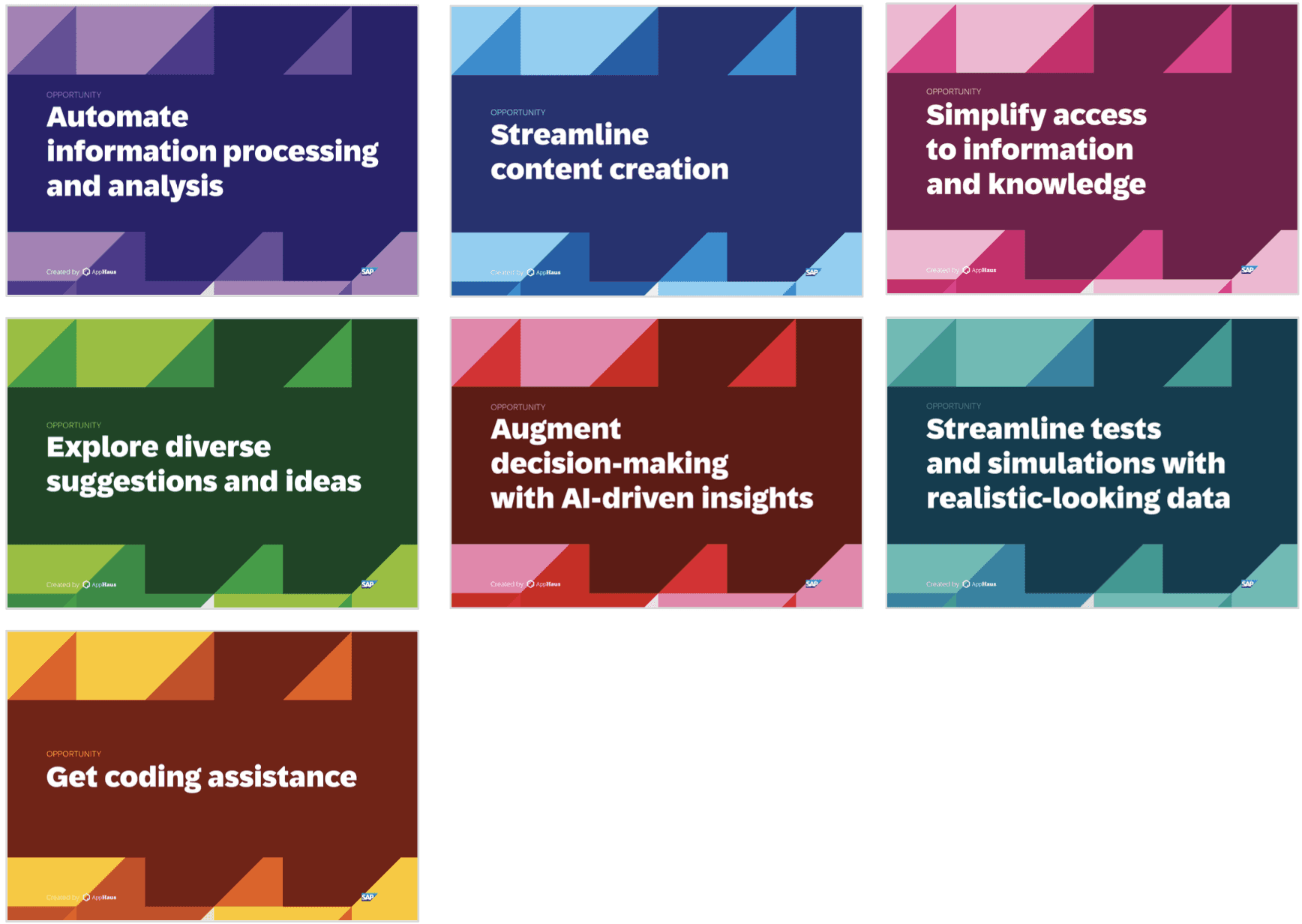
Discover: Framed client goals using AI Opportunity Cards
Ideate: Mapped feasibility, desirability, and viability
Prototype: Translated ideas into storyboards + early flows
Handoff: Shared toolkits for future AI design efforts
CONTEXT
Did you know this…
42%
Products fail from a lack of market need
80%
Unused features in the average software product
$29b
Wasted developer time and money
At SAP AppHaus, workshops addressed the challenge of helping enterprise clients identify meaningful AI opportunities amid complexity and design solutions that align with user and business needs.

Goal
Identify real business challenges and opportunities where AI can add value.
How it works
Use opportunity cards as prompts to spark brainstorming.
Generate a wide range of potential AI use cases.
Describe and detail the most relevant ideas.
Compare and prioritize use cases to decide which ones to pursue further.
Outcome
High-potential, business-aligned AI use case(s) to take into design and prototyping phases.
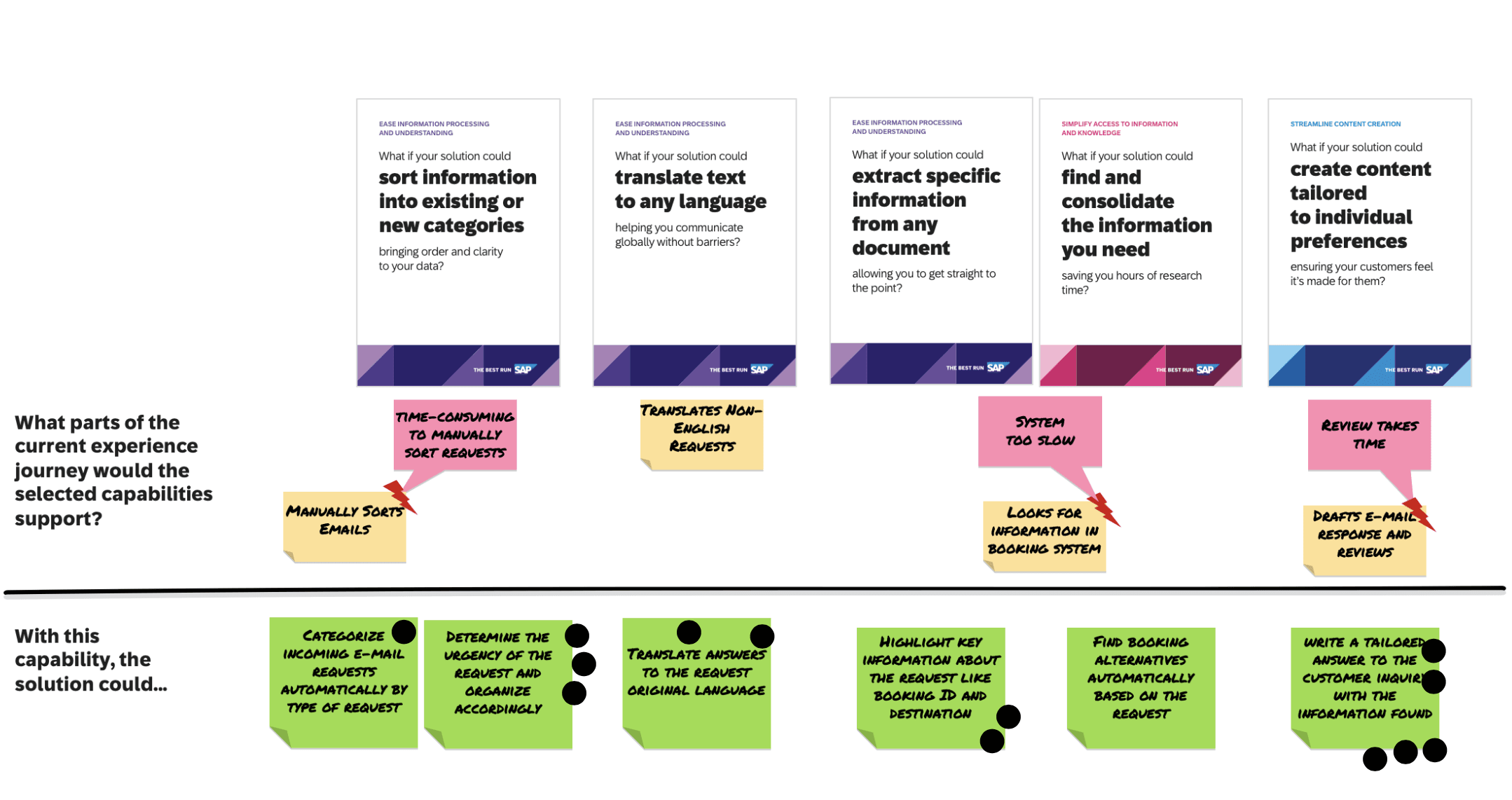
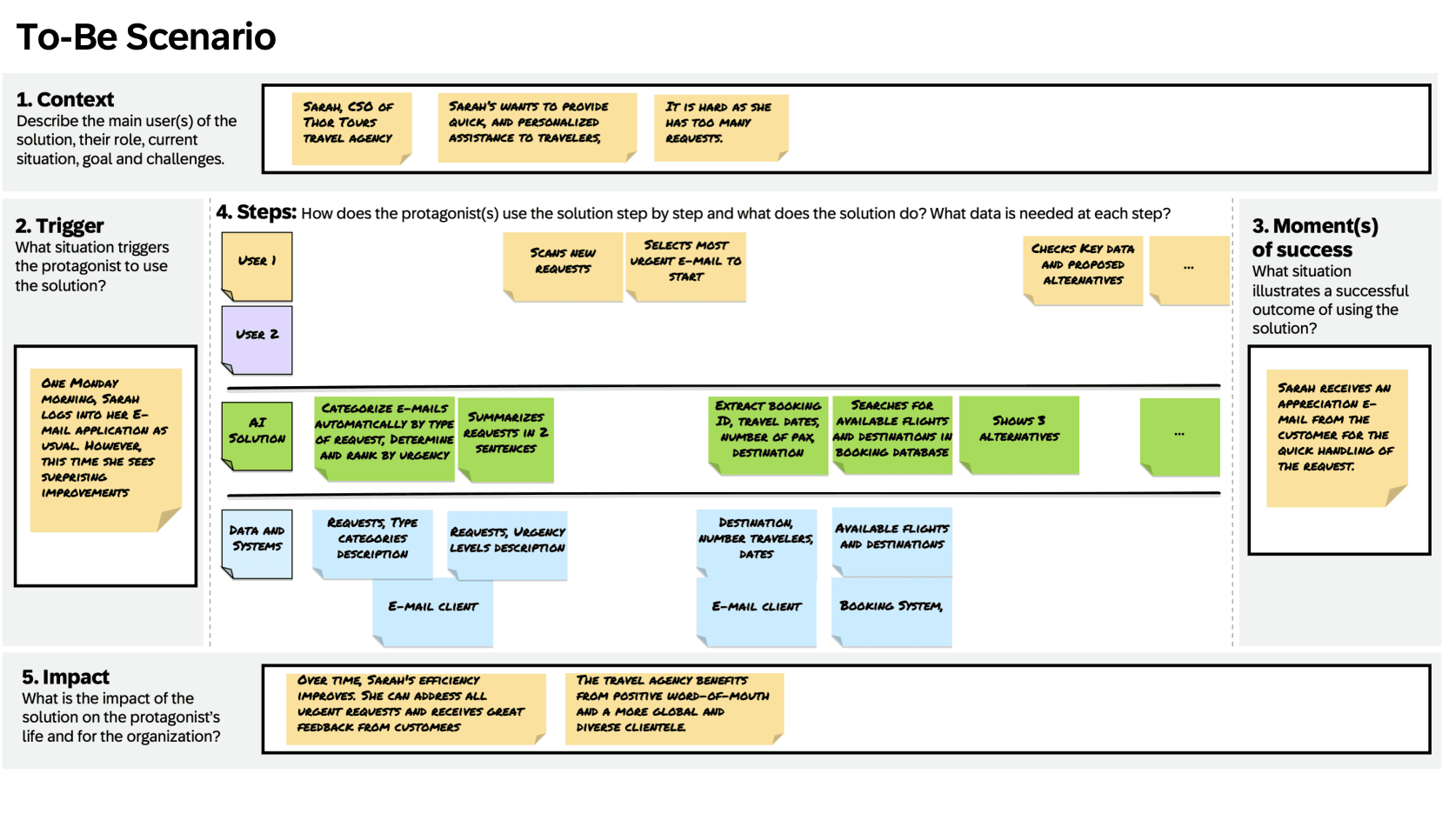
This workshop is designed to explore user objectives and challenges within a specific use case or solution, and to define a future scenario that leverages AI capabilities to address these challenges.
Goal
Understand the current (as-is) user objectives and challenges, then design a future (to-be) scenario that leverages AI to solve them.
How it works
A clear vision of an AI-enhanced solution, with defined user journeys and scenarios ready for prototyping.
Outcome
High-potential, business-aligned AI use case(s) to take into design and prototyping phases.
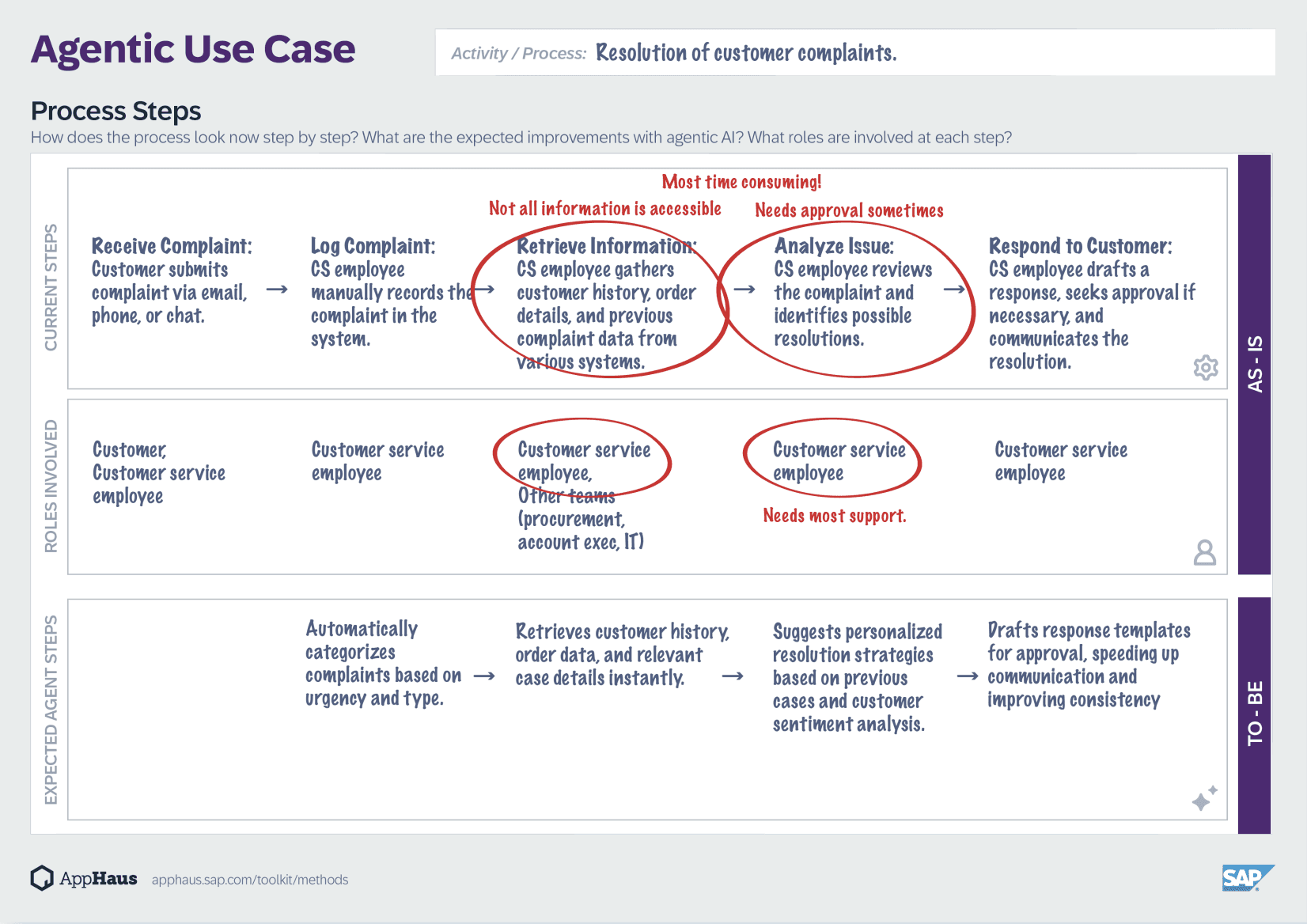
This workshop helps participants understand the unique role of agentic AI — what it’s suited for, and how it differs from other automation and AI technologies. By the end, teams will have identified high-value agentic use cases and documented one in detail, ready to take forward.
Goal
Understand the power of agentic AI, how it differs from traditional automation, and identify high-value agent use cases that can drive productivity.
How it works
Participants learn how agentic AI differs from other automation, discuss its potential, and brainstorm where autonomous agents can deliver the most impact.
Outcome
A documented high-value agentic use case, defined in detail and ready for further design exploration.
This workshop format aims to empower you and your team to decide which tasks an autonomous AI agent should handle and which should remain in human hands.
Goal
Understand the power of agentic AI, how it differs from traditional automation, and identify high-value agent use cases that can drive productivity.
How it works
Clarify goals → Define where AI could create the greatest impact.
Identify responsibilities → Decide which tasks should be owned by the agent vs. humans.
Outline the role → Describe the agent’s required skills and capabilities.
Design the collaboration → Plan how the agent and humans will work together.
Outcome
A design blueprint for an AI agent, including goals, responsibilities, and interaction model—ready for prototyping and validation.
Reflections
Across four workshops, I learned that AI innovation succeeds by aligning business goals, technical feasibility, and human needs—not technology alone. The AI Innovation Toolkit provided structure, but true impact stemmed from guiding teams to ask the right questions, prioritize effectively, and visualize actionable possibilities immediately.