HASSO-PLATTNER INNOVATION AWARDS NOMINEE 2025!
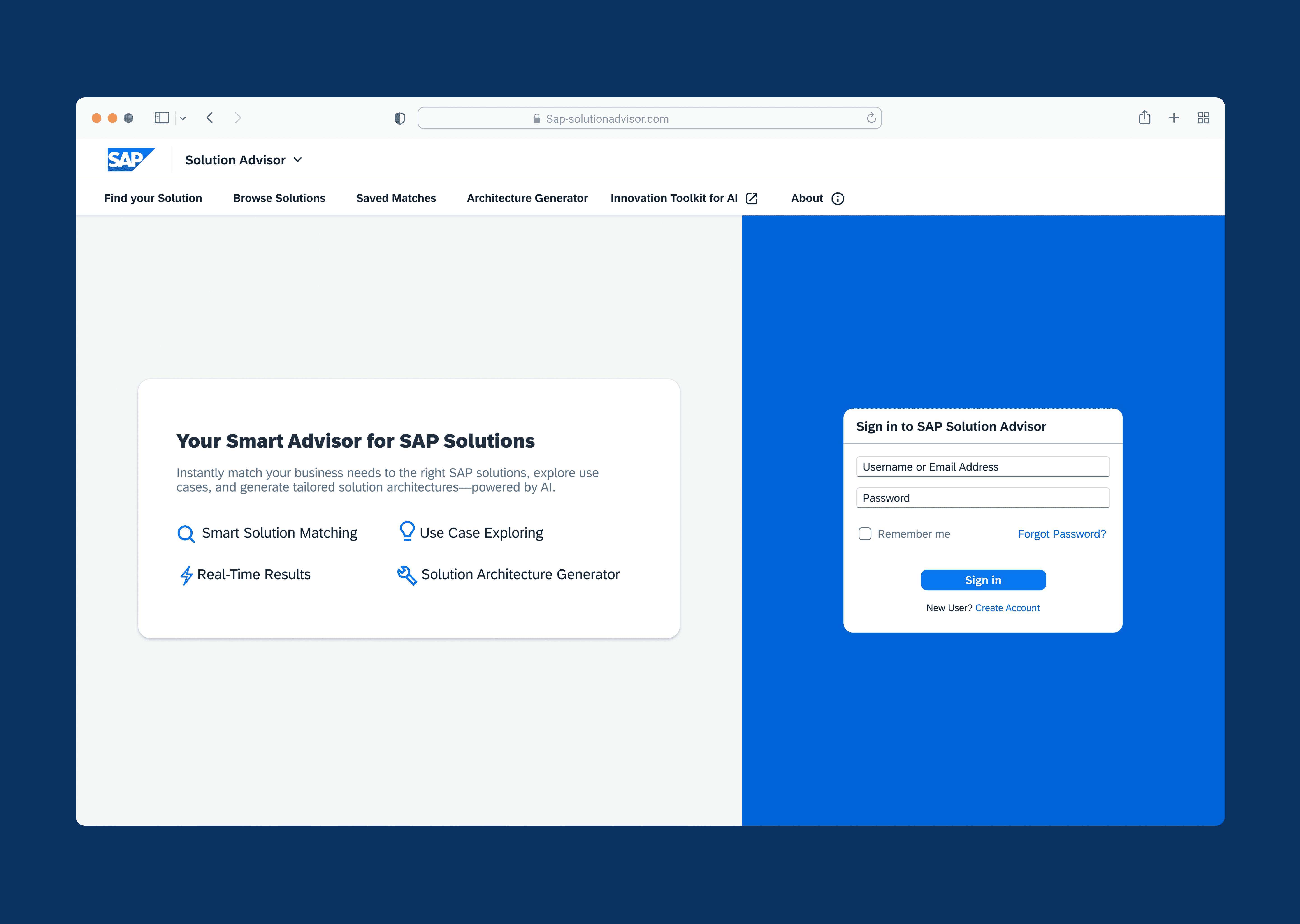
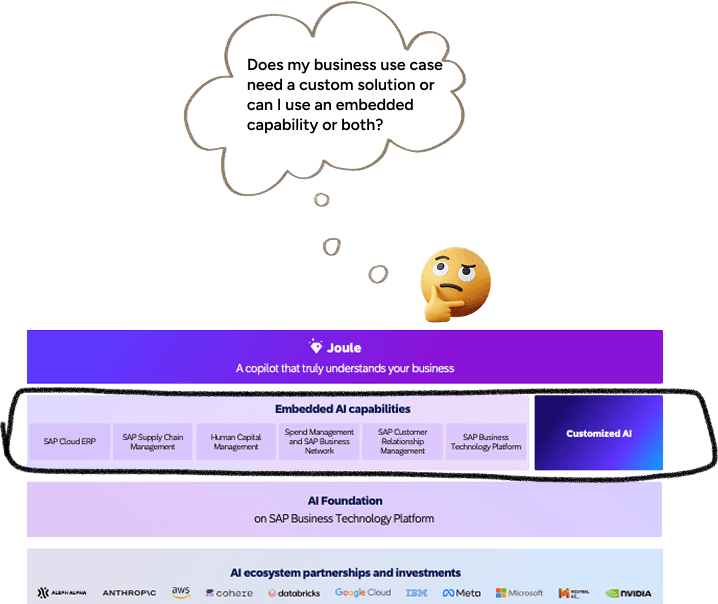
SAP customers often spent hours or even weeks determining whether a business need required a custom build or could be addressed with an existing SAP solution. I designed an AI-powered Advisor Tool that reduces this decision-making process to under 2 minutes.
My Role: Lead UX Designer
Team: 2 Developers, 2 Enterprise Architects, 1 Project Manager
Tools: 2 Figma, SAP Fiori Design Kit
The Problem
Finding the right SAP solution for customers was slow, manual, and confusing.
The solution
An AI-powered Solution Advisor Tool that instantly matches customer needs to the right SAP offerings.
Impact
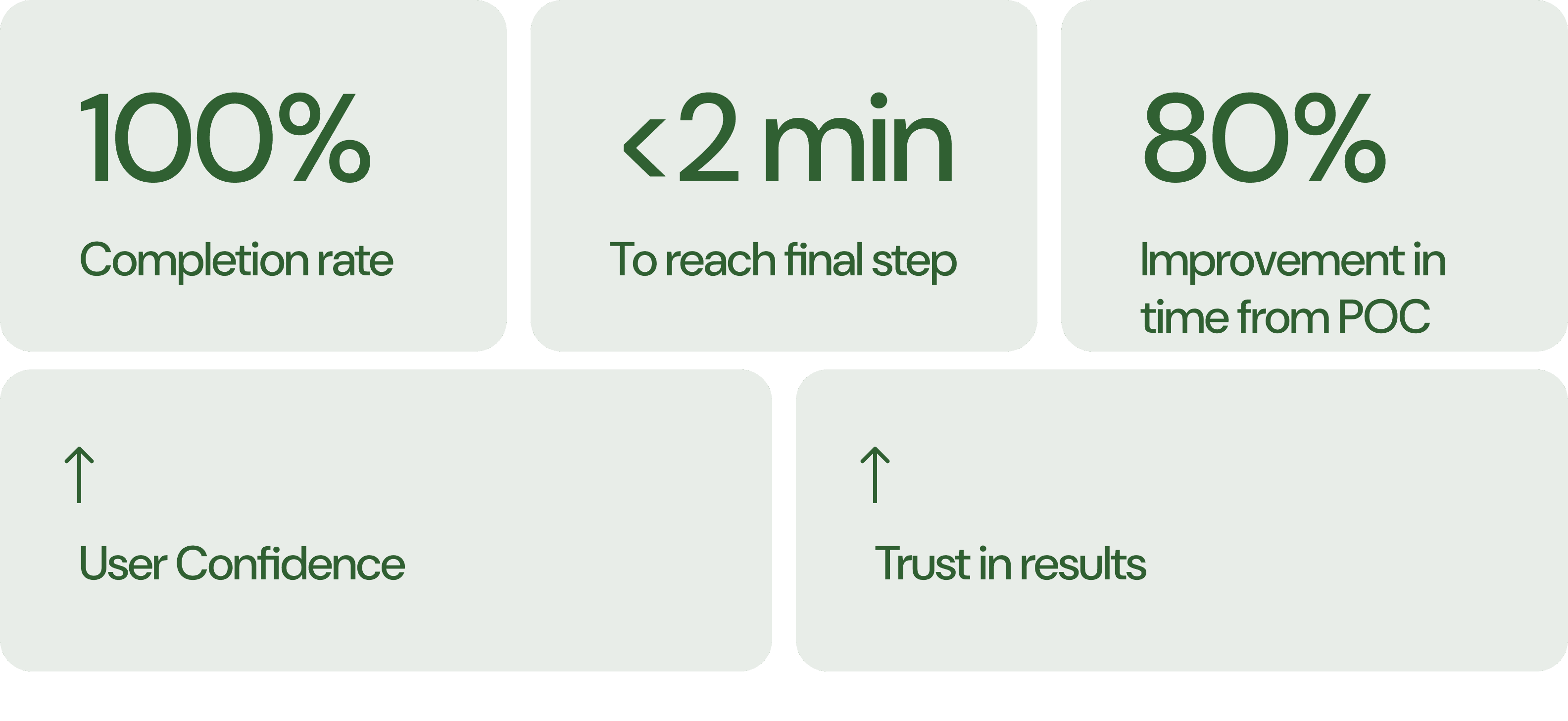
Discovery time reduced from 10 min → 2 min
Nominated for the Hasso Plattner Innovation Award
Action
What led to the solution?
AI Design Thinking Workshop
User Interviews
Cross-functional Collaboration
CONTEXT
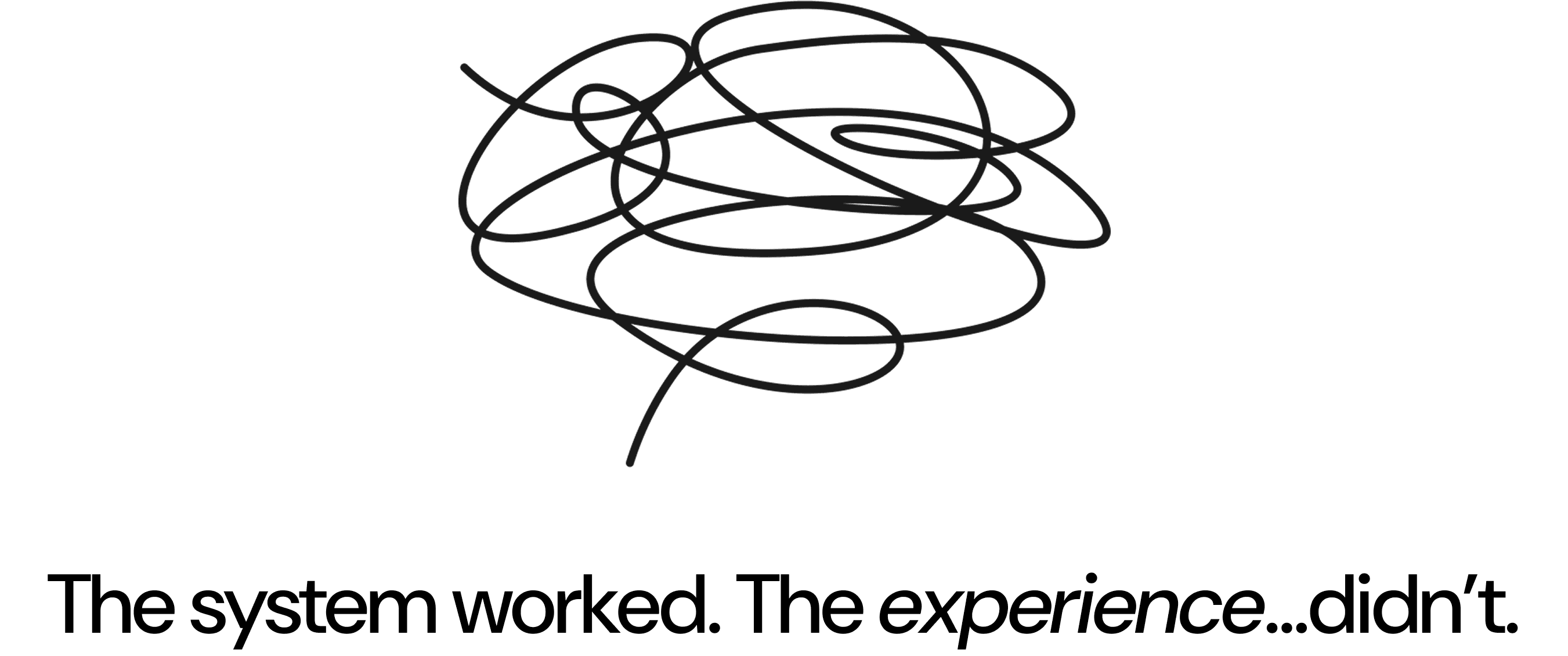
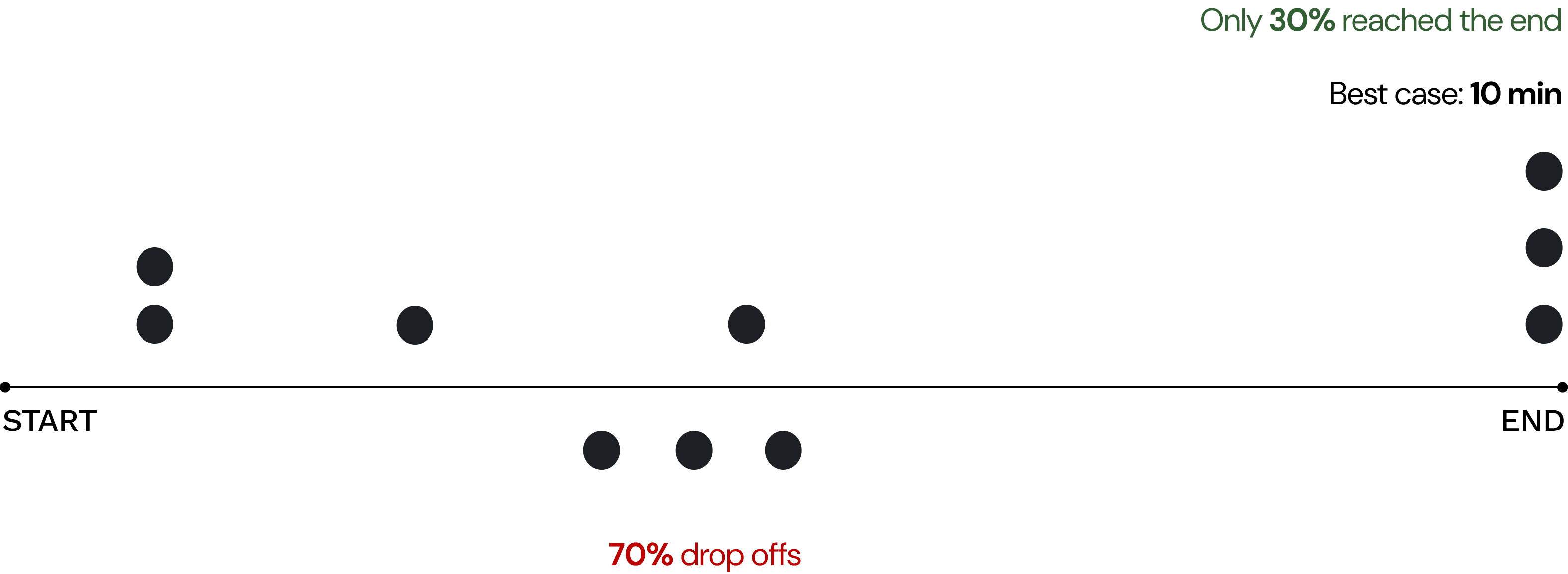
While the AI worked wonders - turning weeks of back-and-forth into minutes and set the stage for faster sales cycles and higher-quality leads, the experience itself was extremely technical and very hard to use.
THE CHALLENGE
RESEARCH
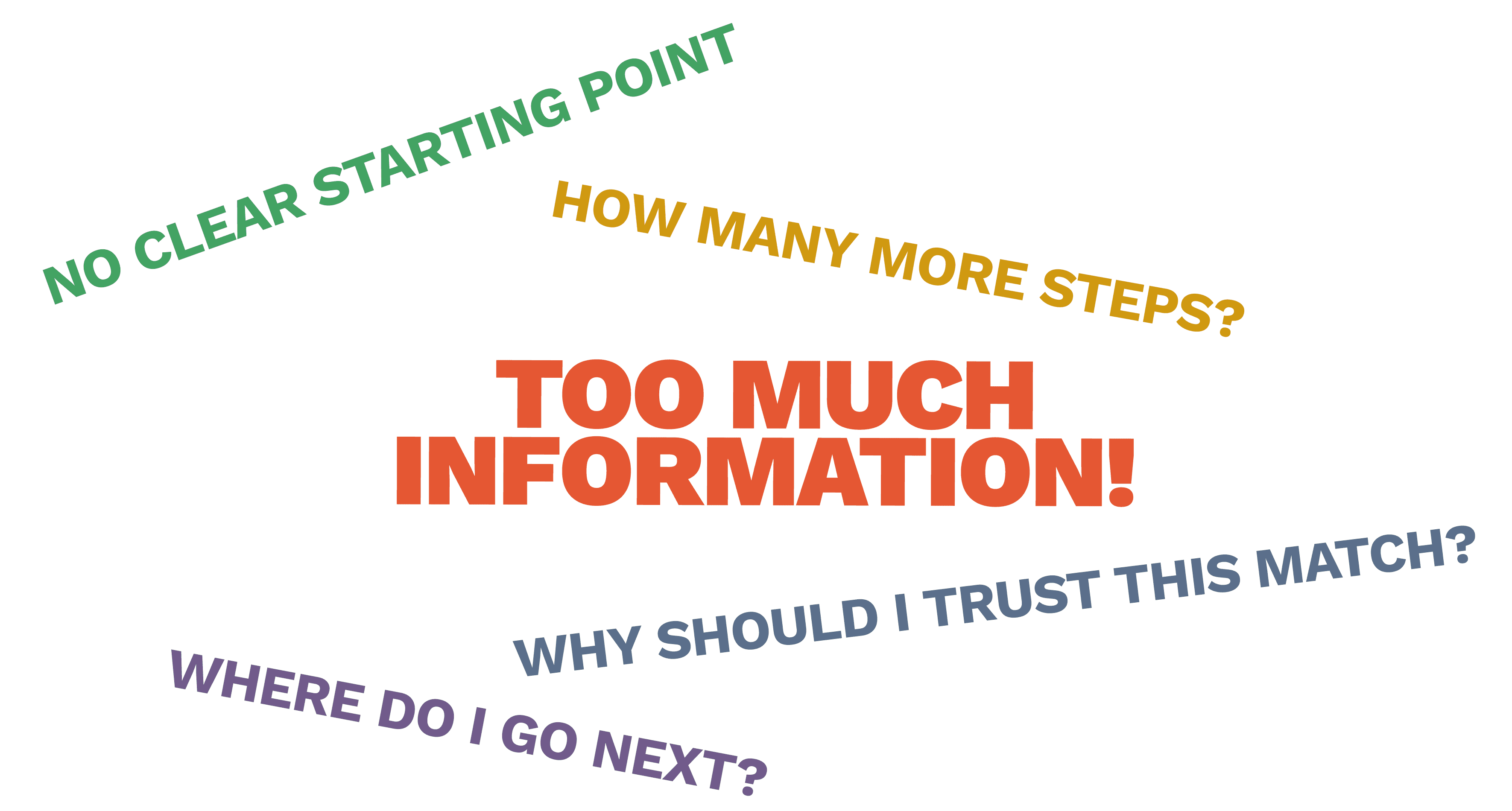
Understanding pain points was achieved through a comprehensive AI design thinking workshop, stakeholder interviews, and user testing sessions. These methods provided deep insights into user challenges, expectations, and trust issues, guiding the design toward more intuitive, transparent, and user-friendly AI solutions.

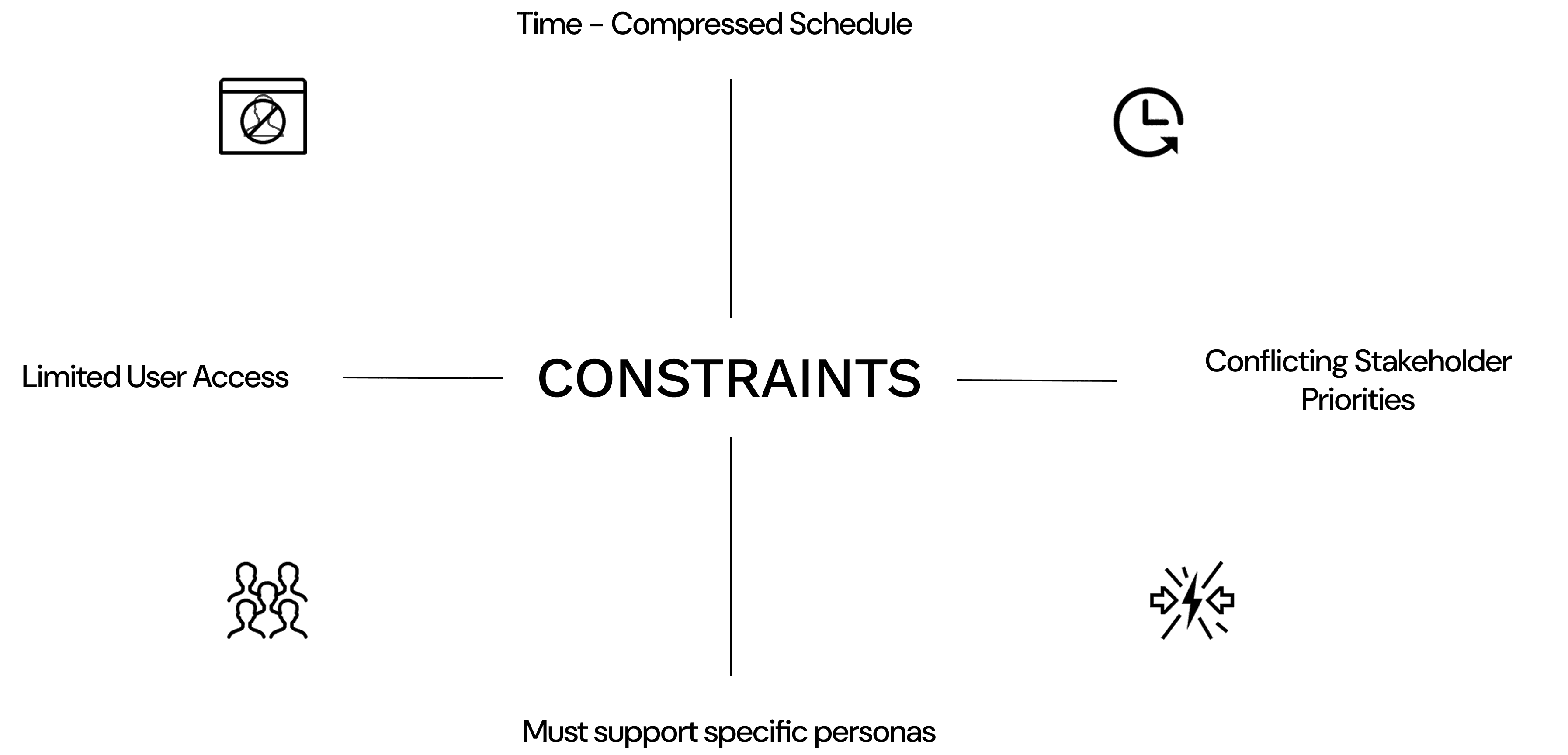
CONSTRAINTS
There were several constraints for this project, especially since the team and I wanted to pitch this for the Hasso-Plattner Innovation Awards to get further sponsorship to work on building the entire experience as an official SAP tool.
STAKEHOLDER ALIGNMENT
The Challenge
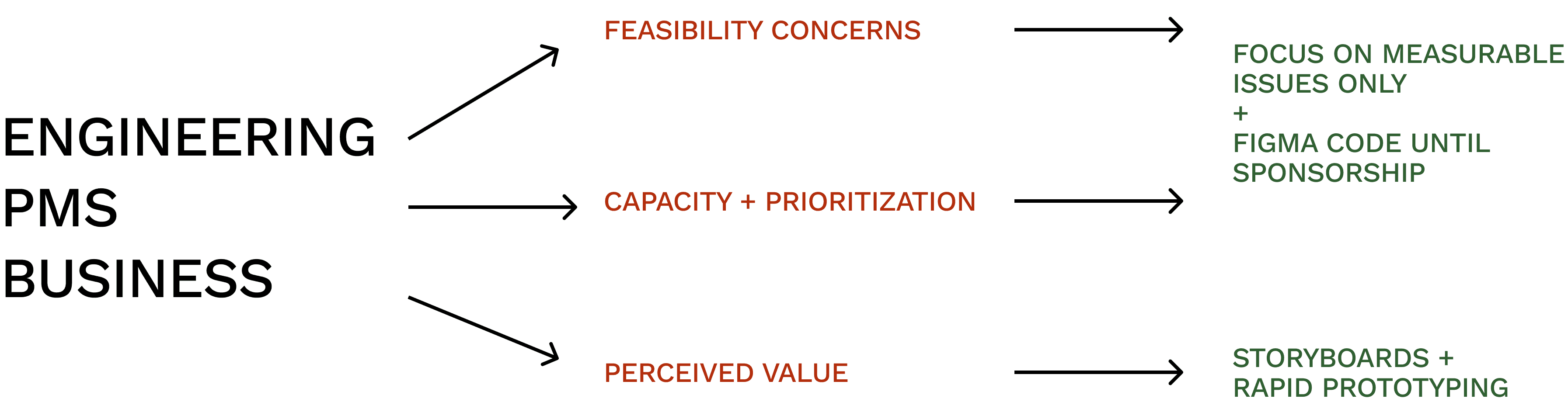
Engineering: Concerned about feasibility and time required to implement changes.
Product Managers: Worried about team capacity and prioritization of work.
Business: Questioned the perceived value of redesign efforts.
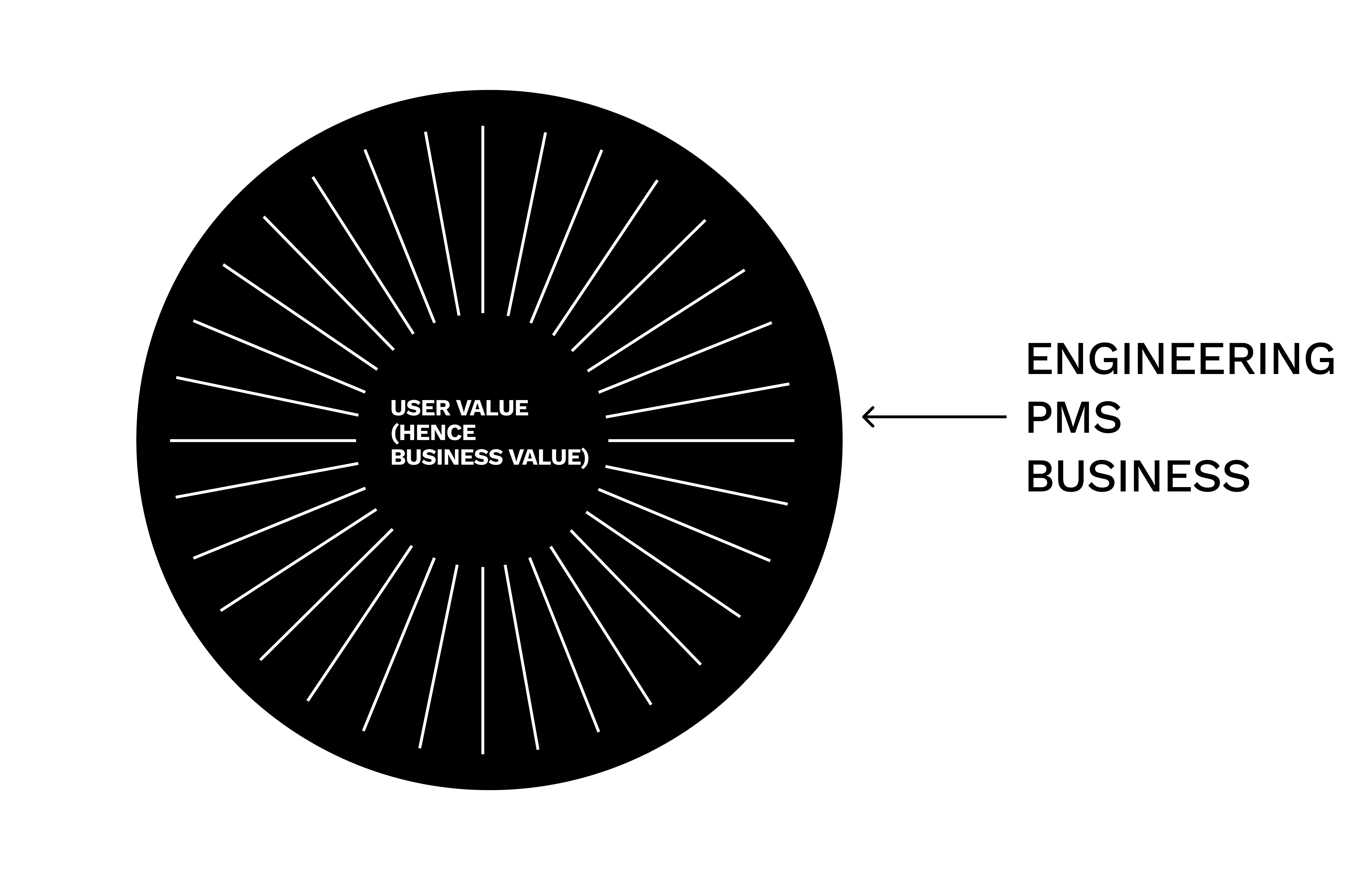
As I was thinking about how to approach this, I realized everyone had one common goal.
My Approach - Alignment Session:
Synthesized research findings into clear insights.
Storyboards created from a user persona perspective to illustrate pain points and key usability issues.
Ensured all stakeholders saw the same story, building a shared understanding of the problems.
Feasibility and Capacity Concerns :
Focused on high-impact issues
Used Figma code for a rapid prototype to secure future sponsorship
Business needed to see the value in the redesign:
Leveraged Figma Make to quickly prototype and demonstrate value to stakeholders.
Outcome
Stakeholders reached consensus on scope and priorities.
Everyone aligned on design direction, reducing friction and accelerating decision-making.
IDEATION
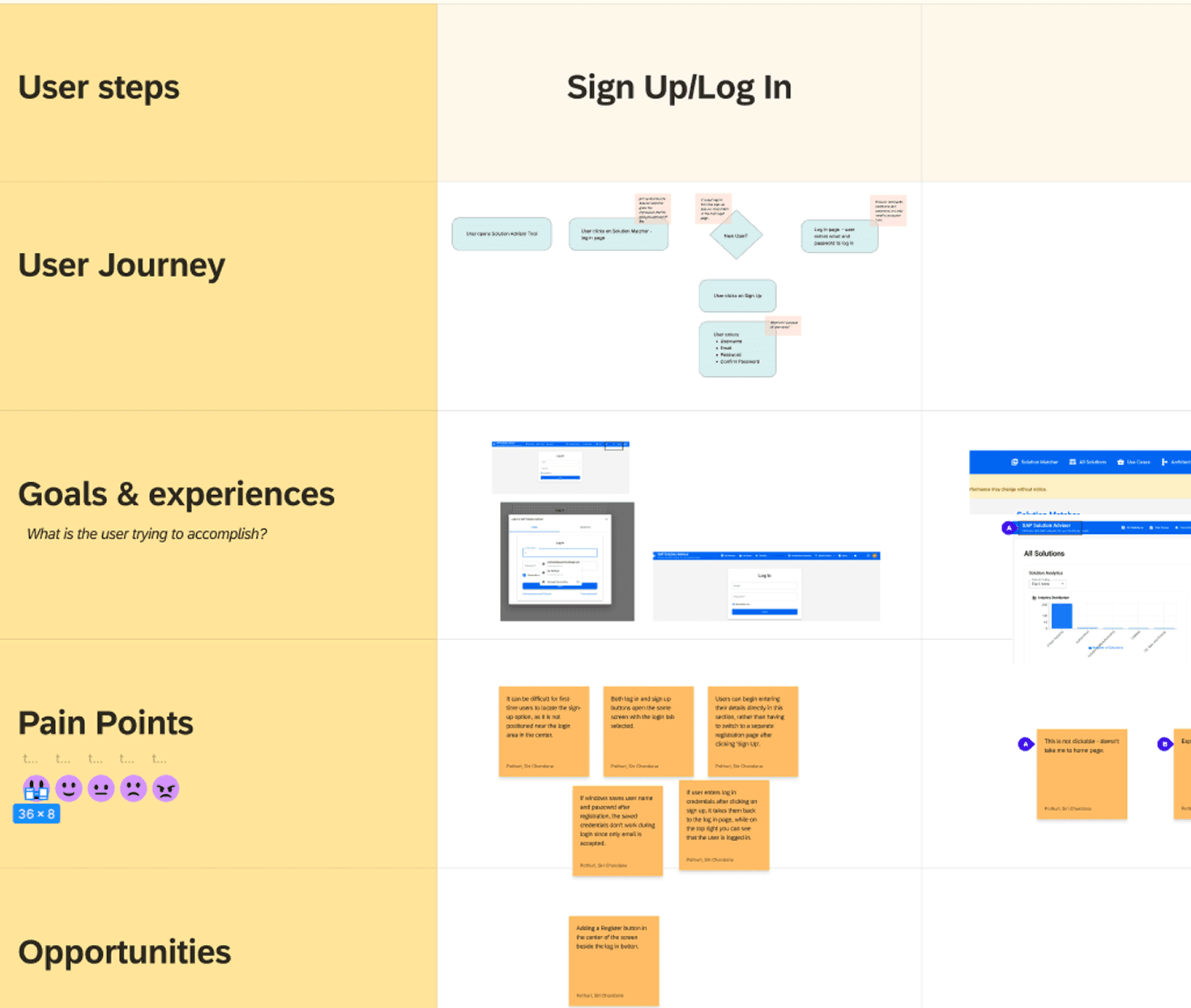
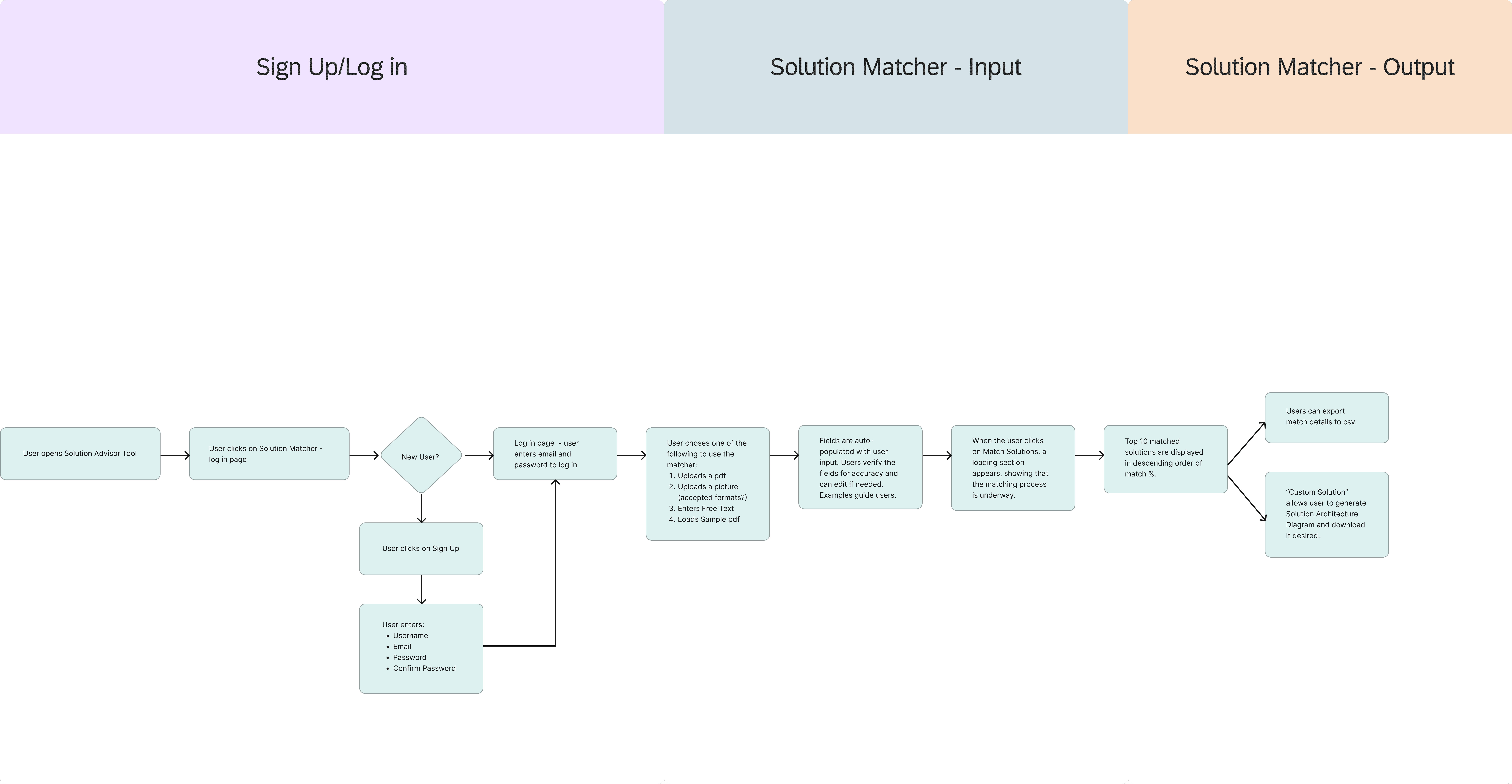
Mapped the current 'As-Is' journey to uncover key pain points and friction, then designed the 'To-Be' journey to highlight opportunities for clarity, efficiency, and trust.
DESIGN
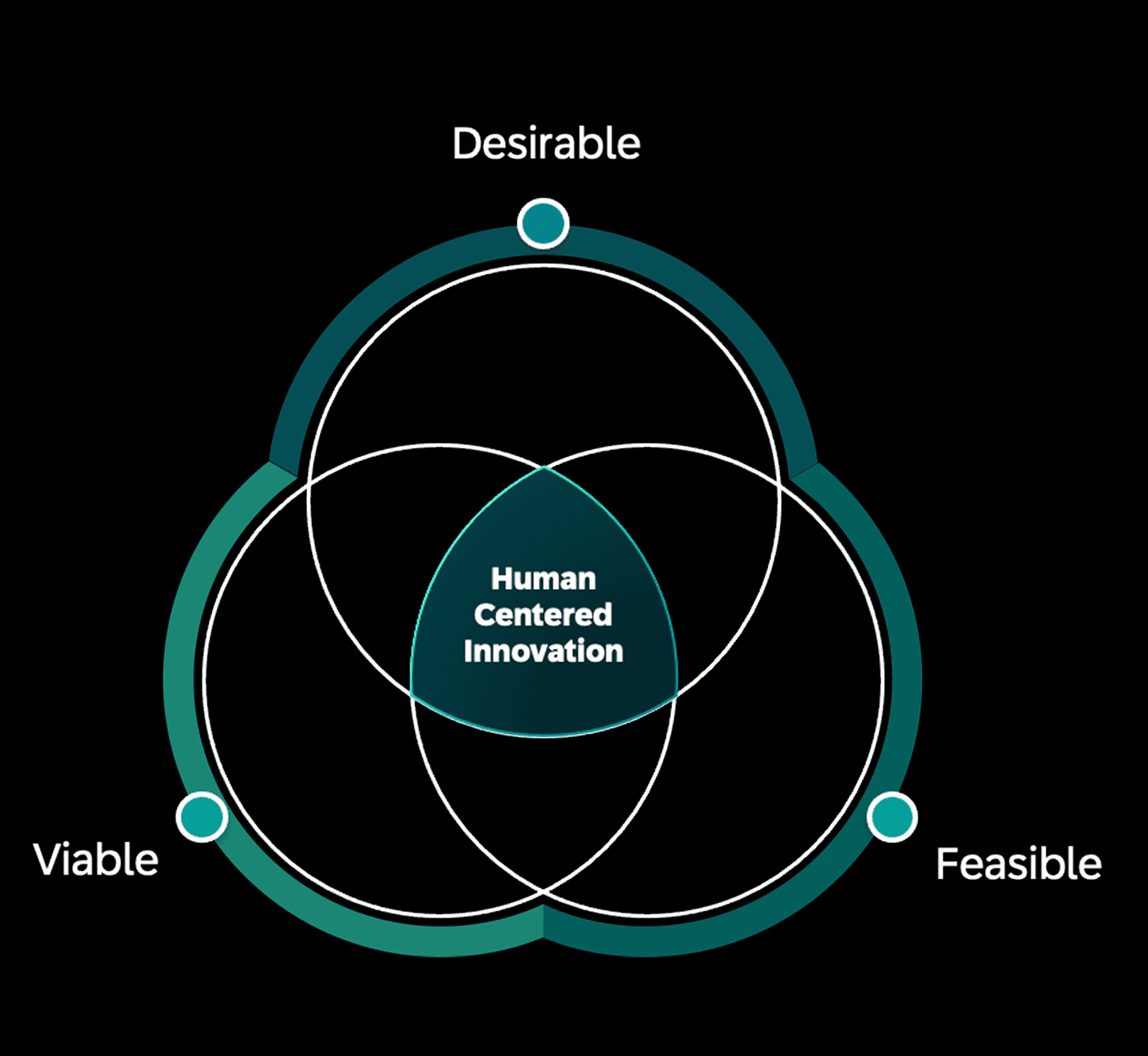
I redesigned the experience following SAP Fiori design guidelines Human-AI interaction principles. This approach ensured a consistent, intuitive interface while promoting transparent and user-centered AI collaboration.
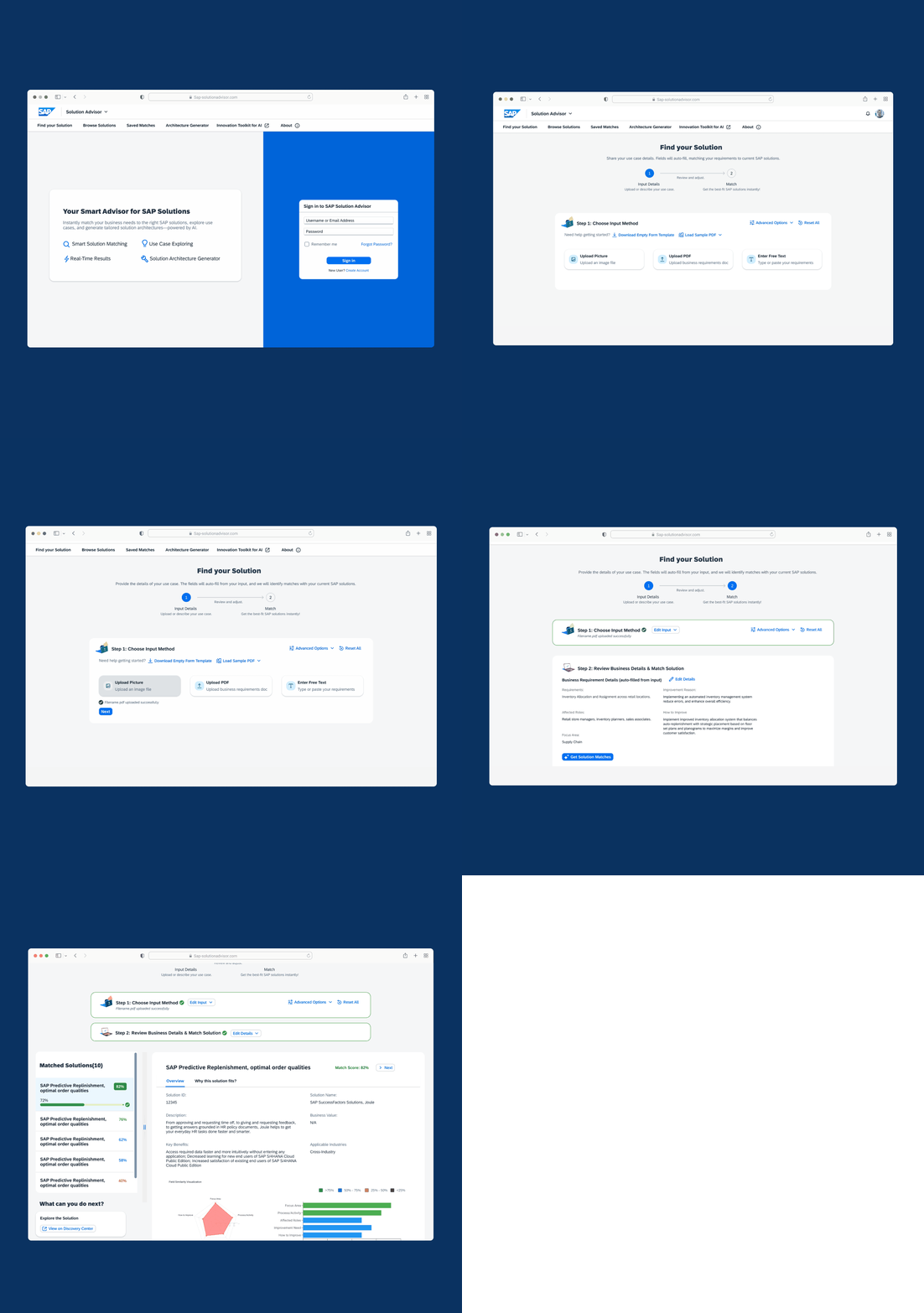
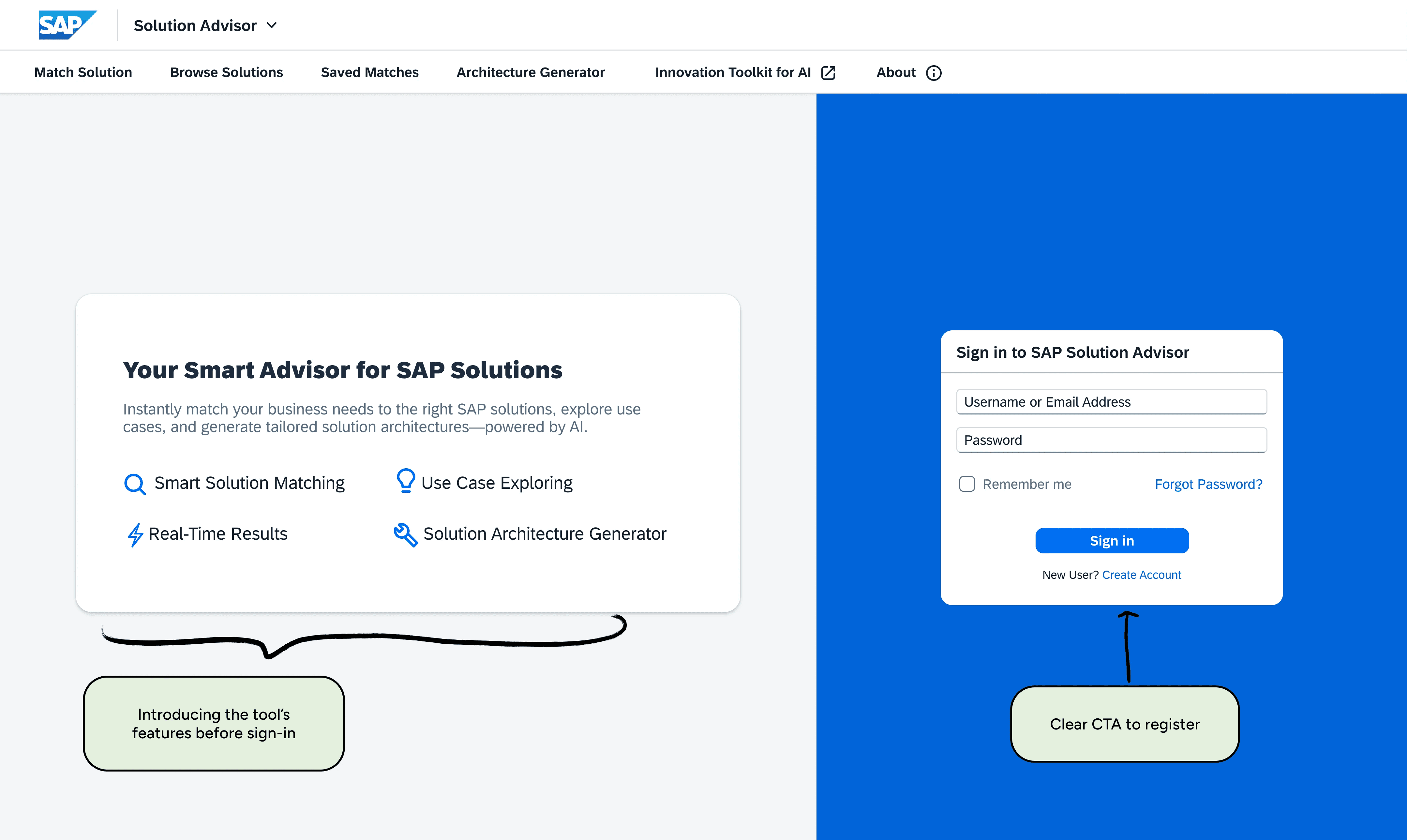
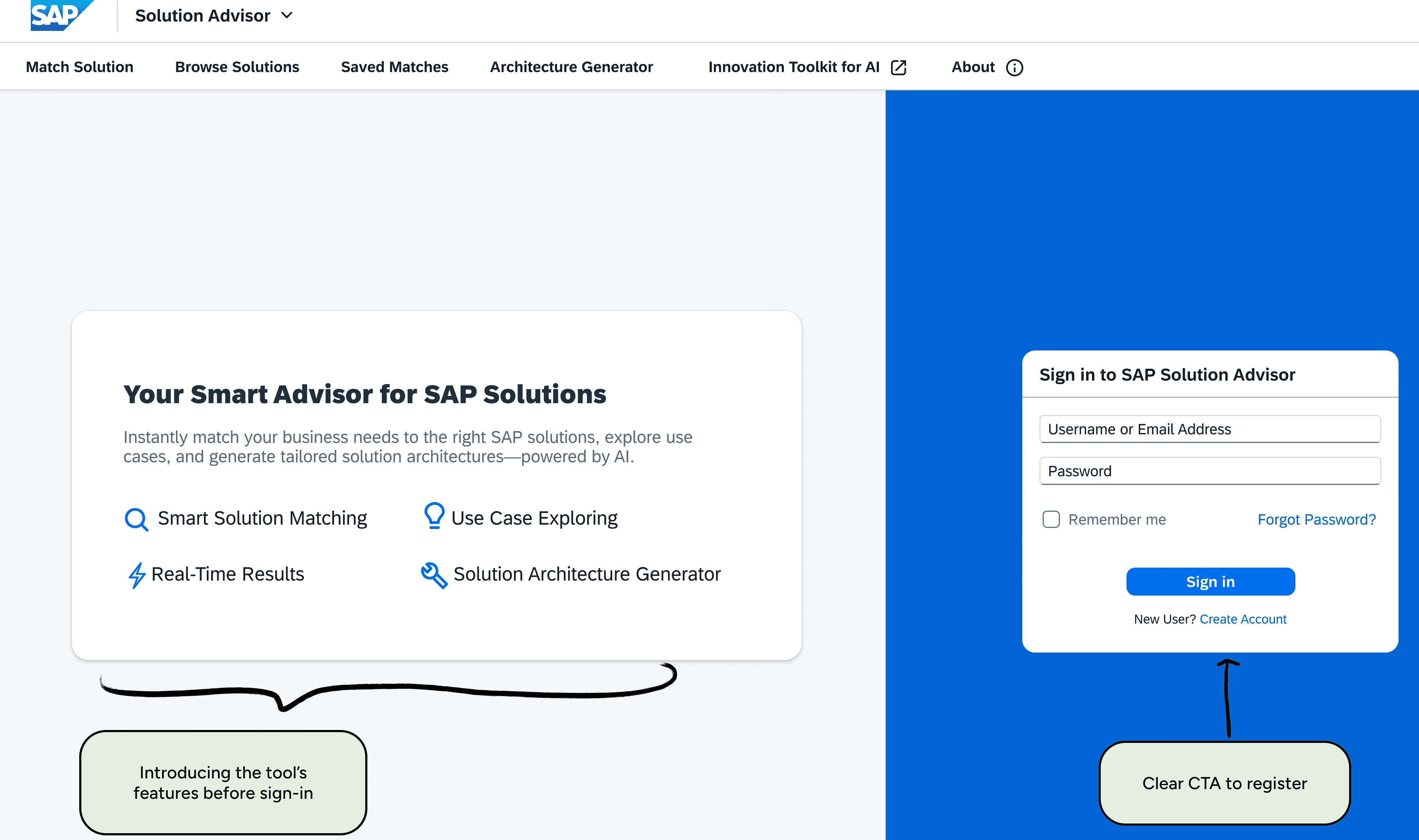
Previous design hid features and lacked obvious signup. Now, a prominent call-to-action showcases the Smart Advisor tool upfront, guiding users seamlessly to value.
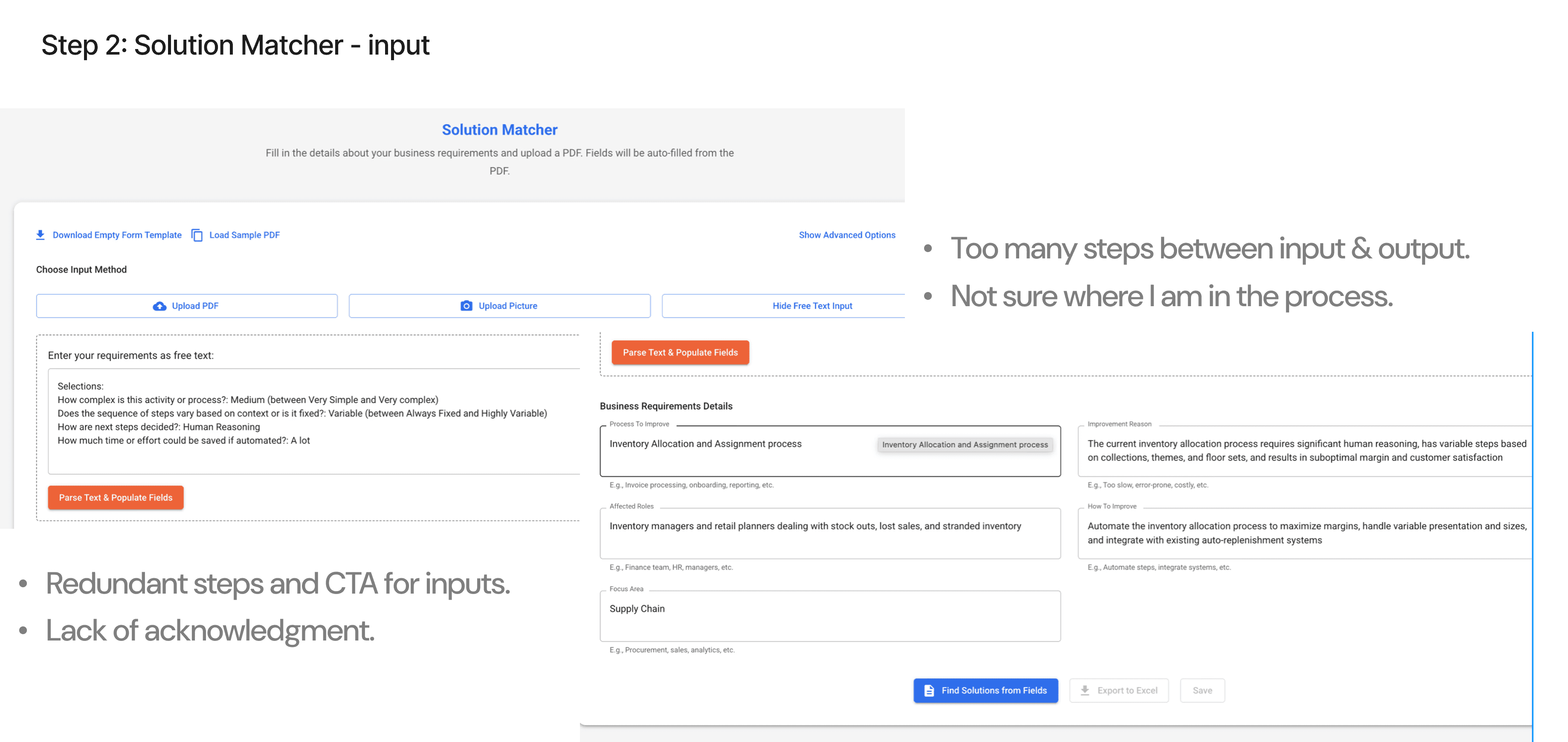
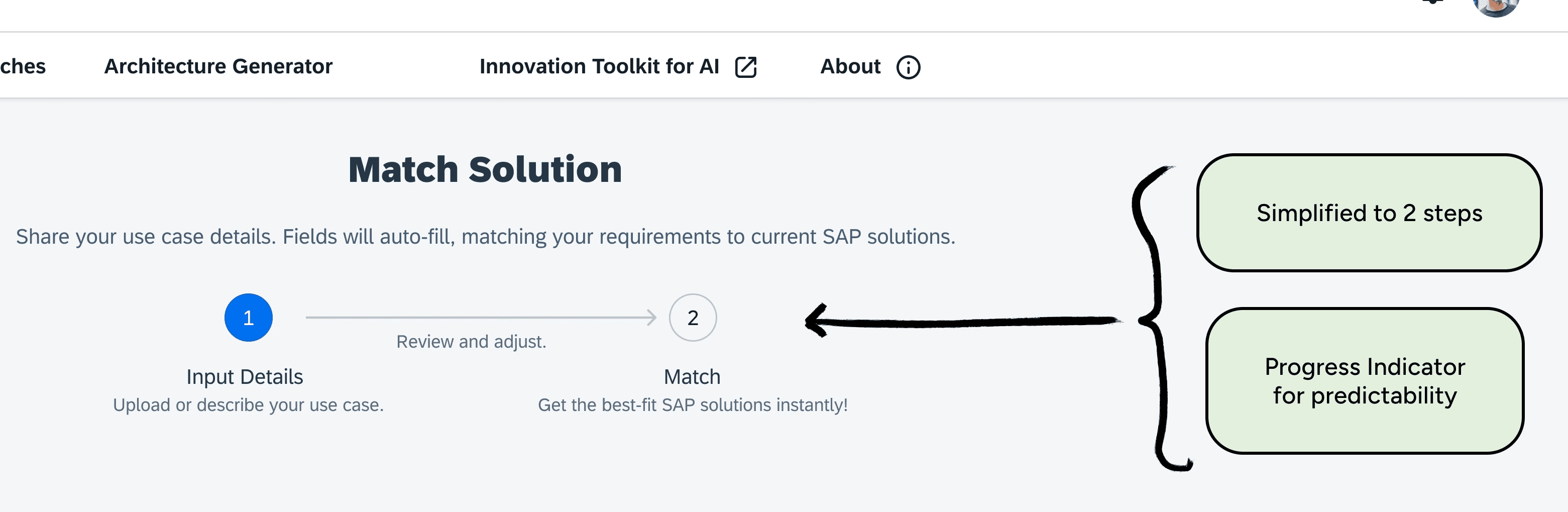
Users dropped off at solution matcher due to unclear business input step. Redesigned into two guided steps with progress indicator, three labeled input options, and explicit requirements, ensuring smooth completion.
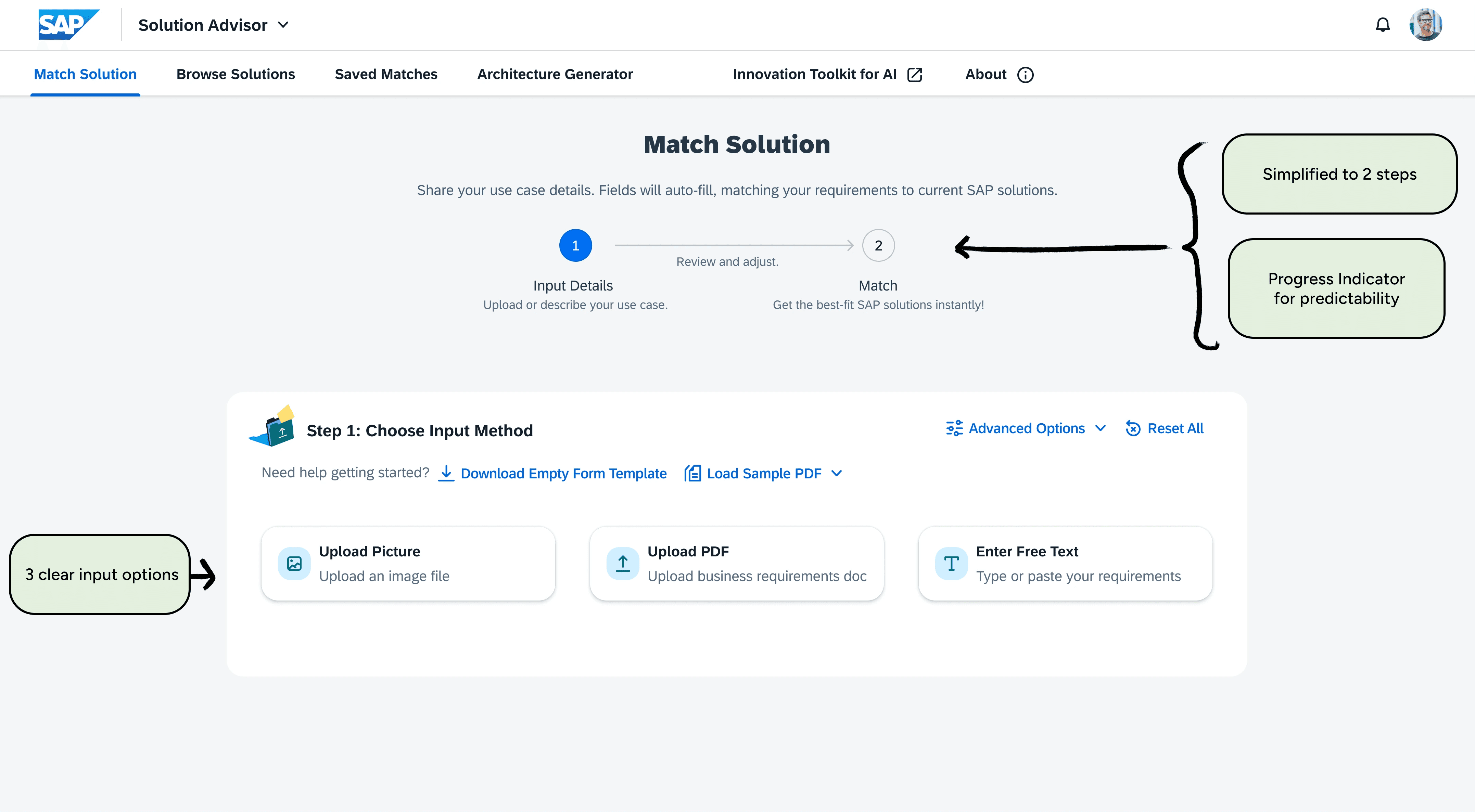
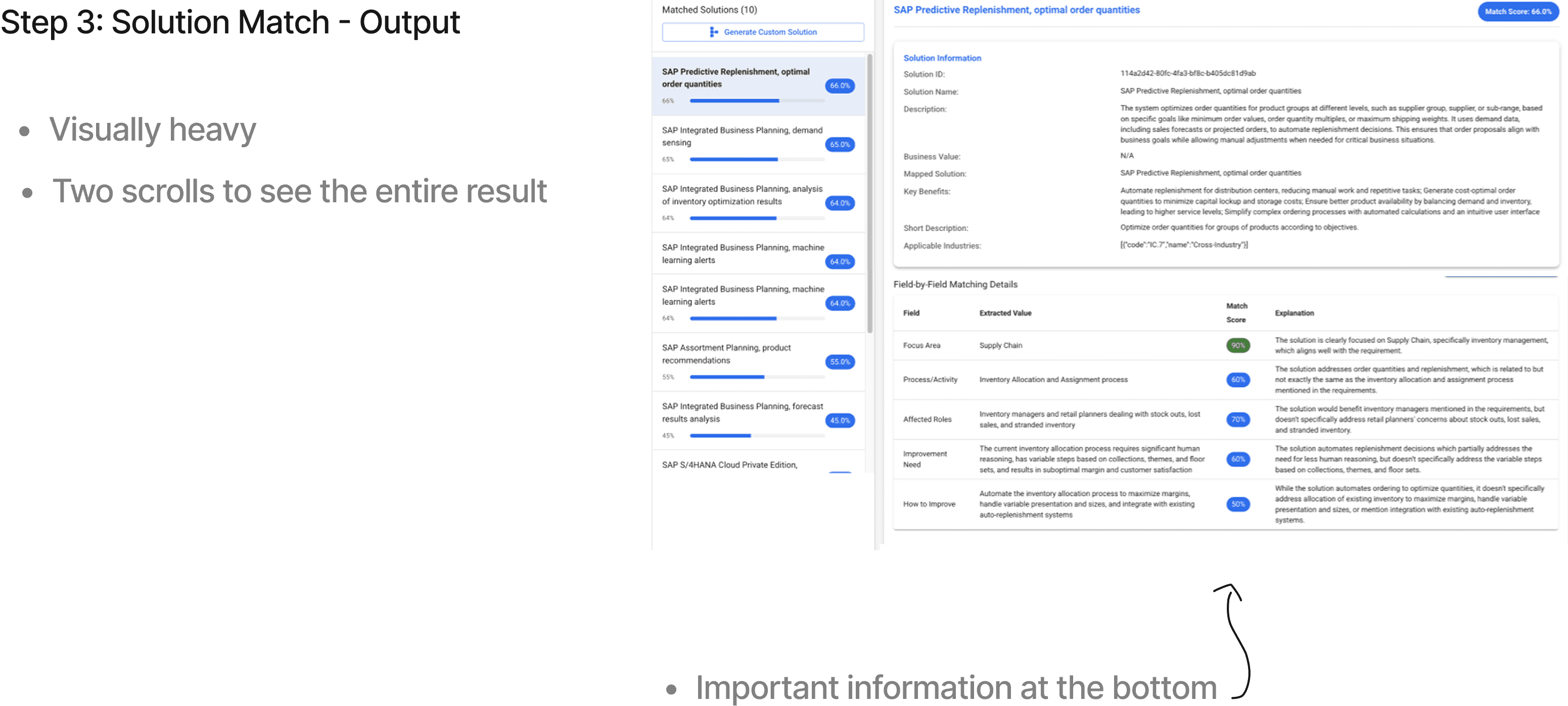
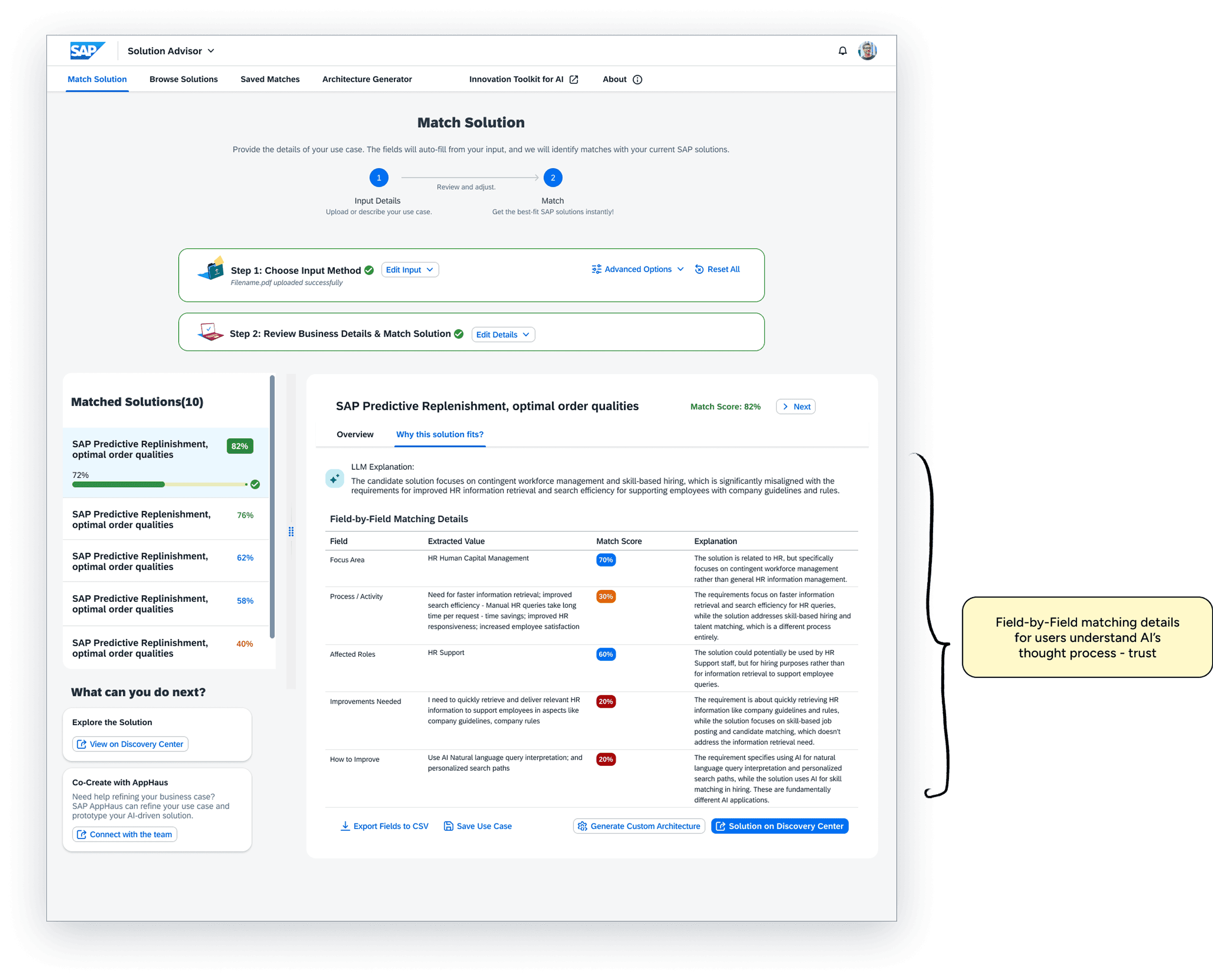
Hidden LLM explanations forced excessive scrolling and overload. Redesigned with tabs to minimize scrolling, surfaced top 5 matching solutions, and added clear headings for seamless next steps.

Impact
The innovation and impact of this redesign led to its submission for the Hasso-Plattner Award 2025, SAP’s highest employee recognition for outstanding and innovative projects that significantly advance SAP’s mission and customer value.
Business Impact
Faster sales cycles.
Reduced solution advisor back-and-forth.
Higher-quality leads.
Increased adoption of embedded AI solutions.
Customer trust.
Reflections
Design builds trust.
Clarity scales.
Storytelling aligns teams.