Lead UX Designer
2 Developers
2 Enterprise Architects
1 Project Manager
Figma
SAP Fiori Design Kit
SAP customers spent hours (if not weeks) figuring out whether a business need required a custom build or could be solved with an existing SAP solution. With the Solution Advisor Tool, it would take them less than 2 minutes.

This manual exploration took hours or even days, requiring technical expertise and deep SAP product knowledge.
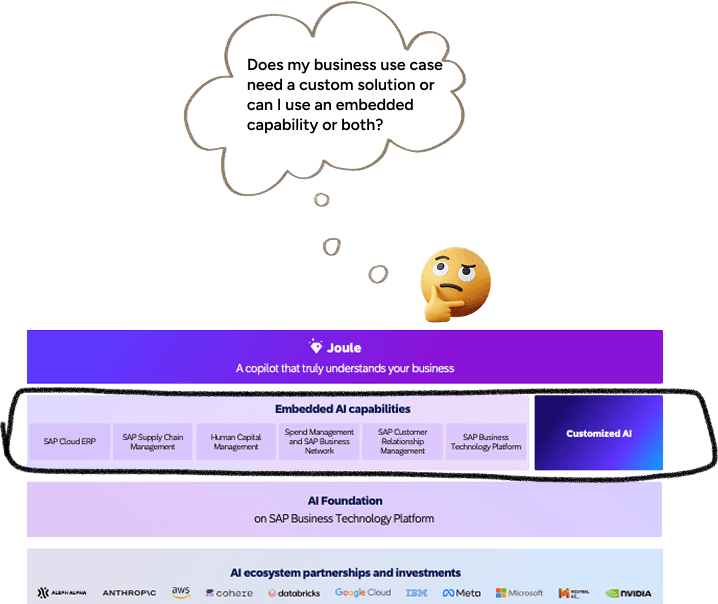
It's goal - to help SAP customers find the right solution match for their business use case.
Users describe their business challenge in plain language / by uploading an image or pdf.
Step 1 -
User inputs the business problem.
Step 2 -
AI interprets the request, begins matching process.
Step 2 -
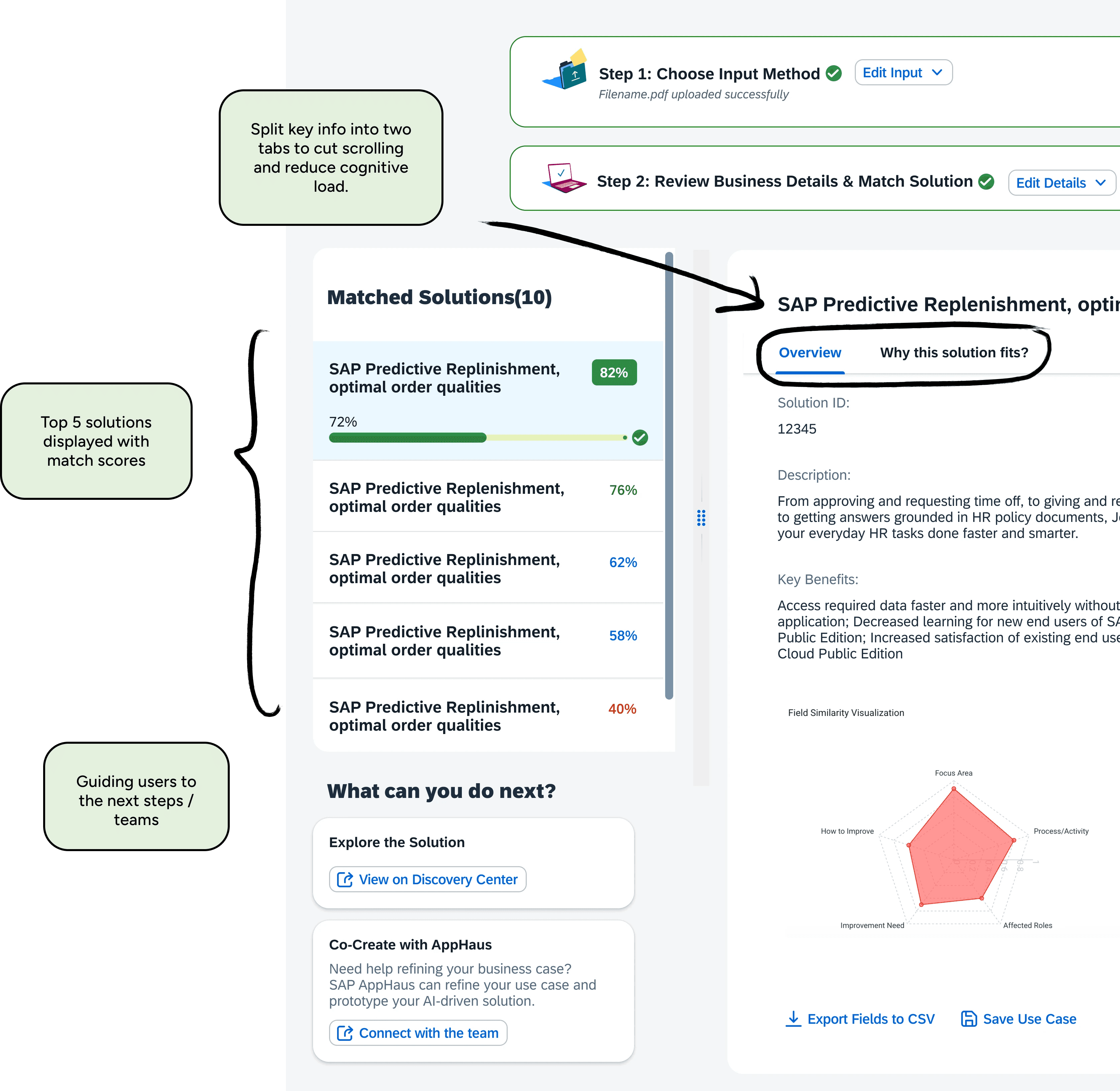
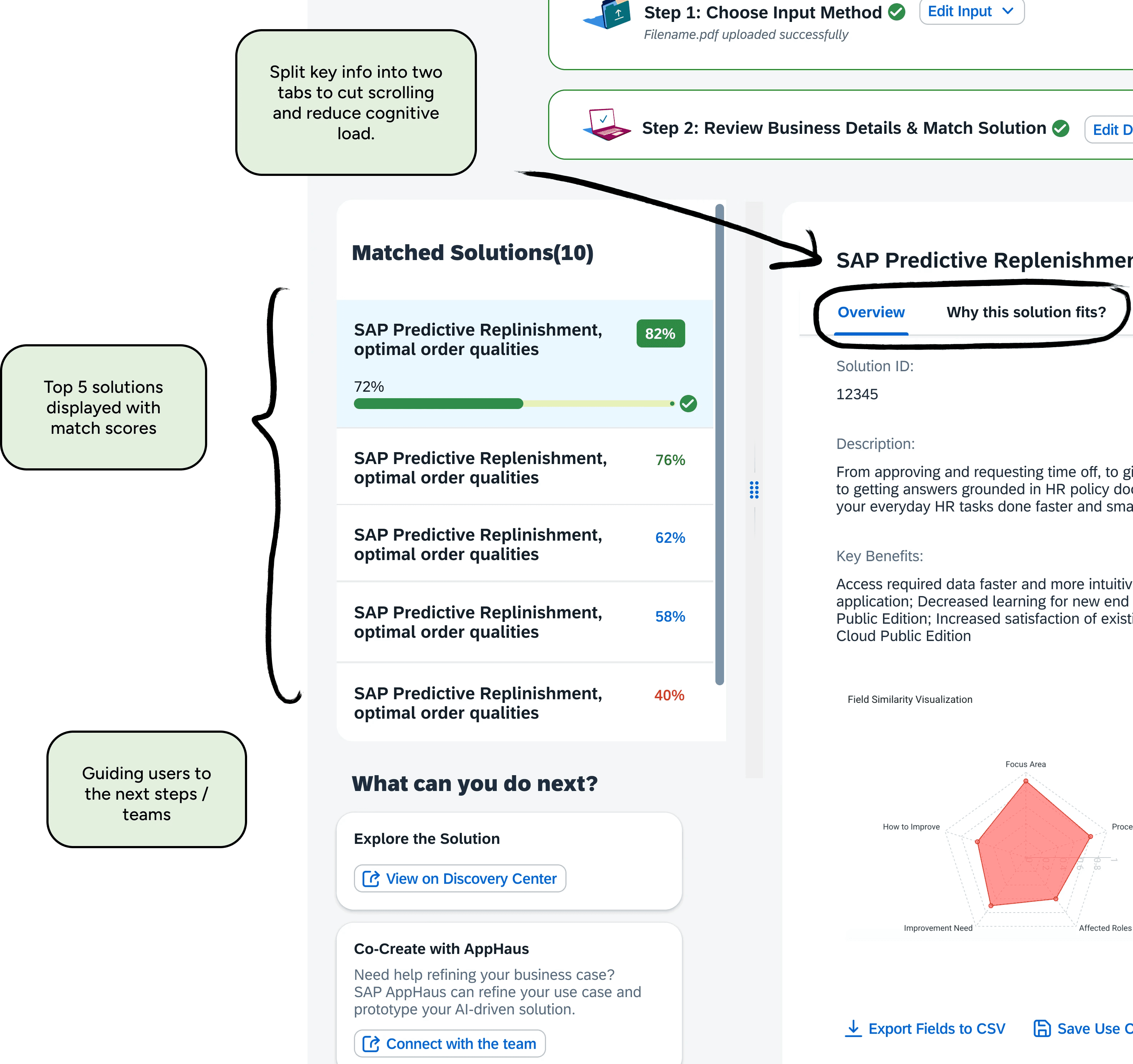
Displays top 10 matches to the user.
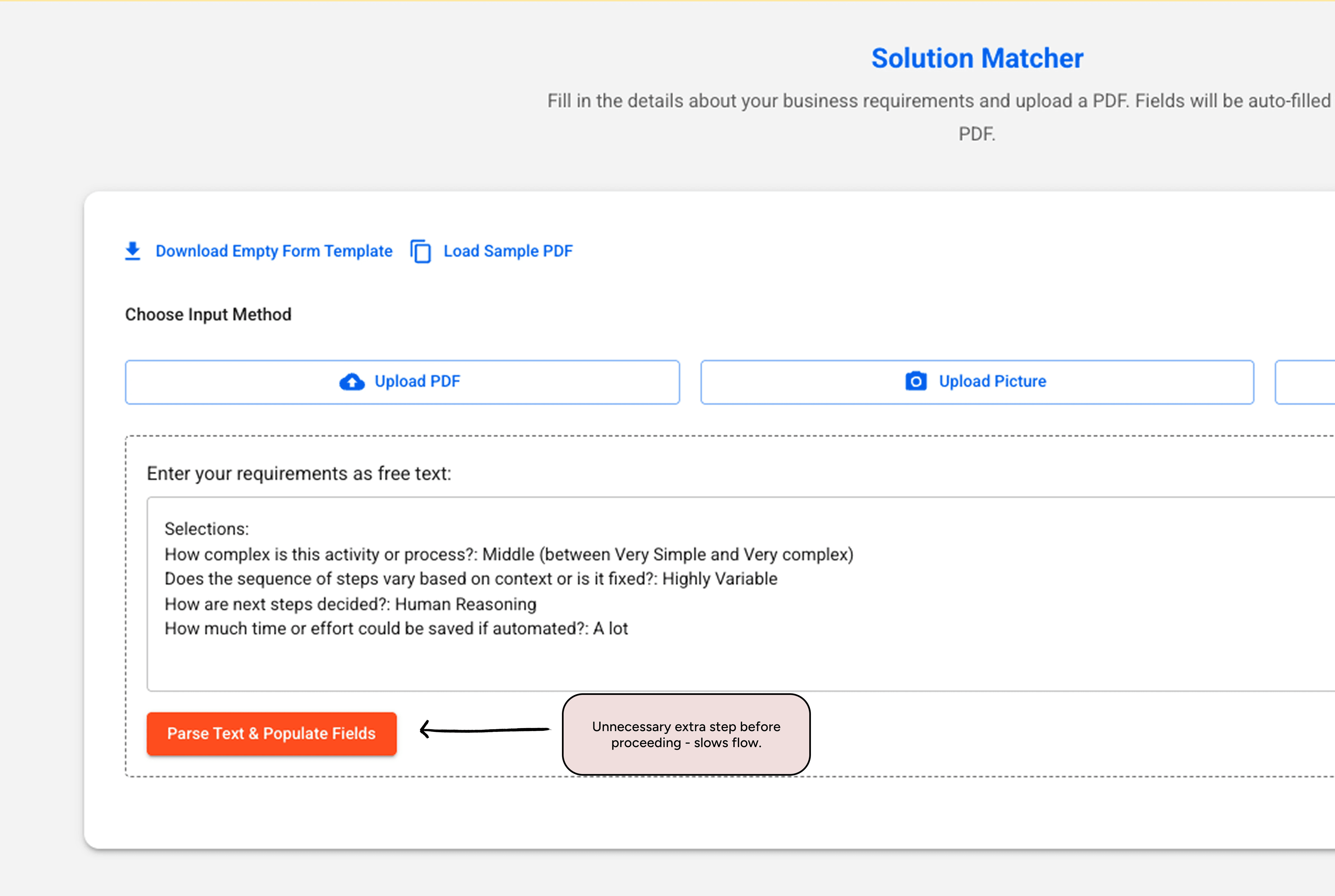
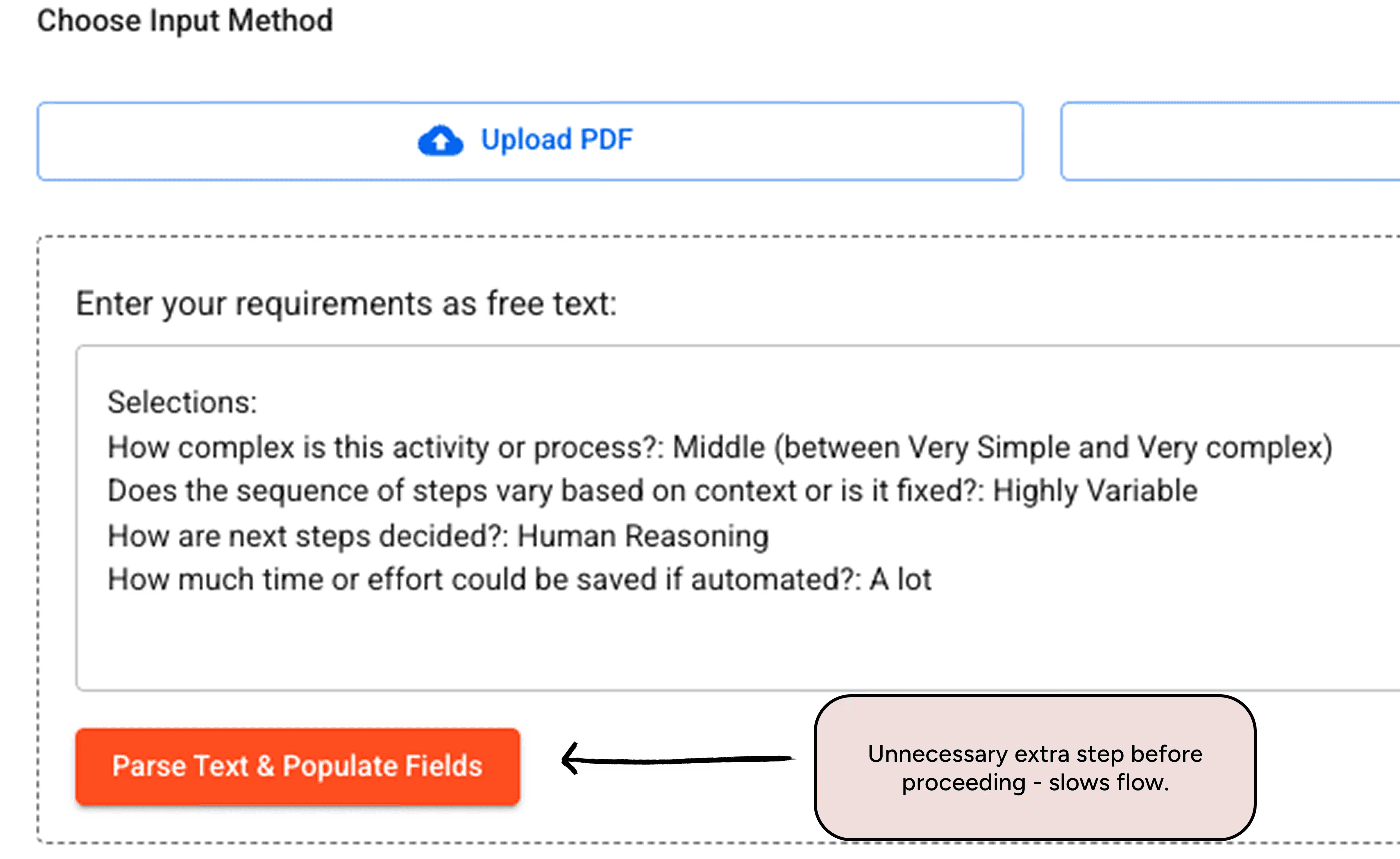
However, this POC was very technical and hard to use. And the biggest challenge of all was to create trust and transparency in the matched solutions given by AI.
The Challenge
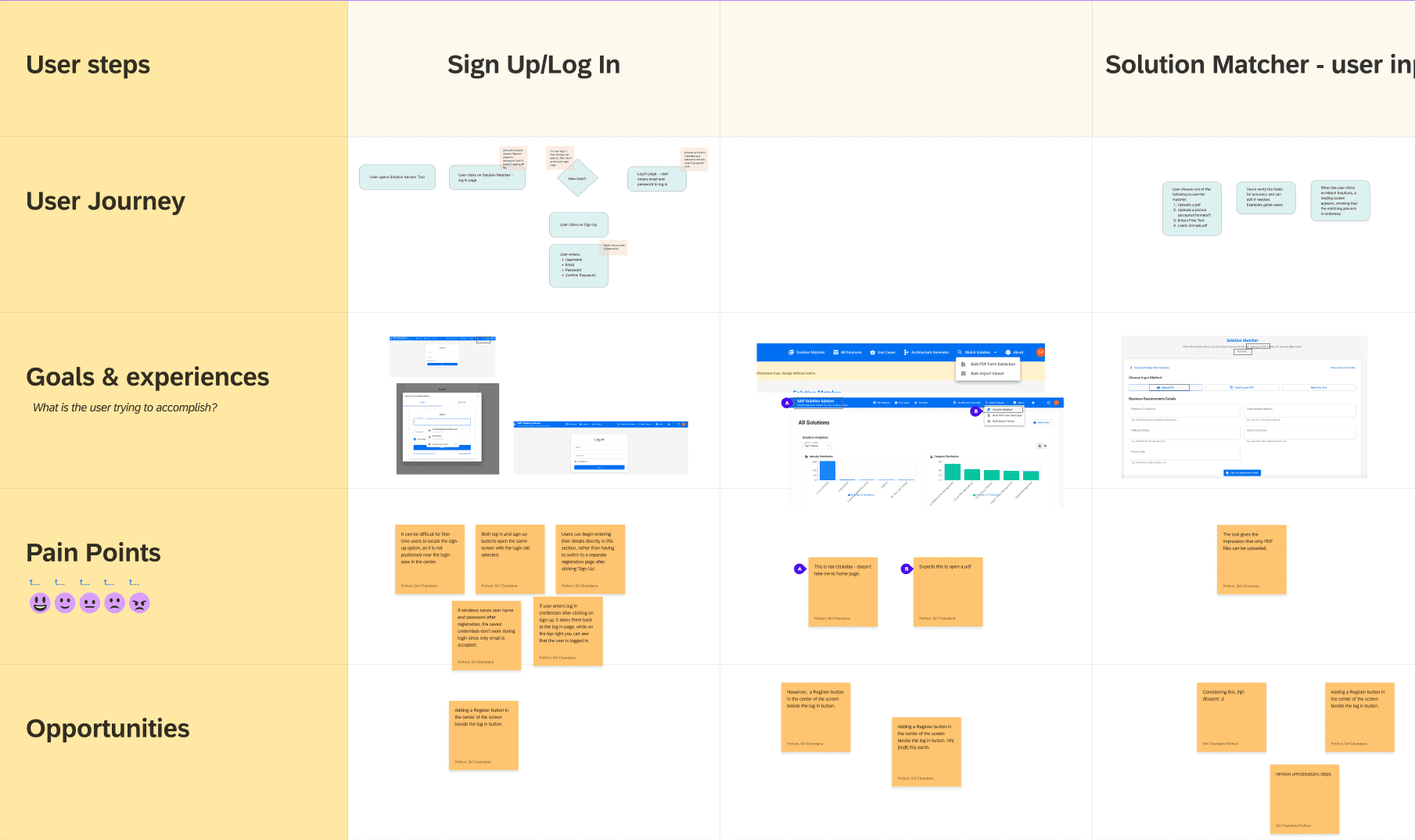
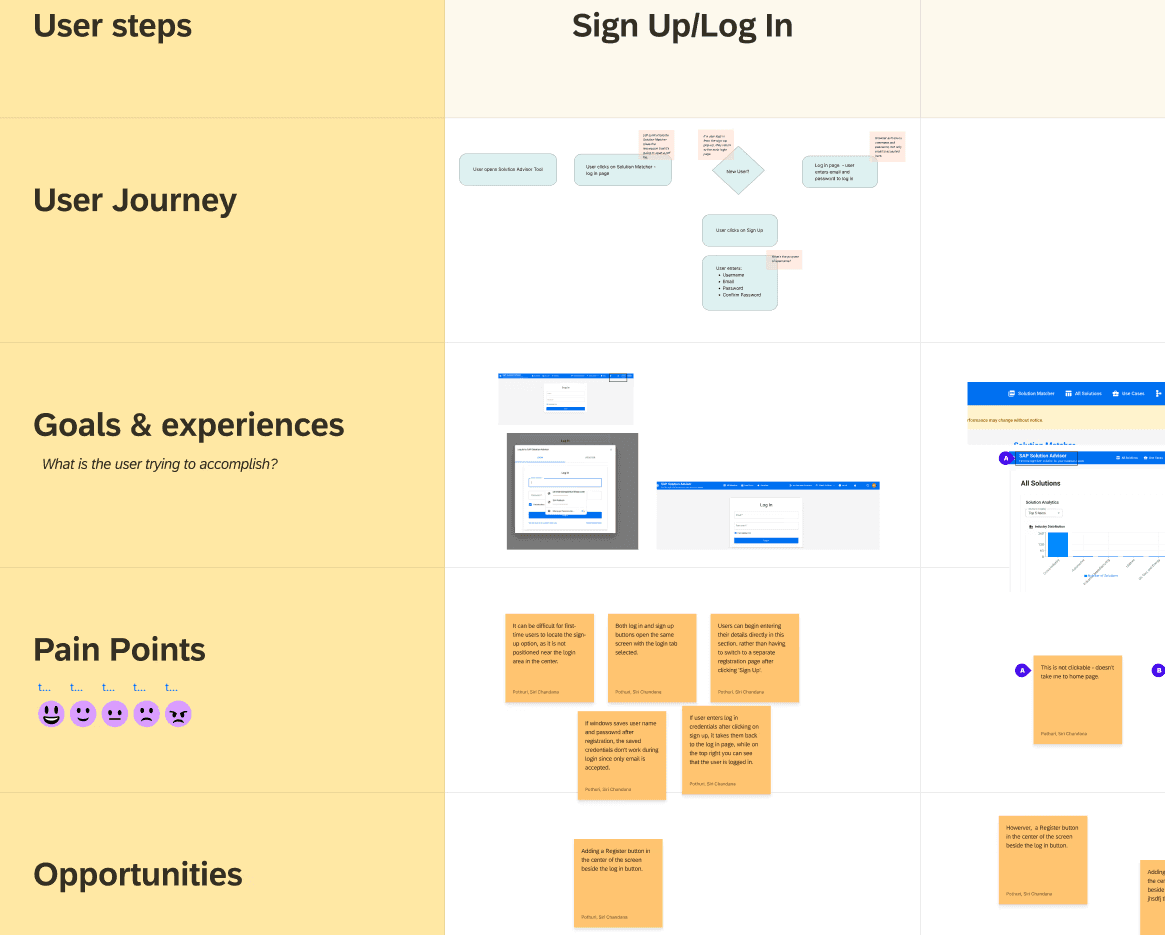
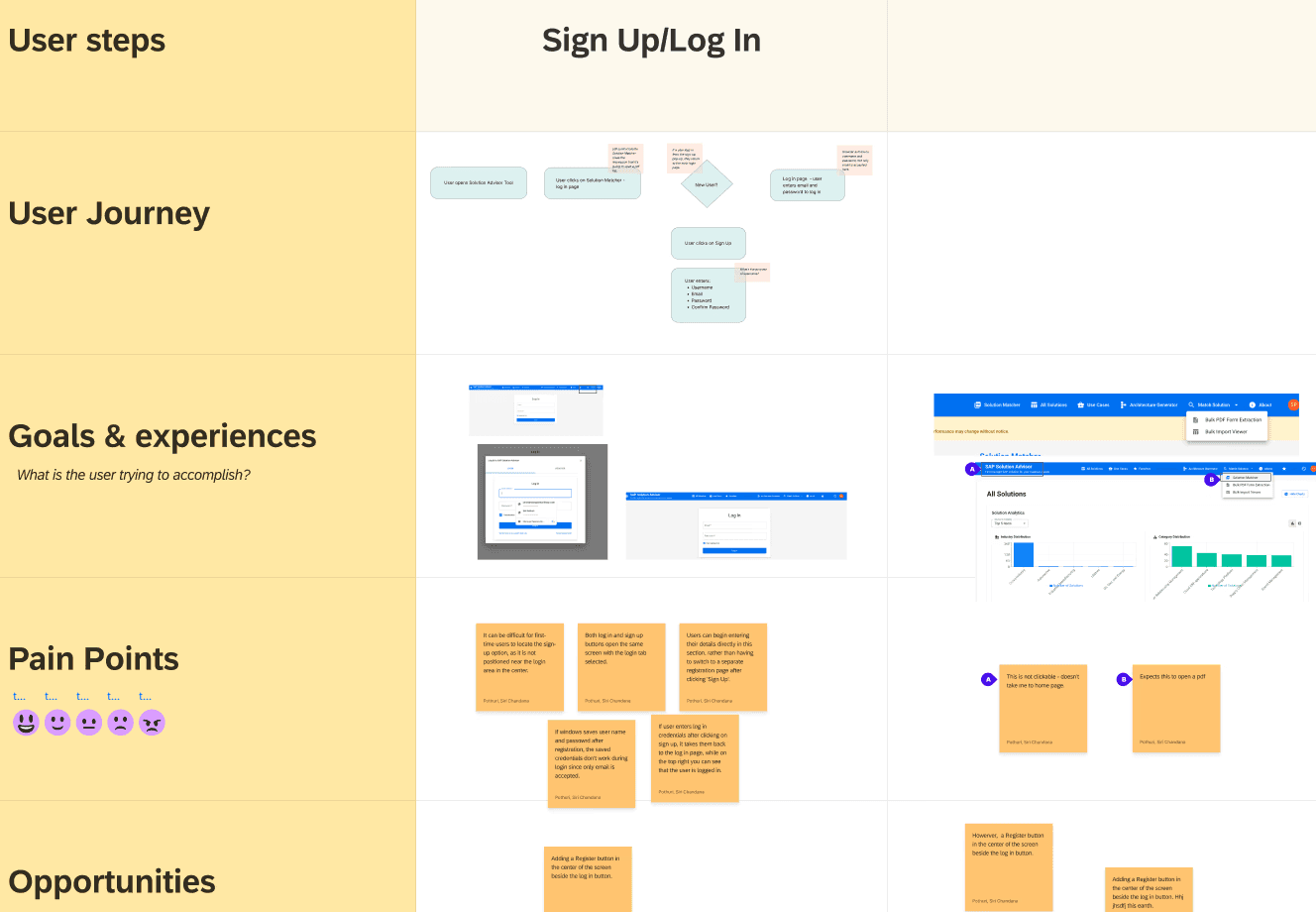
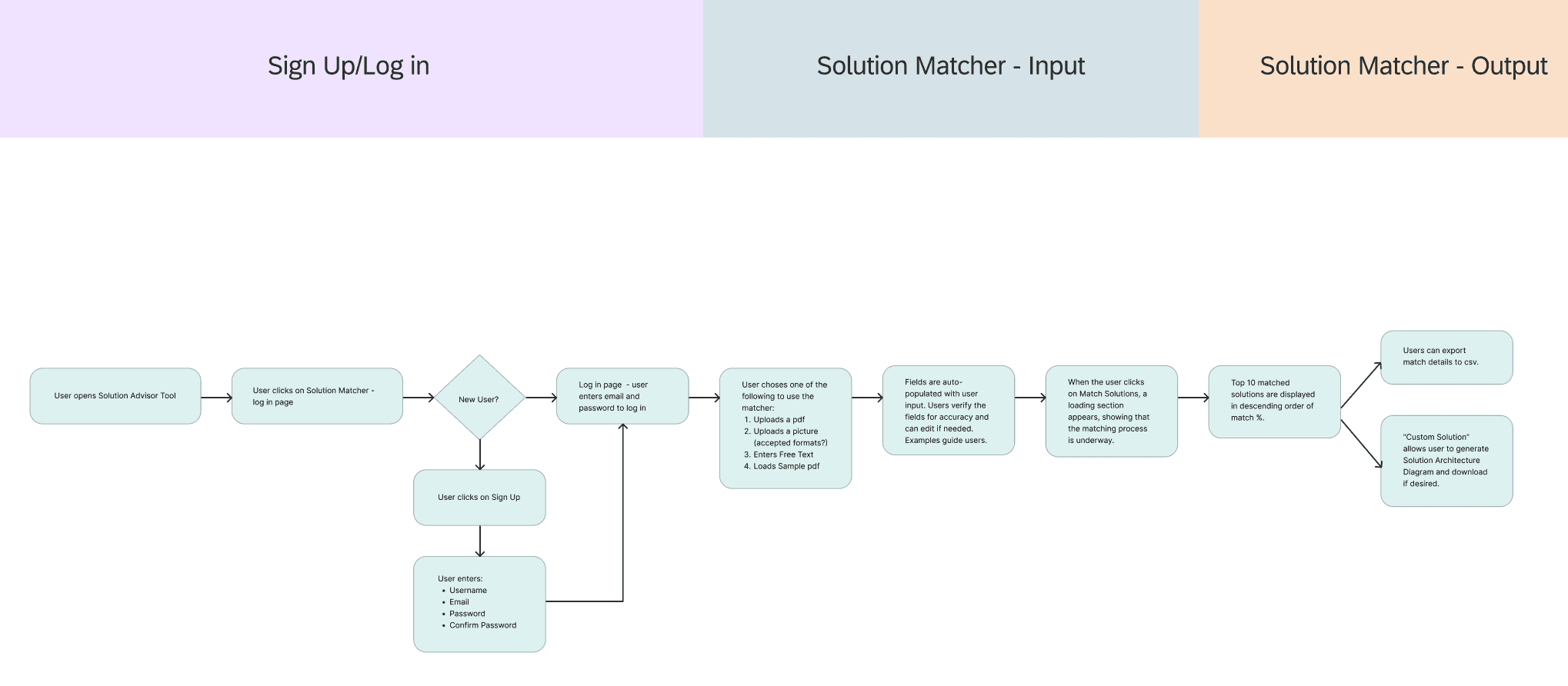
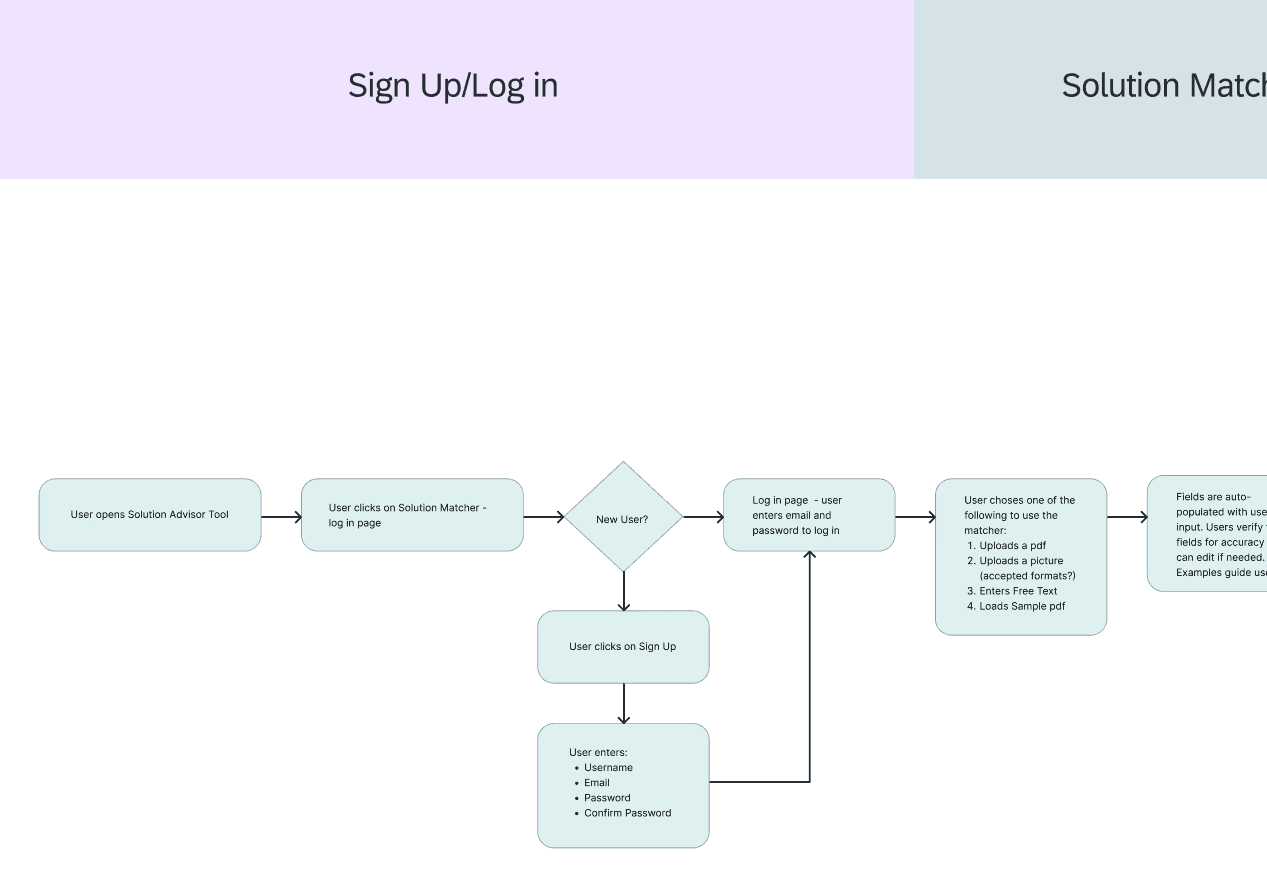
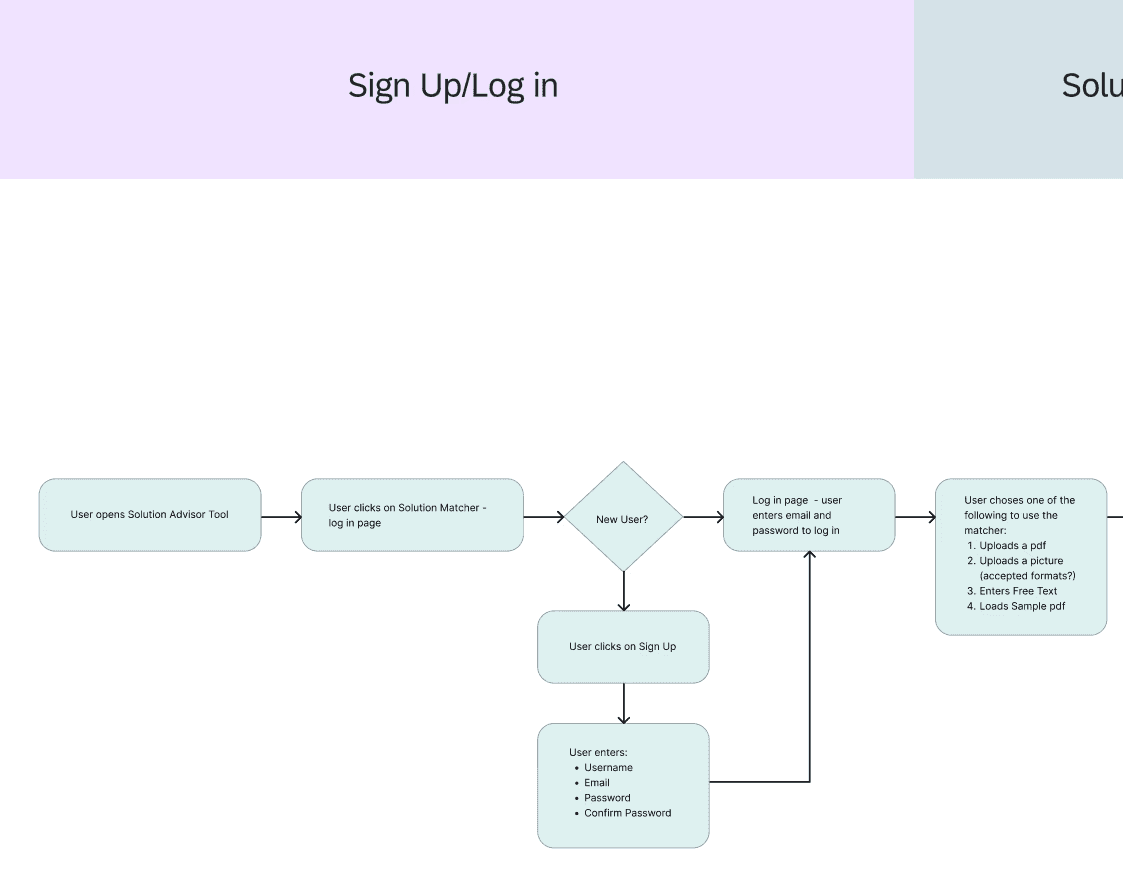
Using these findings, I mapped an ideal To-Be journey emphasizing clarity, efficiency, and ease:
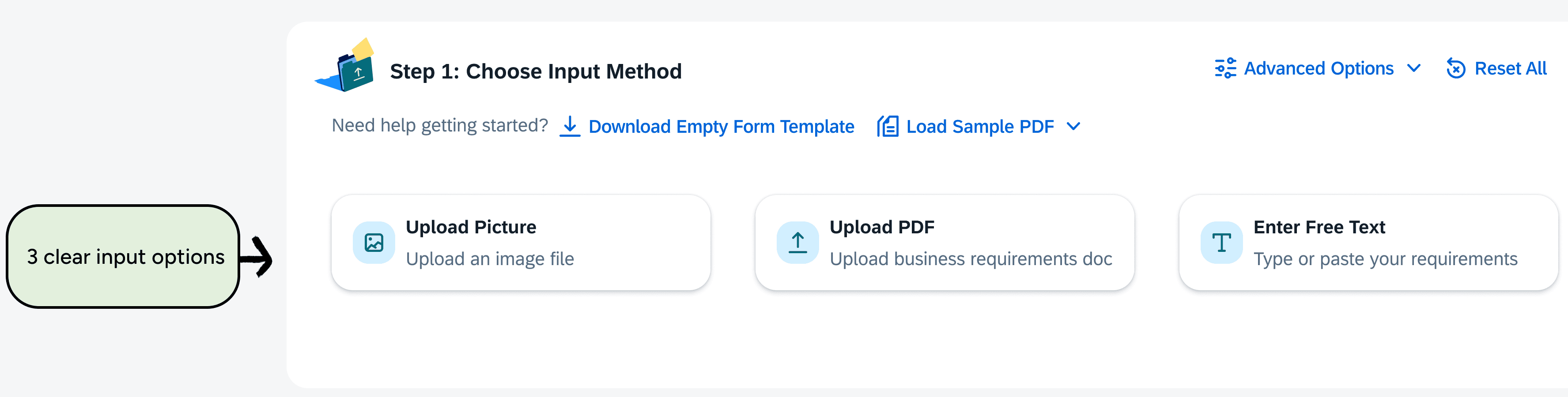
Guided Entry: Simplified onboarding for a smooth start.
Progressive Disclosure: Show only essential inputs and results.
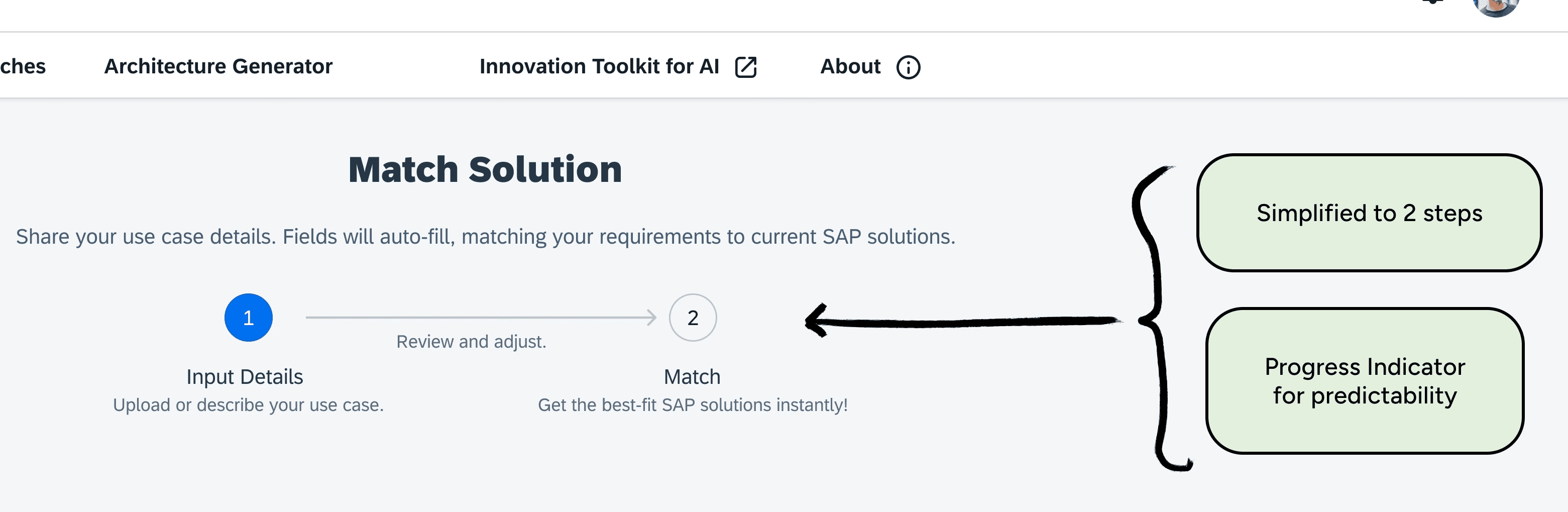
Predictable Flow: Clear progress indicators and hierarchy.
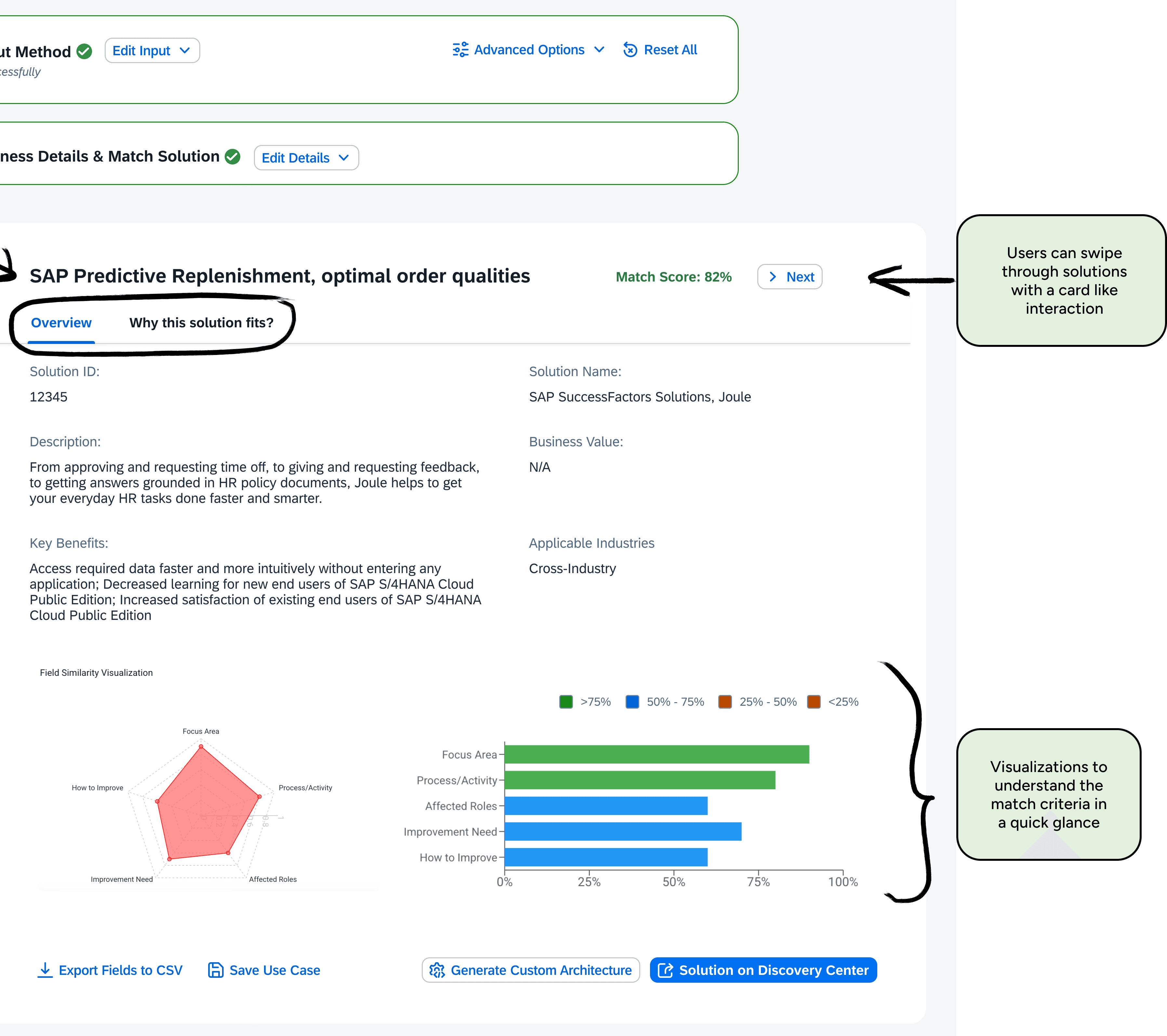
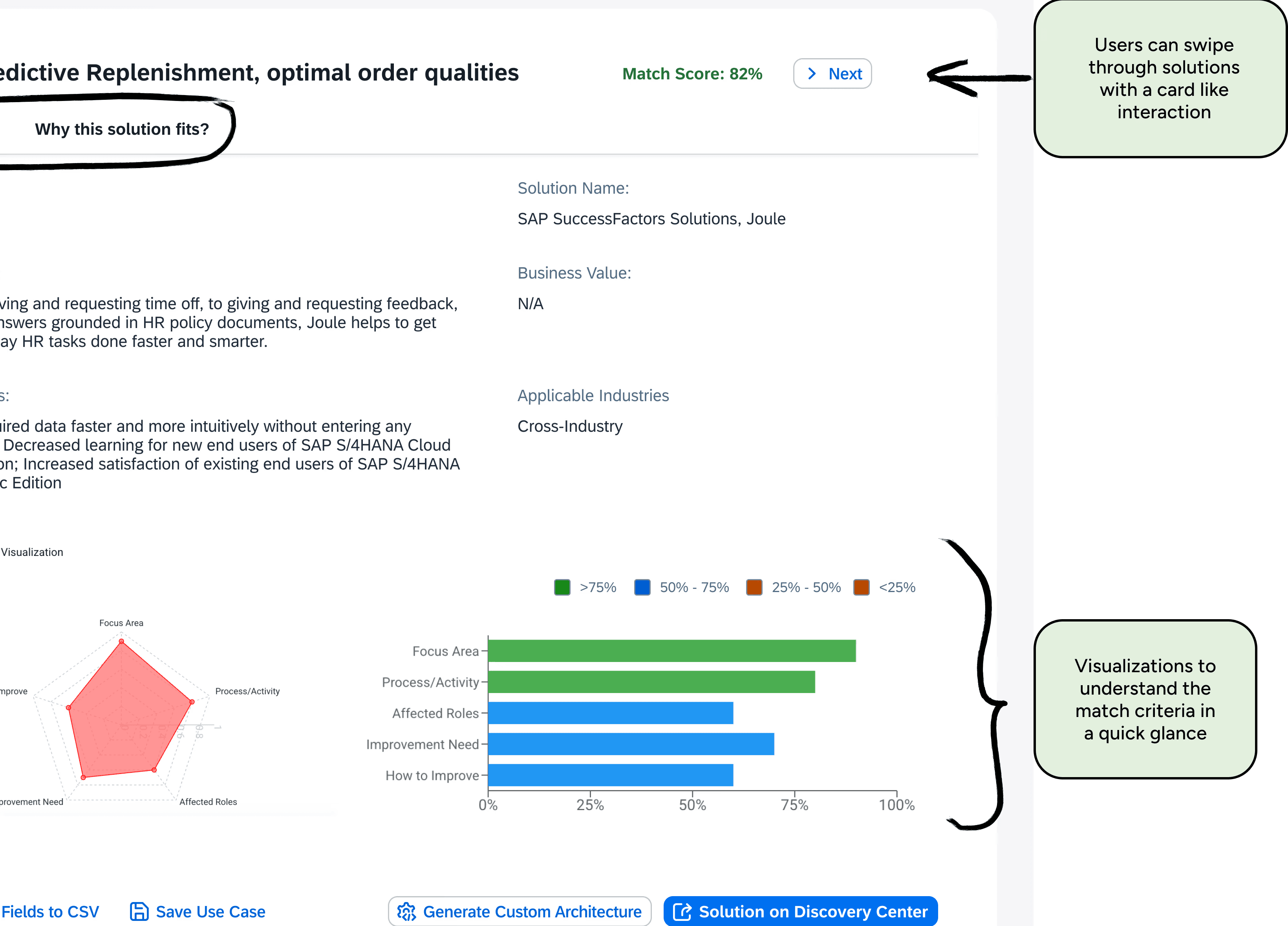
Actionable Insights: Personalized solution matches with reasoning and confidence scores.
After identifying user pain points, I redesigned the experience using SAP Fiori design guidelines and AppHaus’ human-AI interaction principles.
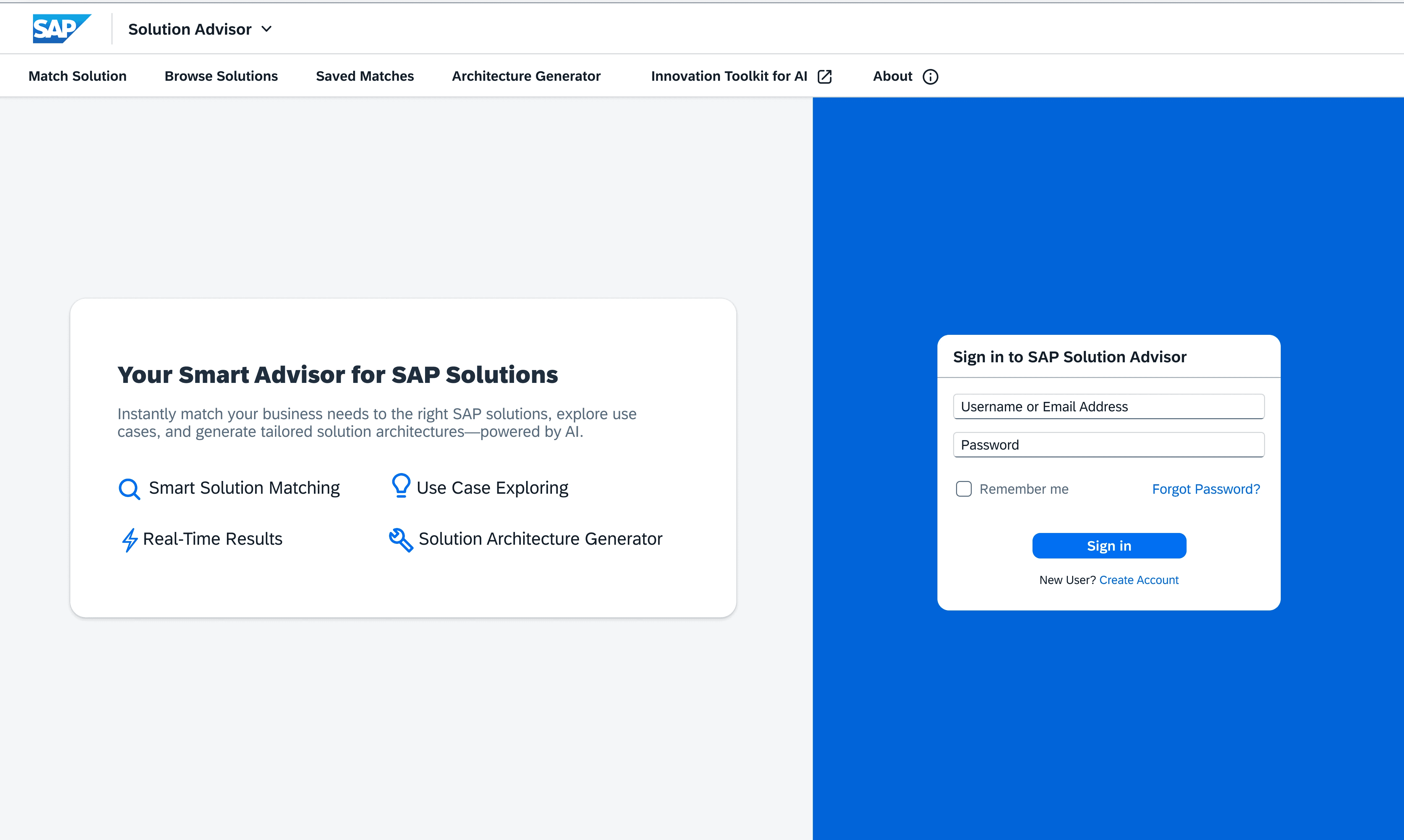
Final experience features:
An intuitive business use case input
AI-generated top 10 solution matches
Rationale behind matched solutions
Pointing users to the right direction from the solution
Full alignment with SAP’s design system for consistency and scalability
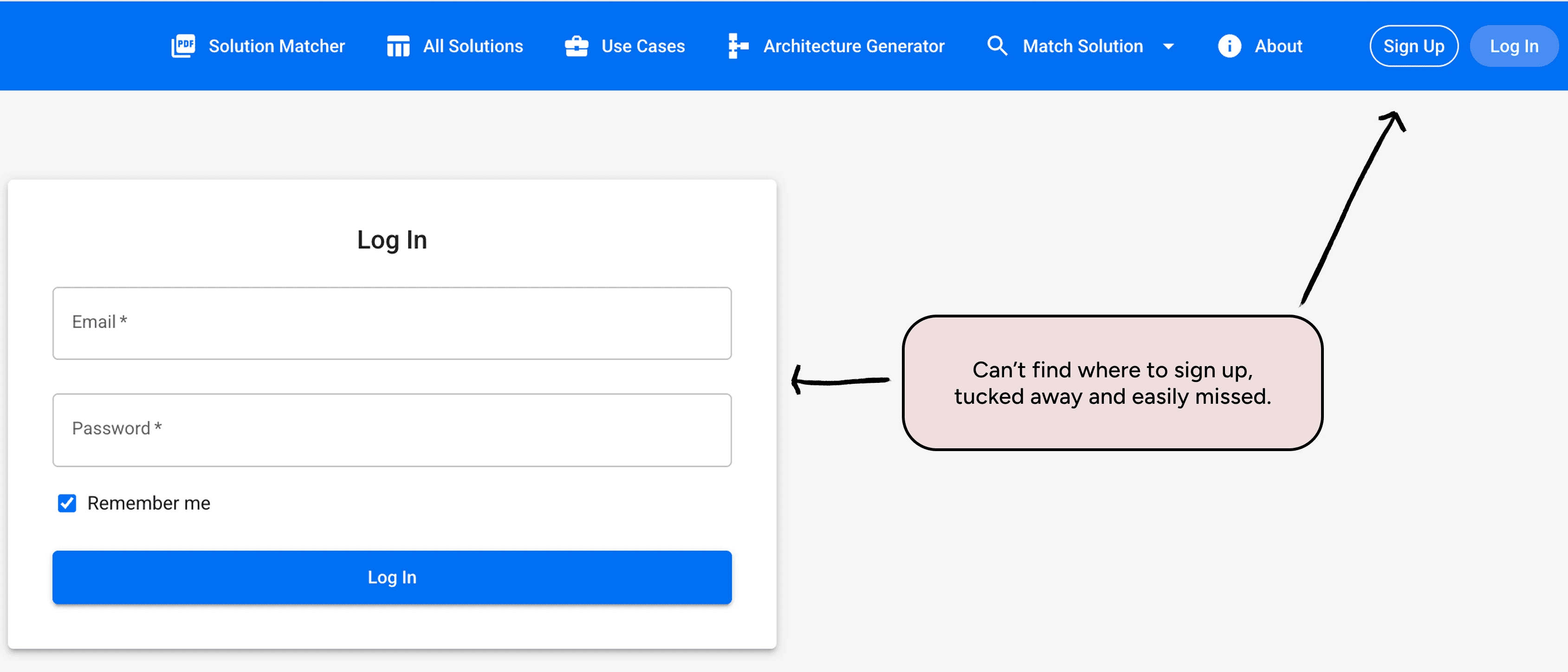
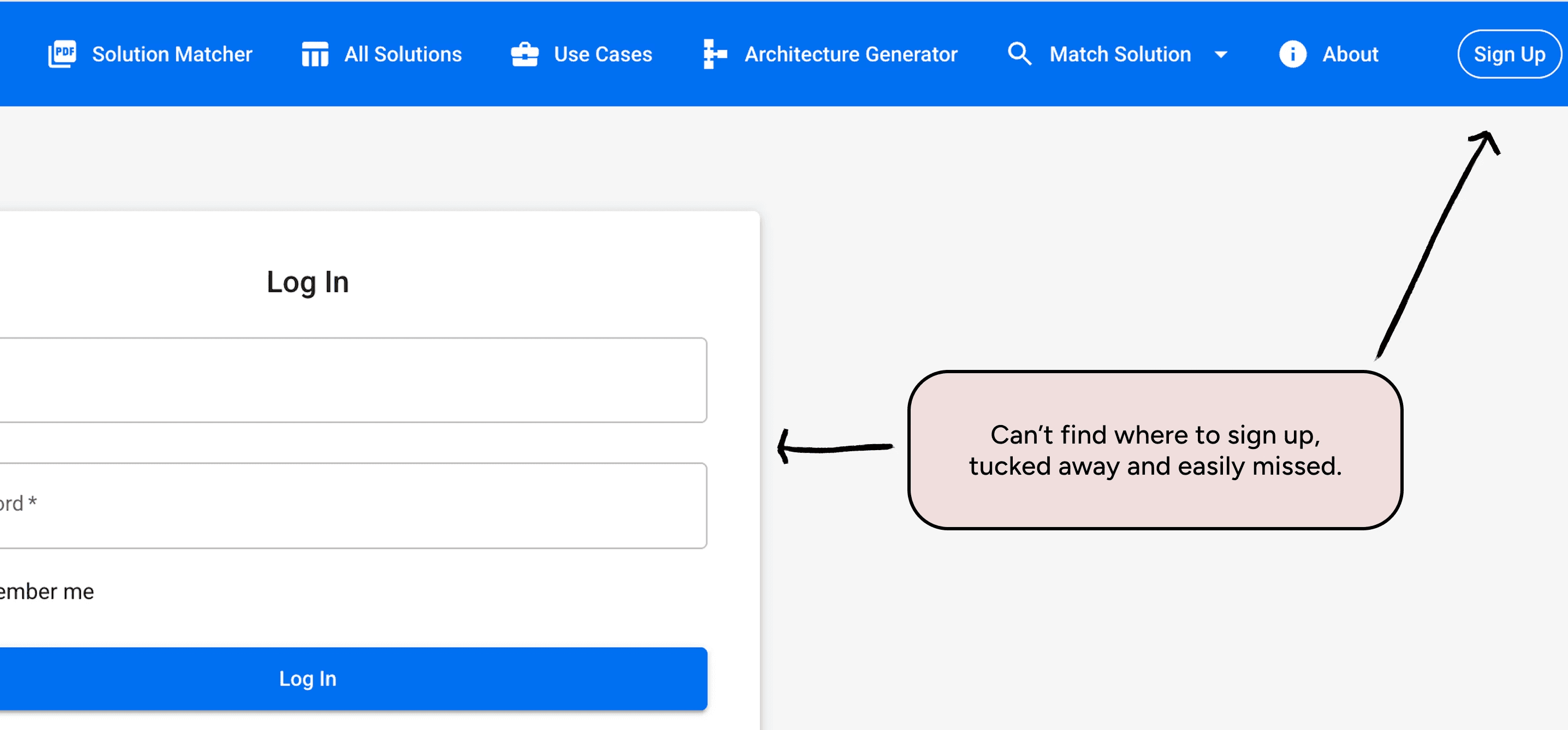
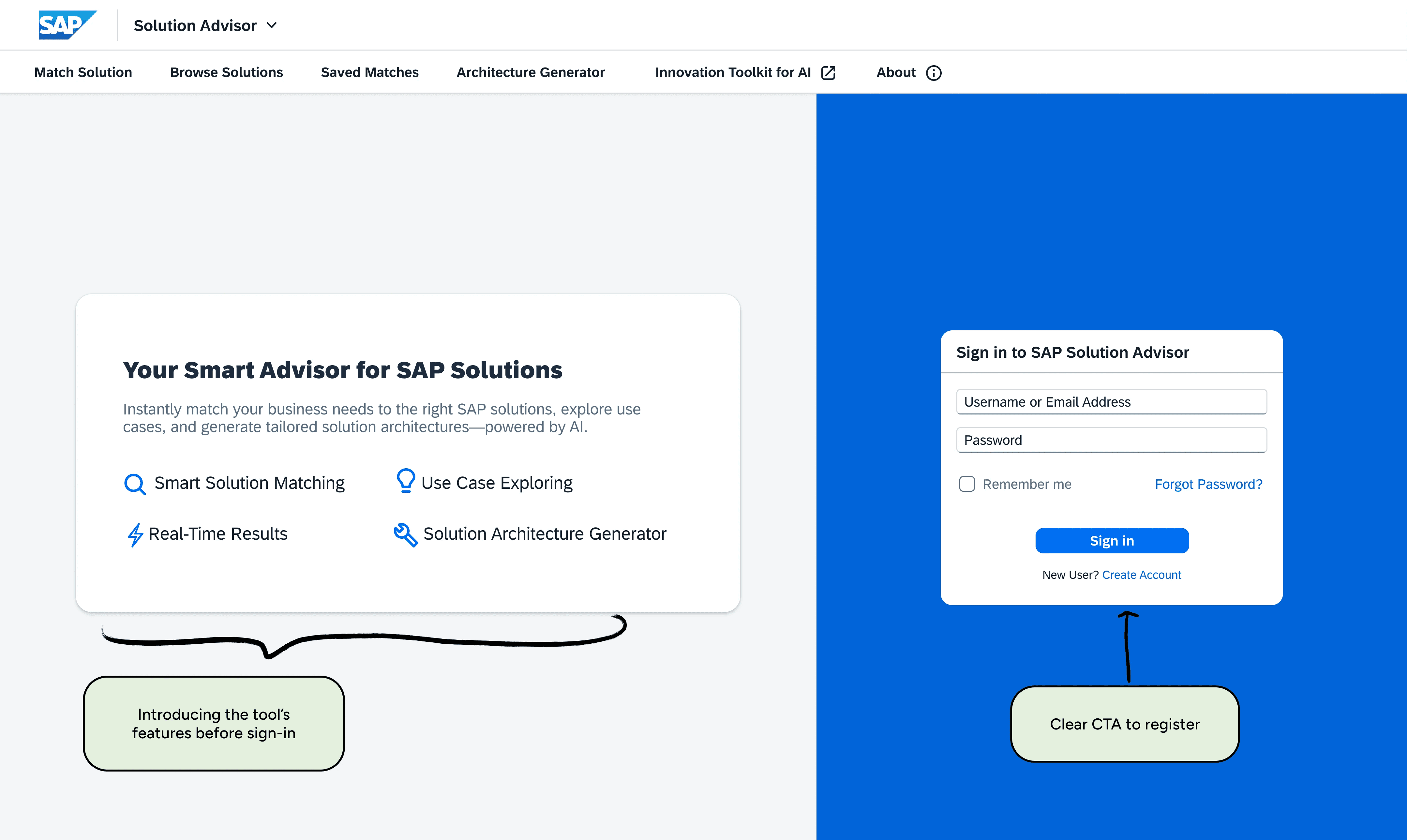
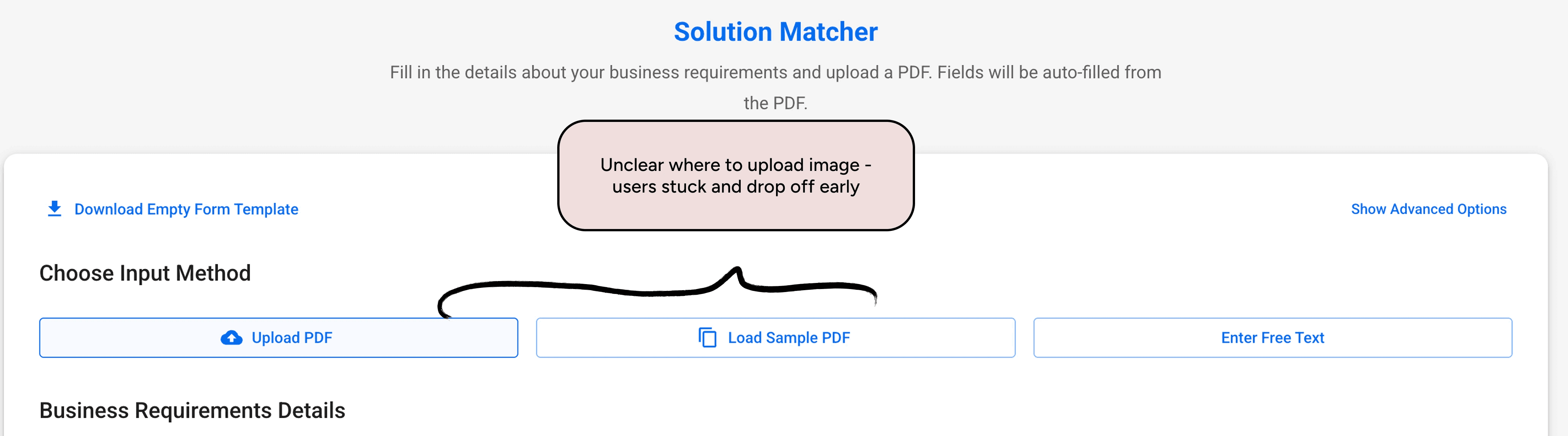
BEFORE:

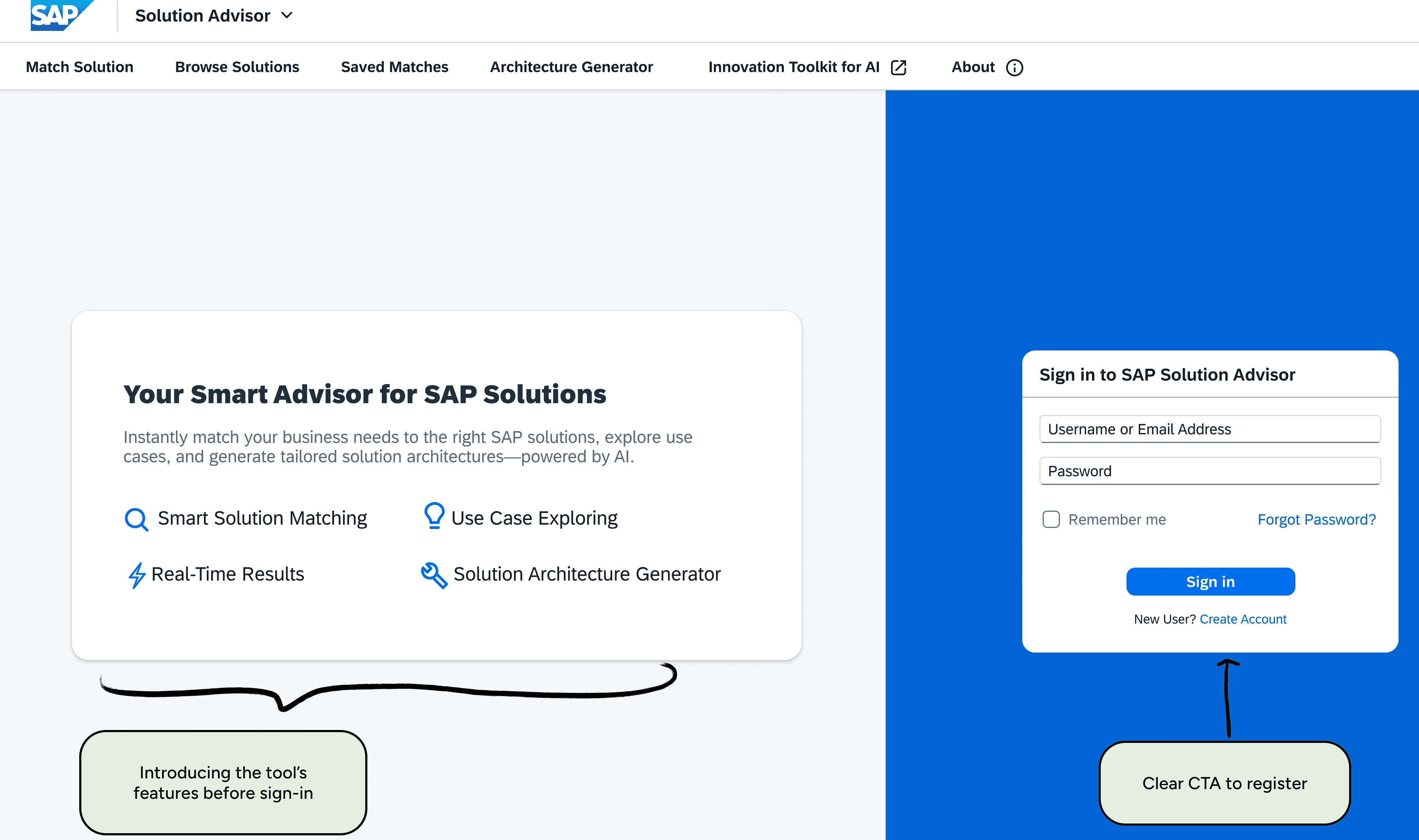
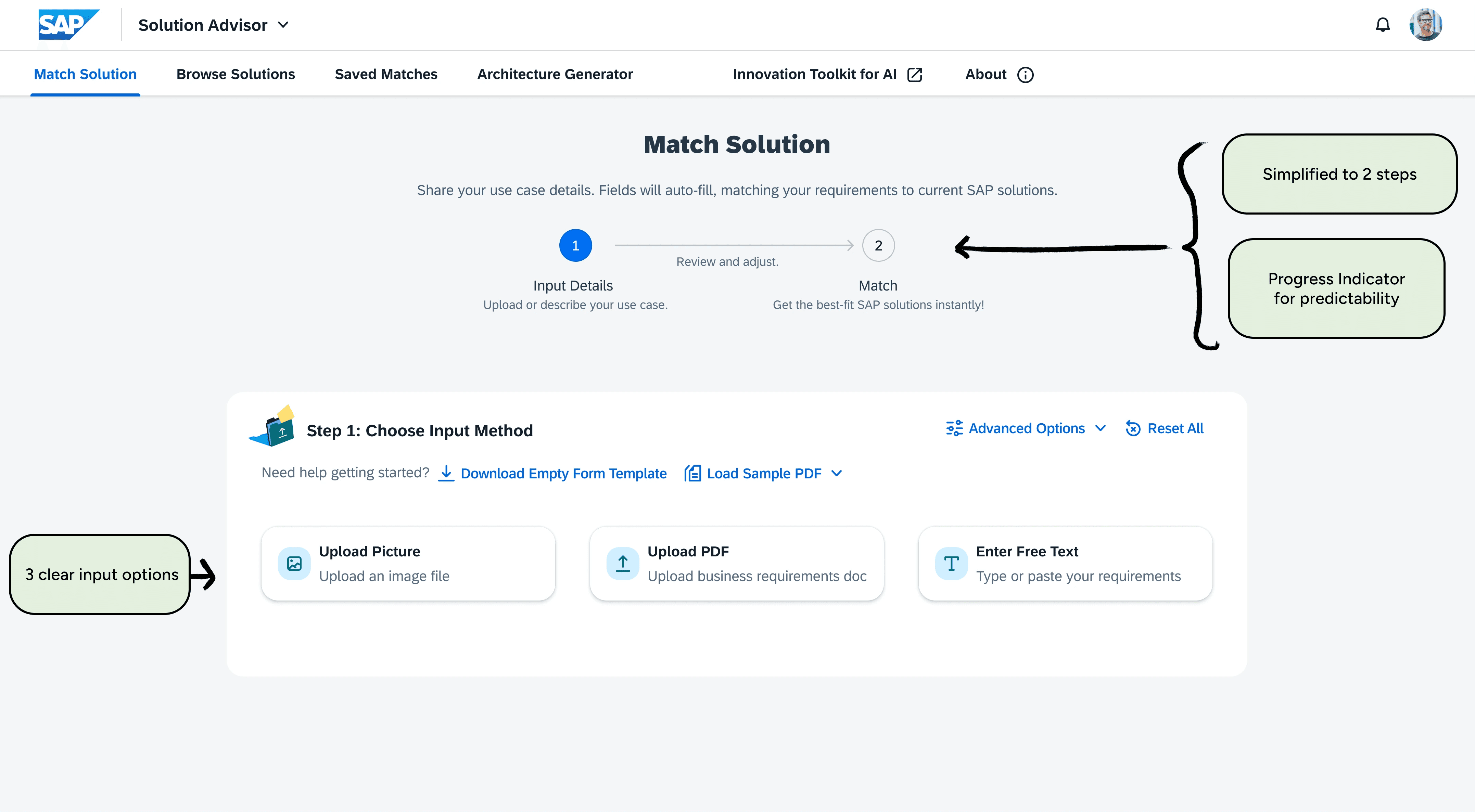
AFTER:
BEFORE:
AFTER:
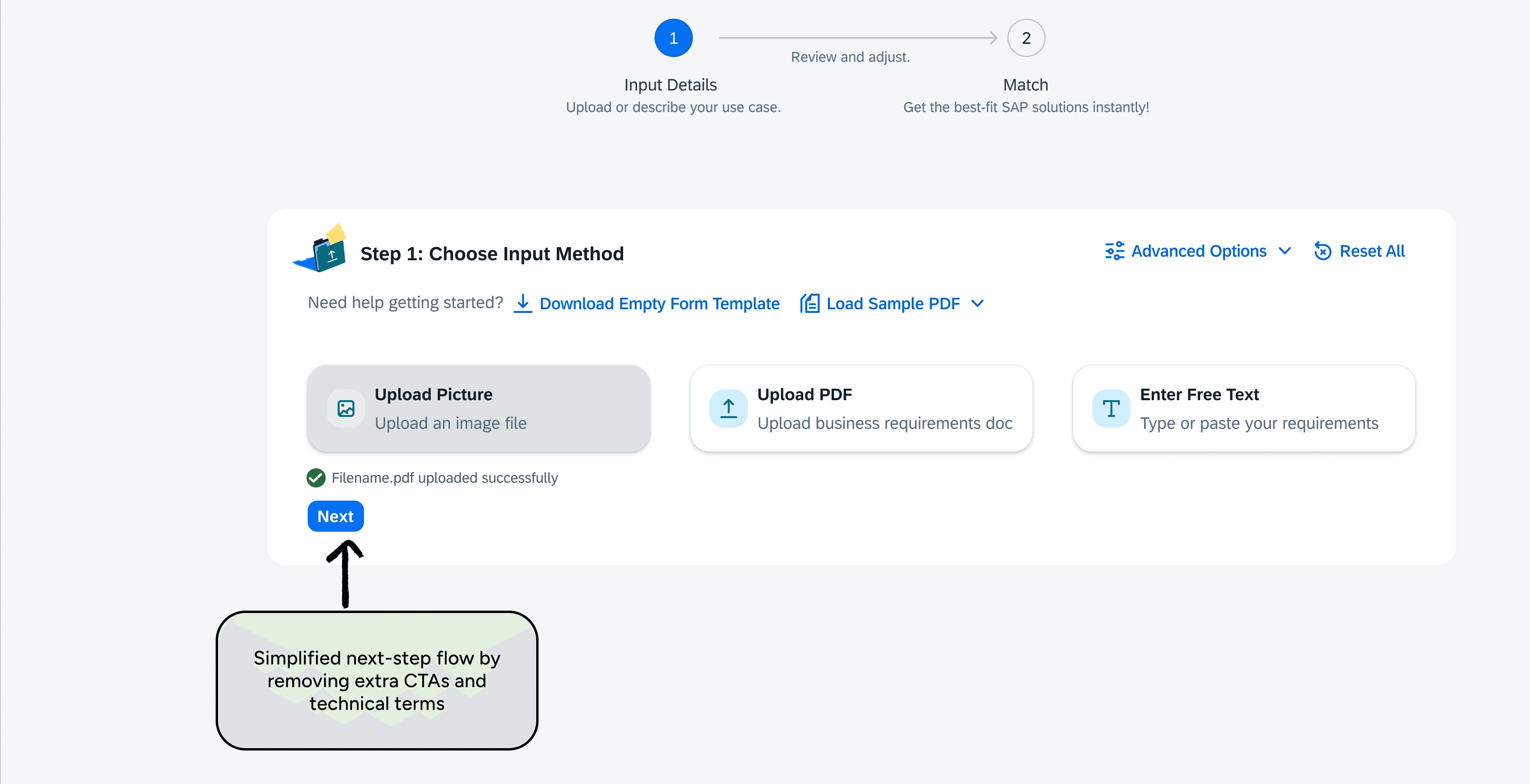
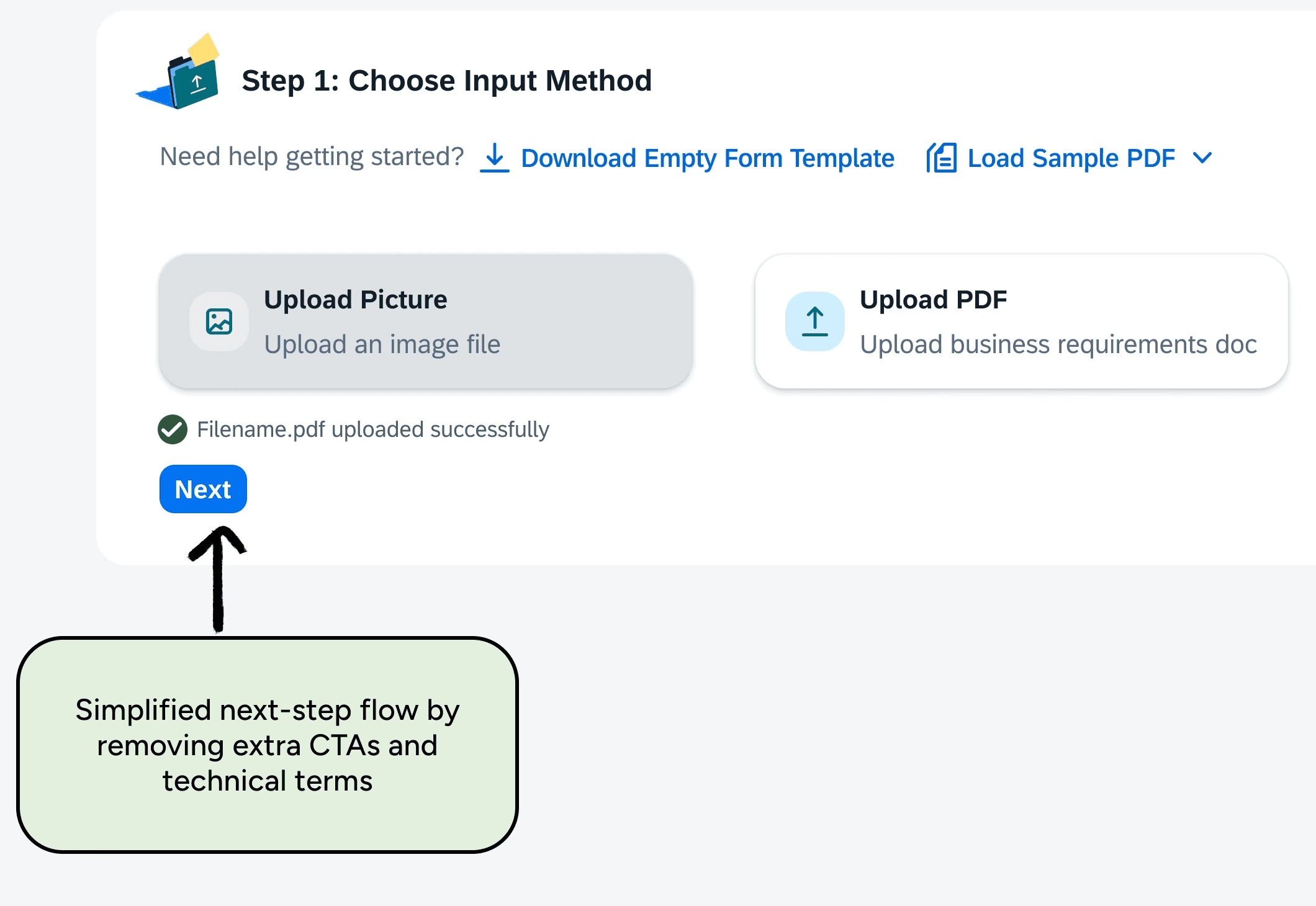
BEFORE:
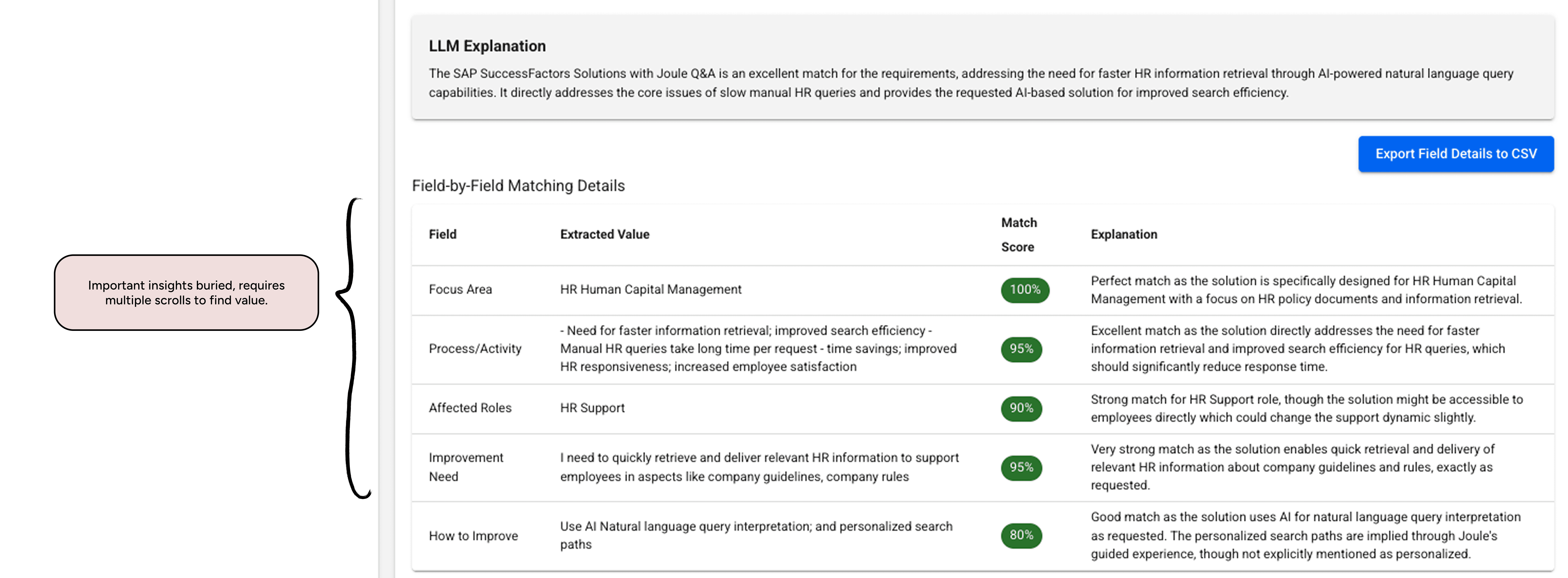
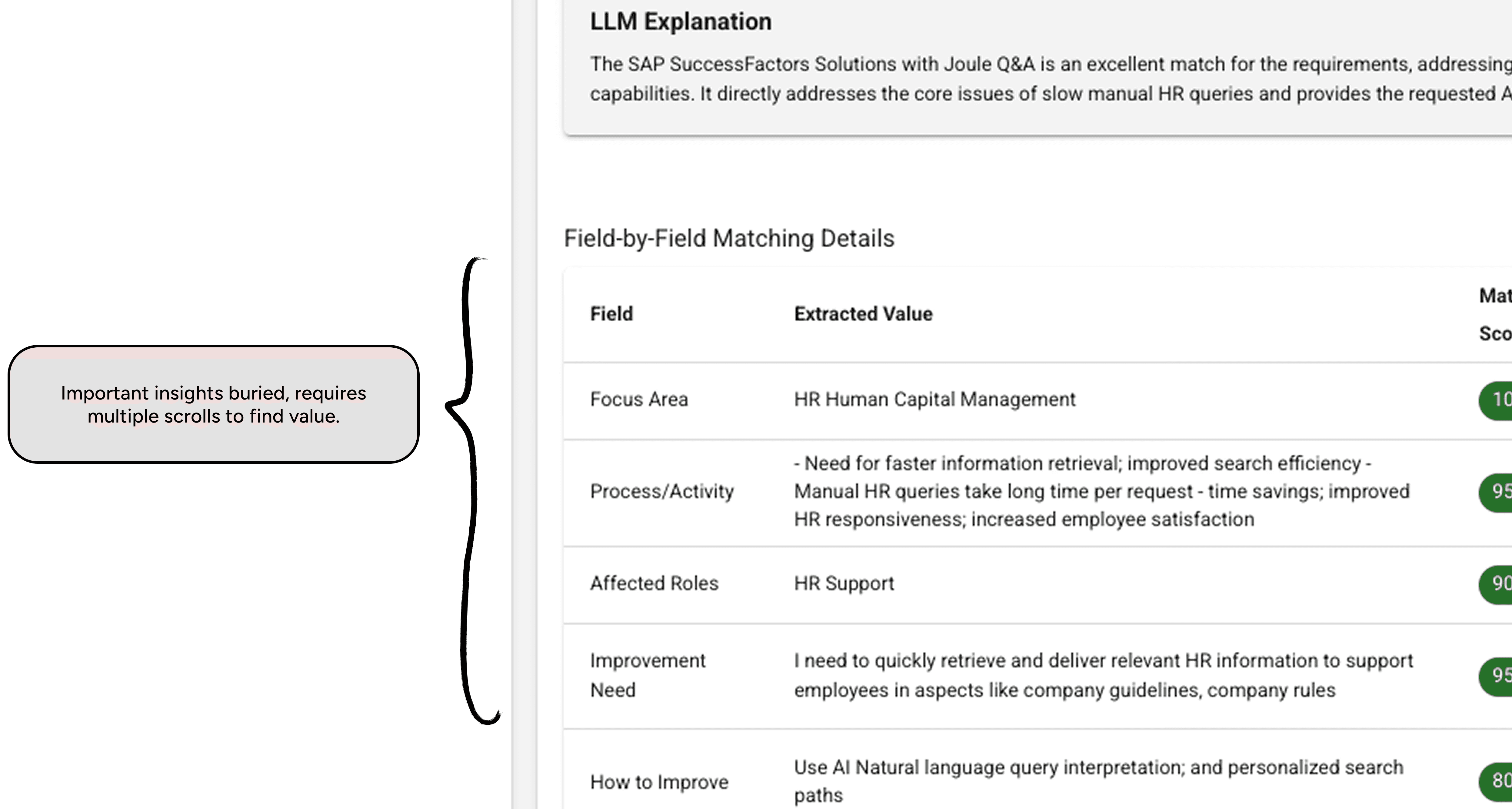
AFTER:
✅ Time reduced: 10 minutes → under 2 minutes (80% decrease)
✅ Empowered Users: Leveraging the power of the tool to make informed decisions
✅ Better clarity & trust: Transparent AI reasoning & pointing to the right teams
✅ Recognition: Submitted for the Hasso Plattner Award 2025
This project taught me that successful AI experiences aren’t about automation, they’re about partnership.
Grounded in human-centered design, I worked hand-in-hand with business teams, technical users, and real customers - ensuring that the final solution was not only feasible and scalable but also meaningful and intuitive for the people who use it.